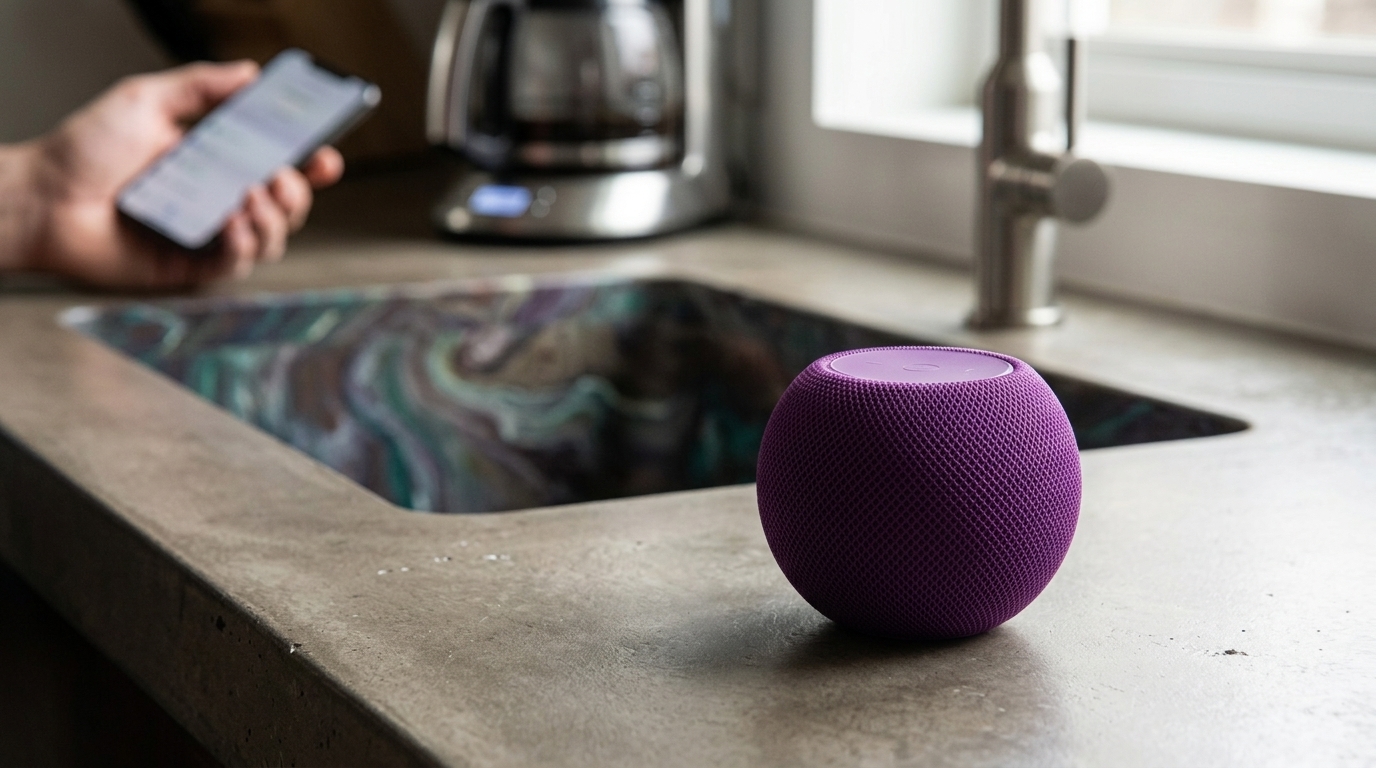
As we approach mid-June 2026, the technology market is gearing up for one of the most significant commercial milestones of the year: Amazon's Prime Day. Traditionally, Jeff Bezos's company uses this period not only to boost sales volume but also to cement the presence of its own devices in the homes of millions of consumers. This year, the headline deal is the drastic price cut of the Echo Dot Max, now retailing for $64.99—a significant $35 drop from its original MSRP.
The Echo Dot Max is not just another speaker. In its 2026 iteration, it integrates advanced Generative AI capabilities, allowing Alexa to hold more natural dialogues, understand context, and control the home with unprecedented precision. This offer, arriving as an "early" gift for Prime subscribers, highlights a long-standing Amazon tactic: using hardware as a "Trojan horse" to sell services and harvest data.
The Technical Prowess of the Max Model
The Echo Dot Max was designed to bridge the gap between the small, budget-friendly Dot and the larger Echo Studio. Despite its compact footprint, it features upgraded audio drivers and a dedicated neural processing unit (NPU) that allows for local processing of many voice commands. This reduces latency and enhances privacy, as fewer data packets need to travel to the cloud for simple tasks like turning off lights or setting timers.
Under the current promotion, Amazon is targeting users who crave high-quality audio without sacrificing desk or nightstand space. The inclusion of the Matter protocol means the device works seamlessly with thousands of other smart home products, from smart bulbs to thermostats, positioning it as the central nervous system of any modern dwelling. The $64.99 price point places it in an extremely competitive position against Apple's HomePod mini and Google's Nest Audio, which rarely see such aggressive discounting.
The Economics of Loss Leaders and the Prime Ecosystem
Why does Amazon choose to sell such an advanced device at a price that likely hovers near production cost? The answer lies in the "loss leader" model. The Echo device is not the end product; the product is the consumer's relationship with the Amazon ecosystem. Having an Echo device in the living room facilitates voice-activated shopping, promotes Amazon Music subscriptions, and keeps the user tethered to Prime services.
Market analysts suggest that a user who owns an Echo device tends to spend, on average, 20% more annually on the Amazon platform compared to a non-owner. Therefore, a $35 discount is a minor investment for the company compared to the long-term profits derived from purchases and behavioral data collection. Furthermore, with the rise of AI agents, owning the "physical interface" (the microphone and speaker) is of strategic importance in the battle for who will control the digital lives of tomorrow.
Challenges and Privacy: The Price of Convenience
Despite the attractive price, the increasing penetration of smart speakers raises questions that remain more relevant than ever in 2026. Alexa, now bolstered by Large Language Models (LLMs), has the ability to "listen" and analyze the environment with startling detail. Amazon maintains that privacy protection is built-in by design, featuring physical microphone kill-switches, but concerns regarding the use of data for hyper-targeted advertising persist.
Moreover, reliance on a closed ecosystem means consumers are limited to the choices provided by the platform. While Matter has improved interoperability, the "user experience" remains tightly coupled with Amazon's services. For the average consumer, however, the convenience of controlling everything with their voice and accessing cutting-edge technology for under $70 is often a compromise they are willing to make.
- The deal is exclusively available for Prime members.
- The Echo Dot Max includes built-in temperature and motion sensors.
- The discount is part of the Early Access strategy ahead of the main event.
- The device supports Lossless audio for Amazon Music HD subscribers.
In conclusion, Amazon's move to slash the price of the Echo Dot Max is a clear statement of power. In a world where AI is becoming the new operating system of daily life, Amazon wants to ensure its gateway is in every room of your house. Whether this represents a bargain or another retreat for our privacy is a decision every user must make for themselves.