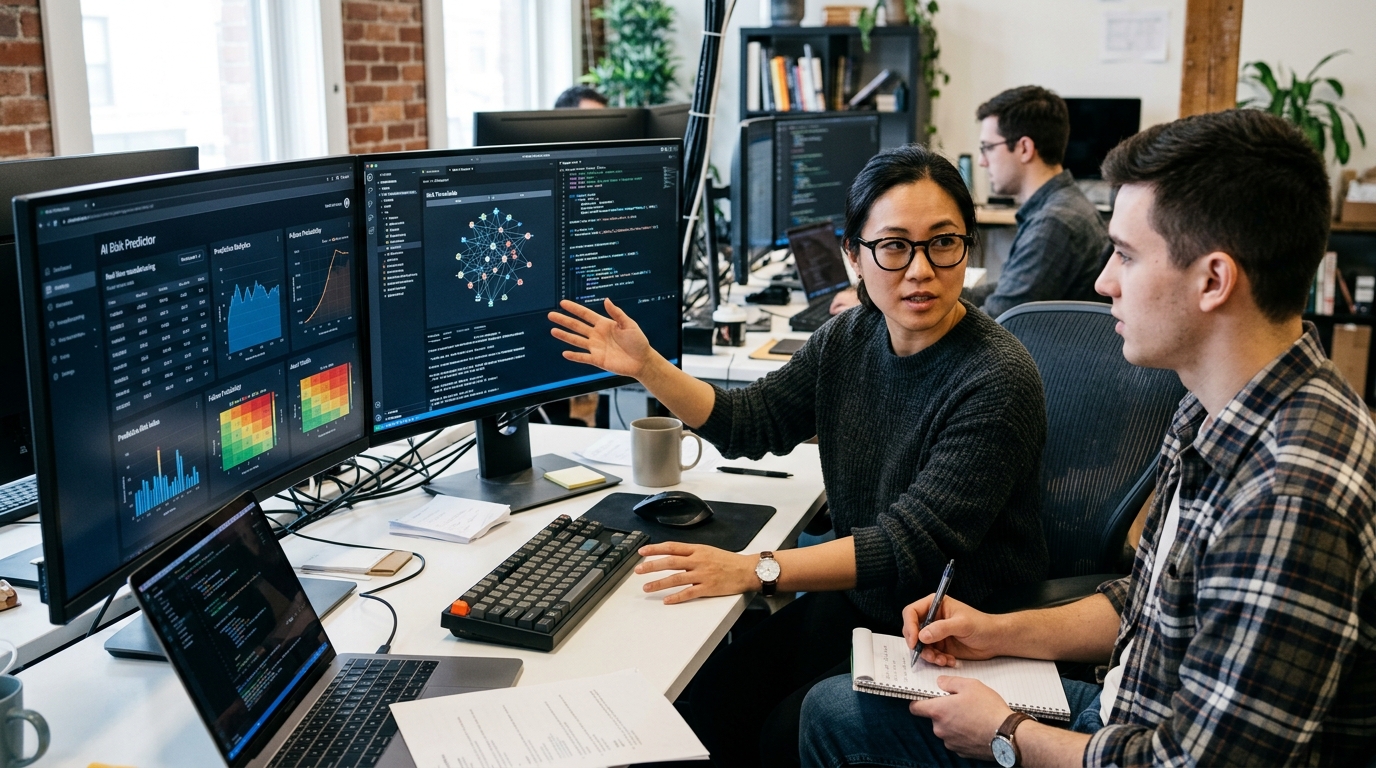
In the modern industrial landscape of June 2026, the traditional "fix it when it breaks" approach is officially obsolete. Manufacturing, a sector historically built on mechanical robustness and human grit, is undergoing a structural metamorphosis. The integration of Artificial Intelligence (AI) into risk management is no longer a luxury for tech giants; it is a prerequisite for survival in a volatile global market.
The Shift to Predictive Maintenance
The single greatest risk in any production facility is unplanned downtime. A failure in a critical production line can cost millions in lost productivity and breached contracts. AI, by analyzing data from thousands of IoT sensors, can now identify subtle changes in vibration, temperature, or energy consumption that precede a mechanical failure.
"The ability to predict a failure before it occurs fundamentally changes the economics of manufacturing," industry analysts suggest.
These systems don't just warn of danger; they suggest the optimal window for maintenance, minimizing disruption. The use of "Digital Twins" allows managers to simulate risk scenarios in a virtual environment before they manifest in the physical world, creating a feedback loop of continuous improvement.
Fortifying the Supply Chain
Manufacturing risks are not confined within factory walls. The supply chain remains the most vulnerable link. AI today processes vast amounts of external data—from geopolitical tensions and port strikes to extreme weather events—to predict delays in raw material deliveries. This allows companies to pivot in real-time, sourcing alternative suppliers or adjusting inventory levels before a crisis hits.
- Automated supplier reliability assessments.
- Dynamic logistics route optimization to mitigate transit risks.
- Predictive modeling for raw material price volatility.
Quality Control and Worker Safety
Risk management also encompasses product quality and personnel safety. Computer Vision systems can detect defects in fractions of a second that the human eye would inevitably miss. This drastically reduces the risk of mass product recalls, which can be catastrophic for a brand's reputation and financial health.
Simultaneously, AI is protecting the most valuable asset: people. AI-powered wearables monitor worker posture to prevent ergonomic injuries, while smart cameras instantly detect if a worker enters a high-risk zone without proper protective gear. Risk management thus becomes a holistic process connecting machine, product, and human safety.
The Challenges of Adoption
Despite the clear benefits, the transition is fraught with challenges. Cybersecurity risks escalate as factories become more interconnected. Furthermore, there is the "black box" problem of algorithms: if an AI decides to halt a production line, engineers must be able to understand the "why." Building trust in technology and ensuring continuous workforce upskilling are the new frontiers for industrial leaders.