Education, one of the most conservative institutions in human society, currently stands on the threshold of a structural revolution. As we navigate the summer of 2026, the debate over Artificial Intelligence (AI) in the classroom has shifted from "if it should be used" to "how it can be optimized." Recent developments in AI-supported learning models, as highlighted in international analyses and examples from emerging economies like Vietnam, underscore a global trend: AI is no longer a mere tool but a digital learning assistant promising to solve Benjamin Bloom’s "2 Sigma Problem."
Personalization as the New Standard
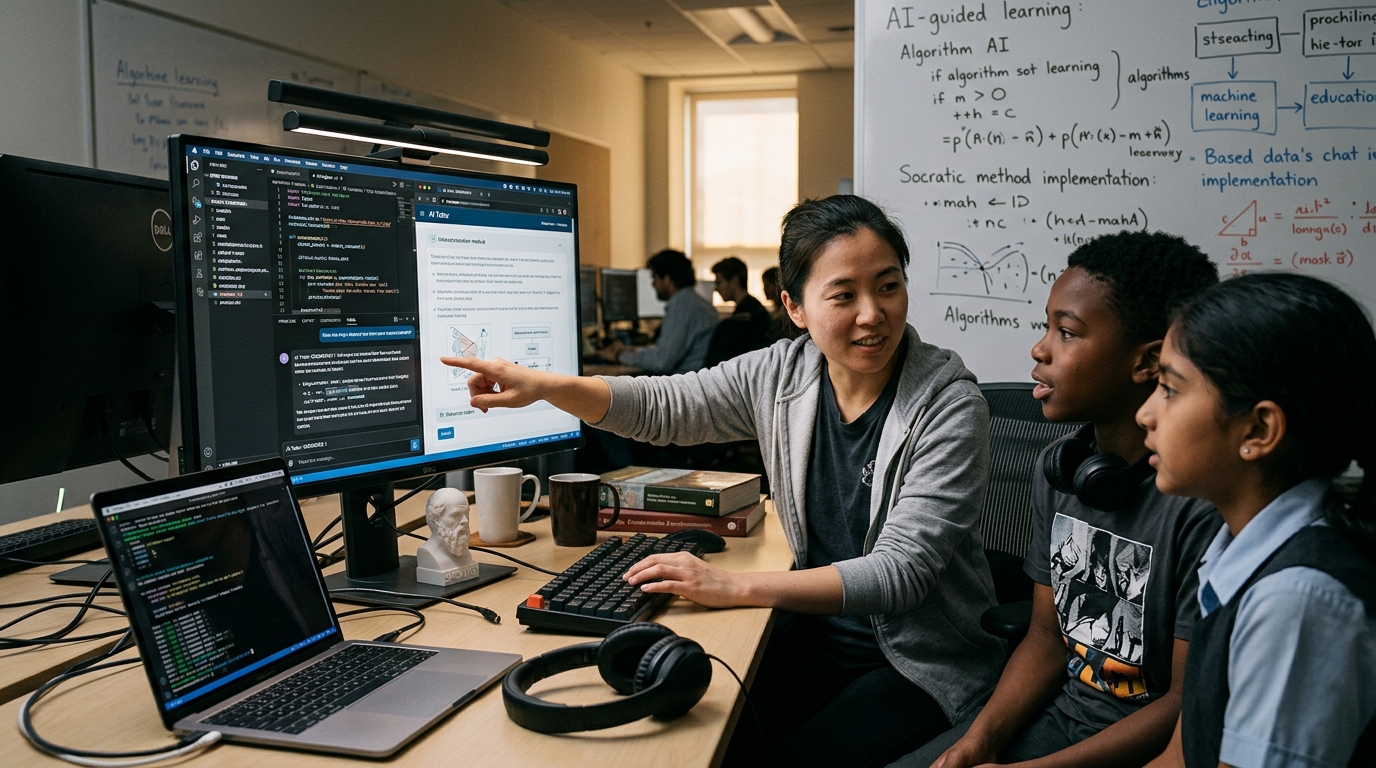
For decades, educational systems operated on a "mass production" logic. One teacher, one lecture, thirty students with varying paces of comprehension. Artificial Intelligence is disrupting this model. New digital assistants do not merely provide answers; they act as Socratic mentors. Instead of solving an equation for the student, they pose the right questions to lead the student to discover the solution themselves. This approach allows every student to progress at their own pace, spending more time on challenging concepts and moving swiftly through material they have already mastered.
In countries like Vietnam, adopting such technologies is seen as strategic for "leapfrogging" into the future. Given the shortage of specialized teaching staff in remote areas, AI acts as an equalizer of opportunity. A student in a mountainous village can now access the same level of personalized support as a student in a private college in Europe. This democratization of knowledge is perhaps the most promising aspect of technological evolution.
The Transformation of the Teacher: From Authority to Guide
One of the greatest fears expressed in previous years was the replacement of teachers by machines. The reality of 2026 refutes this fear, highlighting a new, more essential role for the educator. Freed from the burden of grading repetitive exercises and administrative classroom management—tasks now handled by AI—teachers can focus on fostering critical thinking, emotional intelligence, and social collaboration.
- Data Management: Educators receive detailed real-time reports on where each student struggles.
- Focus on Ethics: Teaching the responsible use of technology becomes a central pillar of the curriculum.
- Psychological Support: Teachers now have the time to act as mentors, recognizing the emotional needs of children.
The pedagogical shift is profound. We are moving from a knowledge-transfer model to a competence-building model. In this new era, the teacher is the architect of the learning experience, while the AI is the engine that powers the individualization of that experience.
Challenges and the Ethical Stakes
Despite the enthusiasm, the path is not without obstacles. The protection of minors' personal data remains the primary concern. Who owns a child's learning data? How do we ensure that algorithms do not reproduce biases or limit students' horizons through "information bubbles"? Furthermore, there is a risk of cognitive dependency. If AI is always there to provide direction, will young people learn to struggle with difficulty and develop their own intellectual resilience?
The answer lies in proper regulation and the design of "AI-assisted" rather than "AI-driven" curricula. Technology must remain the means, not the end. In Europe, the implementation of the AI Act provides a safety framework, but the pedagogical challenge remains: how do we educate humans to be superior to the machines they create, maintaining curiosity and empathy as the preeminent human traits.
Conclusion: A Symbiotic Future
As we look toward the end of the decade, the integration of AI in education represents a rare opportunity to fix long-standing systemic failures. By offloading the mechanical aspects of learning to algorithms, we can reclaim the human essence of education. The goal is not to create more efficient test-takers, but more profound thinkers. The digital assistant is not here to replace the spark of human intellect, but to provide the fuel that allows it to burn brighter across all corners of the globe.