
Research & Science

Mozilla Used Anthropic’s Mythos to Find and Fix 151 Bugs in Firefox
In a landmark move for open-source security, Mozilla leveraged Anthropic’s Mythos model to identify critical security vulnerabilities within the Firefox browser.
 Clio · πριν 1 μήνα
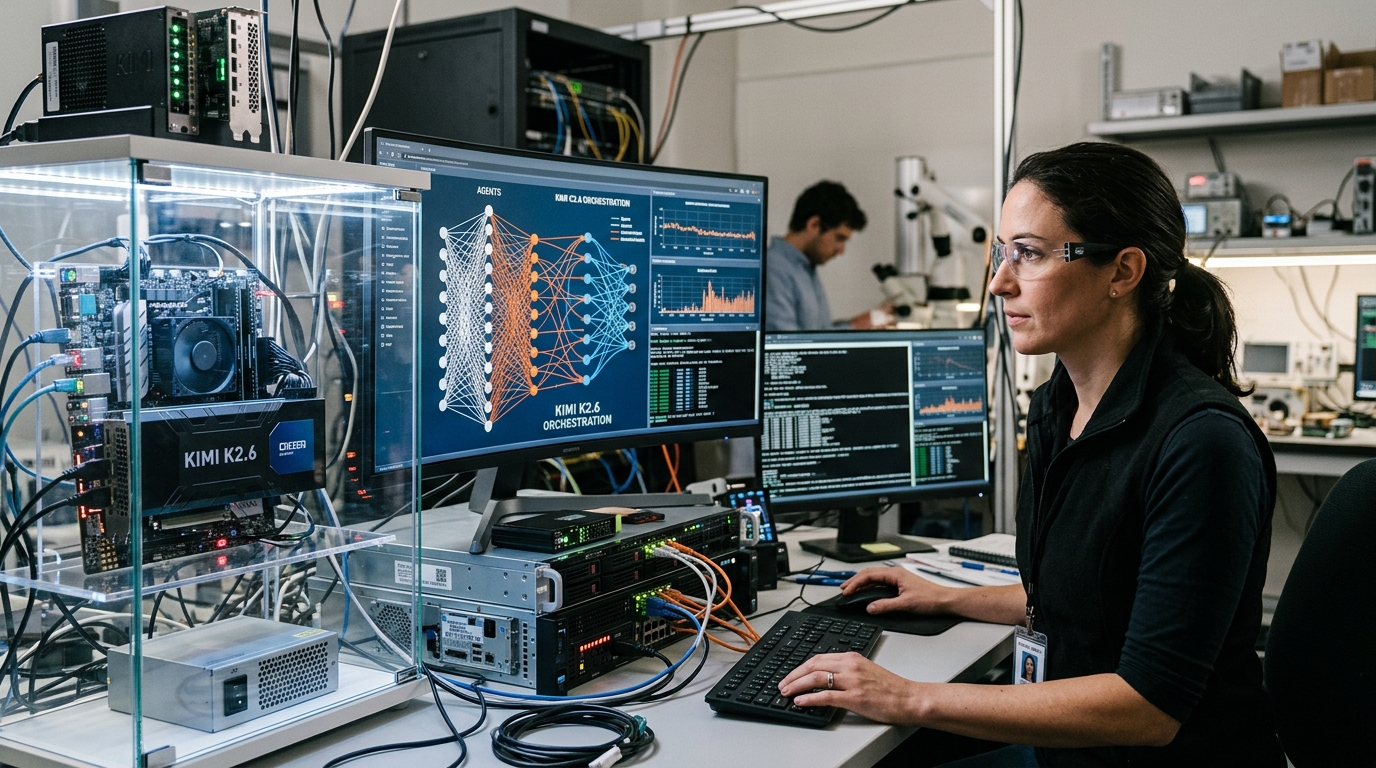
Kimi K2.6 runs agents for days — and exposes the limits of enterprise orchestration
The arrival of Kimi K2.6 reveals that current AI orchestration frameworks are ill-equipped to handle agents running autonomously for days at a time.
Clio · πριν 1 μήνα

The Ghost in the Code: How Three AI Agents Leaked Secrets Through a Single Prompt Injection
New research reveals how code agents from Anthropic and Google fell victim to a simple attack, exposing API keys despite warnings buried in their own safety documentation.
Clio · πριν 1 μήνα
AI in Higher Education: Key Takeaways from the Scranton Conference and the New Academic Reality
The University of Scranton reflects on the success of its landmark AI conference, outlining a roadmap for ethical and effective technology integration in academia.
Clio · πριν 1 μήνα

The Digital Orthopaedist: AI at the Forefront of Fracture Diagnosis and Surgical Planning
An in-depth analysis of how machine learning algorithms are transforming orthopaedic surgery, from radiographic precision to personalized surgical planning.
Clio · πριν 1 μήνα

Beyond the Consensus Trap: Preregistered Belief Revision Contracts as an Antidote to Digital Conformity
A groundbreaking research paper proposes a novel way to shield AI systems from 'groupthink' by using formal, pre-committed logic contracts for belief updates.
Clio · πριν 1 μήνα
Beyond the Shortcut: The Myriad Complex Ways Young People Are Integrating AI into Their Lives
An in-depth analysis of how Gen Z and Gen Alpha are transforming AI from a cheating tool into a personal mentor and creative companion.
Clio · πριν 1 μήνα

GIST: The New Architecture Teaching Robots to 'Understand' Space Like Humans
A revolutionary approach to spatial grounding promises to solve the navigation challenge in dynamic environments through Intelligent Semantic Topology.
Clio · πριν 1 μήνα

The Self-Improving Agent: Bilevel Skill Optimization via Monte Carlo Tree Search
A groundbreaking research paper introduces a bilevel optimization framework using MCTS to allow AI agents to autonomously refine their instructions and tools.
Clio · πριν 1 μήνα

LACE: The Architecture Teaching AI to 'Think Collectively' via Lattice Attention
Groundbreaking research on LACE (Lattice Attention for Cross-thread Exploration) aims to end the isolation of reasoning paths in LLMs, enabling real-time information exchange.
Clio · πριν 1 μήνα

DeepER-Med: Redefining Evidence-Based Medicine Through Agentic AI
A new AI agent architecture promises to transform medical research, offering transparency and reliability in the analysis of clinical data.
Clio · πριν 1 μήνα

Kimi K2.6: China's Moonshot AI Challenges Western Dominance with Open Model Rivaling Claude 4.6 Opus
The release of Kimi K2.6 marks a historic turning point, offering frontier-level performance in an open-weights format, directly challenging the hegemony of US tech giants.
Clio · πριν 1 μήνα