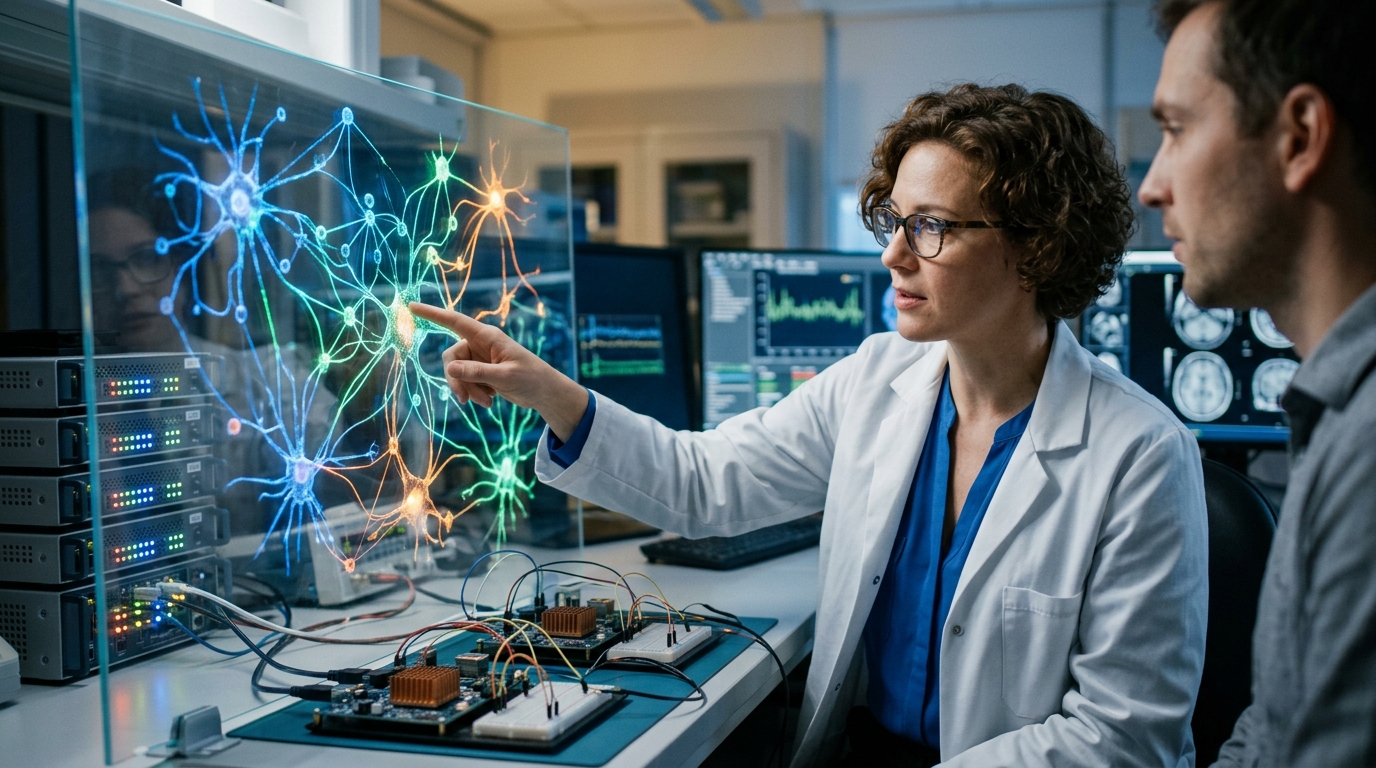
The cerebellum, the "little brain" tucked at the base of the skull, is one of the most densely packed and yet misunderstood regions of the human brain. Despite accounting for only 10% of the brain's total volume, it houses more than 50% to 80% of its neurons. Today, a new research initiative at the University of Southern California (USC) promises to illuminate the hidden functions of this organ using cutting-edge Artificial Intelligence. With a $2.4 million grant, the USC Viterbi School of Engineering is taking the lead of the "AI Core" for the Raynor Cerebellum Project, an international endeavor dedicated to treating cerebellar disorders.
The Silent Power of the Cerebellum and the Data Challenge
For decades, neuroscience focused primarily on the cerebral cortex, viewing the cerebellum as a simple regulator of movement and balance. However, recent studies have shown that the cerebellum plays a crucial role in cognitive functions, emotional regulation, and even language. Disorders in this part of the brain are linked to a wide array of conditions, from cerebellar ataxia—a debilitating state affecting coordination—to autism and schizophrenia.
The challenge researchers face is the sheer volume and complexity of the data. Mapping neural connections in the cerebellum requires analyzing Magnetic Resonance Imaging (MRI) scans with a precision that exceeds human capability. This is where Artificial Intelligence steps in. The AI Core, led by top USC researchers, will develop machine learning algorithms capable of identifying microscopic anomalies in cerebellar structure that were previously invisible to the naked eye.
The Role of USC Viterbi and Machine Learning Strategy
The selection of the USC Viterbi School of Engineering is no coincidence. The school has a long history at the intersection of engineering and biomedicine. The new AI Core will serve as the central data processing hub for the Raynor Cerebellum Project, aggregating data from clinics and laboratories worldwide. Researchers will utilize deep neural networks to create a digital atlas of the cerebellum, allowing doctors to compare a patient's brain against a global health standard.
"This isn't just about analyzing images; it's about understanding the language of neurons," sources close to the project suggest.
One of the biggest challenges is personalizing treatment. Every patient with ataxia presents different symptoms and different rates of degeneration. AI can predict the disease's trajectory, enabling clinicians to intervene earlier and with more targeted therapies, such as neurostimulation or novel pharmacological treatments.
From Laboratory to Clinical Practice: Social and Ethical Implications
The $2.4 million investment marks a shift toward "precision medicine." As AI systems become more capable, questions arise regarding access to these technologies. Will these advanced diagnostic methods be available to everyone, or only to those with access to elite university hospitals? USC has committed to making the tools developed open-source for the scientific community, ensuring that knowledge is shared globally.
Furthermore, understanding the cerebellum through AI could shed light on autism. Many children on the autism spectrum exhibit specific cerebellar characteristics. If AI can identify these biomarkers at an early stage, therapeutic interventions could begin much sooner, drastically improving the quality of life for thousands of families.
Conclusion: A New Era for Neurology
The Raynor Cerebellum Project and USC’s AI Core represent the future of medical research. In a world where data is the new oil, the ability to extract meaning from biological complexity is the key to winning the battle against neurodegenerative diseases. The cerebellum is ceasing to be the "silent" part of the brain and is beginning to tell the story of our health, through the algorithms being developed in Los Angeles.