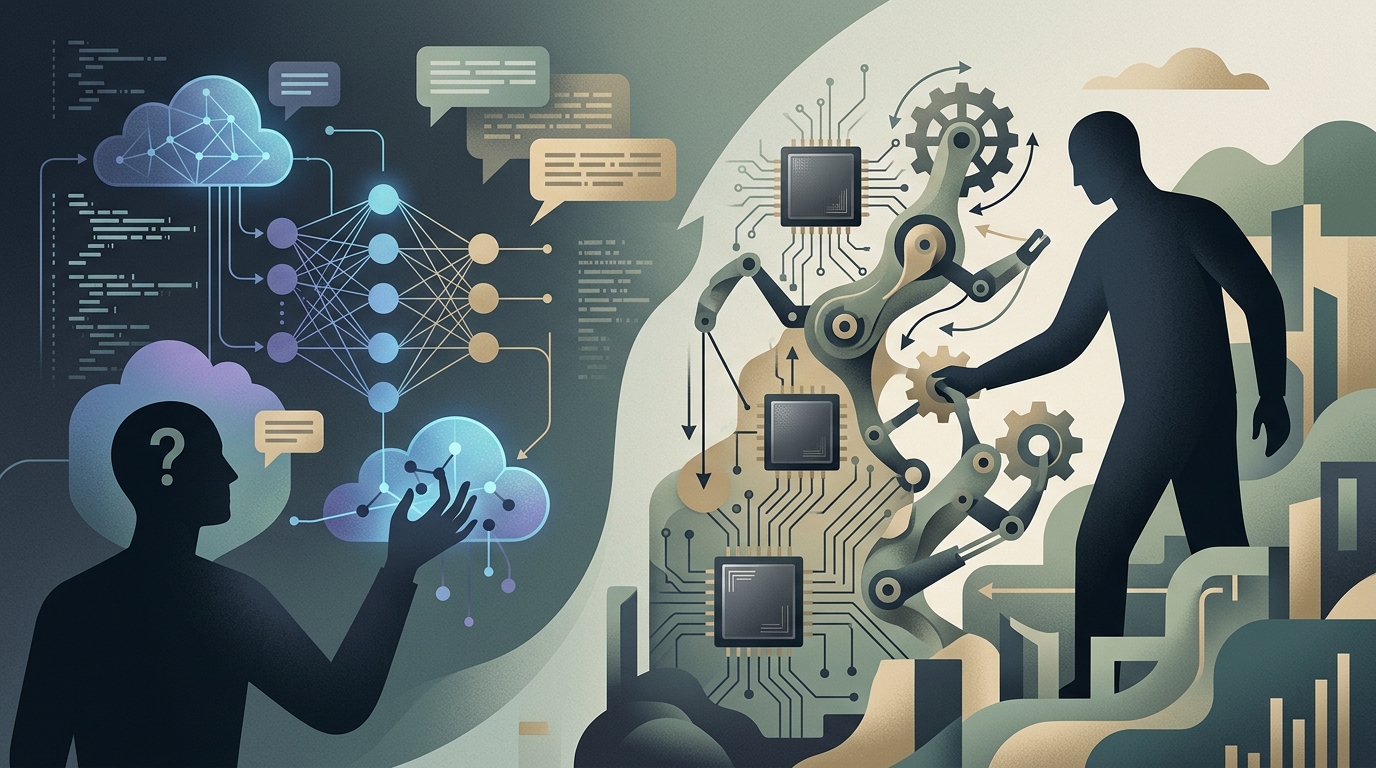
The evolution of Large Language Models (LLMs) has reached a critical crossroads. While their ability to generate natural language is now indisputable, their capacity to plan long-term strategies within a dialogue remains limited. This problem is compounded when the strategy must adapt to the unique characteristics of each user. The recent publication of the UP-NRPA (User Portrait based Nested Rollout Policy Adaptation) framework on ArXiv addresses this gap, proposing a method that combines user profiling with advanced planning algorithms.
The Challenge of Adaptability in Dialogue Systems
Current LLM-based dialogue systems often suffer from a "one-size-fits-all" approach. Whether dealing with a hurried customer seeking quick answers or an indecisive user needing guidance, most models follow a predefined path. This lack of dynamic adaptation leads to lower satisfaction rates and inefficient goal achievement. UP-NRPA introduces the concept of the "User Portrait" as a central pillar of the decision-making process.
A User Portrait is not just a static database of preferences. It is a dynamic representation encompassing communication style, knowledge level, intentions, and emotional nuances. By integrating this portrait, the system can predict how a user might react to different dialogue strategies, allowing the model to select the most effective course of action in real-time.
The Technology Behind UP-NRPA: Nested Rollout and Planning
At the heart of this new method lies the Nested Rollout Policy Adaptation (NRPA) algorithm. This technique stems from the field of Monte Carlo Tree Search, widely used in strategy games like Chess or Go. Within the UP-NRPA framework, the algorithm performs multiple "simulations" of future dialogue (rollouts) before deciding on the next response.
This process allows the system to evaluate the long-term consequences of each choice. For instance, if the system identifies a user as skeptical, UP-NRPA might choose a more explanatory and reassuring approach, even if it requires more steps to complete the task. The "nested" nature of the algorithm means that the decision-making policy is continuously refined during the search itself, making it highly efficient in environments with vast spaces of potential responses.
From Theory to Practice: Applications and Ethics
The applications of UP-NRPA are broad, ranging from customer service and sales to education and mental health. Imagine a digital tutor that senses a student's frustration and automatically adjusts the lesson plan to boost their confidence. Or a sales assistant that understands when to push and when to give the customer space.
However, this deep personalization brings serious privacy and ethical concerns to the fore. Creating a detailed "portrait" of a user requires collecting and analyzing sensitive behavioral data. There is a risk that these systems could be used for manipulation (nudging) to an extent where the user is unaware their behavior is being steered by an algorithm. Transparency regarding what the user portrait contains and the ability for the subject to control their data will be crucial for the adoption of such technologies.
The Future of Goal-Oriented Systems
UP-NRPA represents a shift from "reactive" AI to "proactive" and "strategic" AI. It is no longer enough for an LLM to be eloquent; it must also be insightful. Integrating planning into the dialogue process is the next major step toward creating systems that can function as true human partners, understanding not just what we say, but who we are when we say it.
In conclusion, this research highlights that the future of human-machine communication lies not just in increasing model parameters, but in the intelligent use of information already provided by the user through their behavior. UP-NRPA points the way toward a more human-centric, flexible, and effective digital interaction.