In the enterprise AI landscape of June 2026, a critical realization has dawned upon technology leaders: the twin pillars of the previous era—Fine-tuning and Retrieval-Augmented Generation (RAG)—are hitting a structural ceiling. Companies that have poured millions into AI agents are finding that their deployments often stall in production. While these agents demo beautifully, they frequently require human intervention to "top up" their context or correct outputs that have drifted off-course. The issue isn't a lack of intelligence, but a fundamental flaw in how that intelligence is structured. Enter Hypernetworks: a paradigm shift that builds the specific model your agent needs, exactly when it needs it.
The Failure of Static Weights and Context Overload
For the past few years, the industry has relied on fine-tuning to specialize general-purpose models. However, fine-tuning is plagued by "catastrophic forgetting," a phenomenon where a model loses its foundational reasoning capabilities while trying to absorb niche data. It is also a static, expensive process; one cannot fine-tune a massive model every time a company's internal documentation or market conditions change. It is akin to rewriting a textbook every time a new news article is published.
RAG was supposed to be the solution, acting as an external memory bank. But RAG suffers from "context leakage." As we cram more documents into a model's context window, the signal-to-noise ratio plummets. The model struggles to distinguish between relevant nuances and distractive filler, leading to hallucinations or generic responses. The promised efficiency of AI agents evaporates into a new form of labor: supervision. The agent does the work, but the human does the watching, negating the very ROI the technology promised.
Hypernetworks: The Meta-Architects of AI
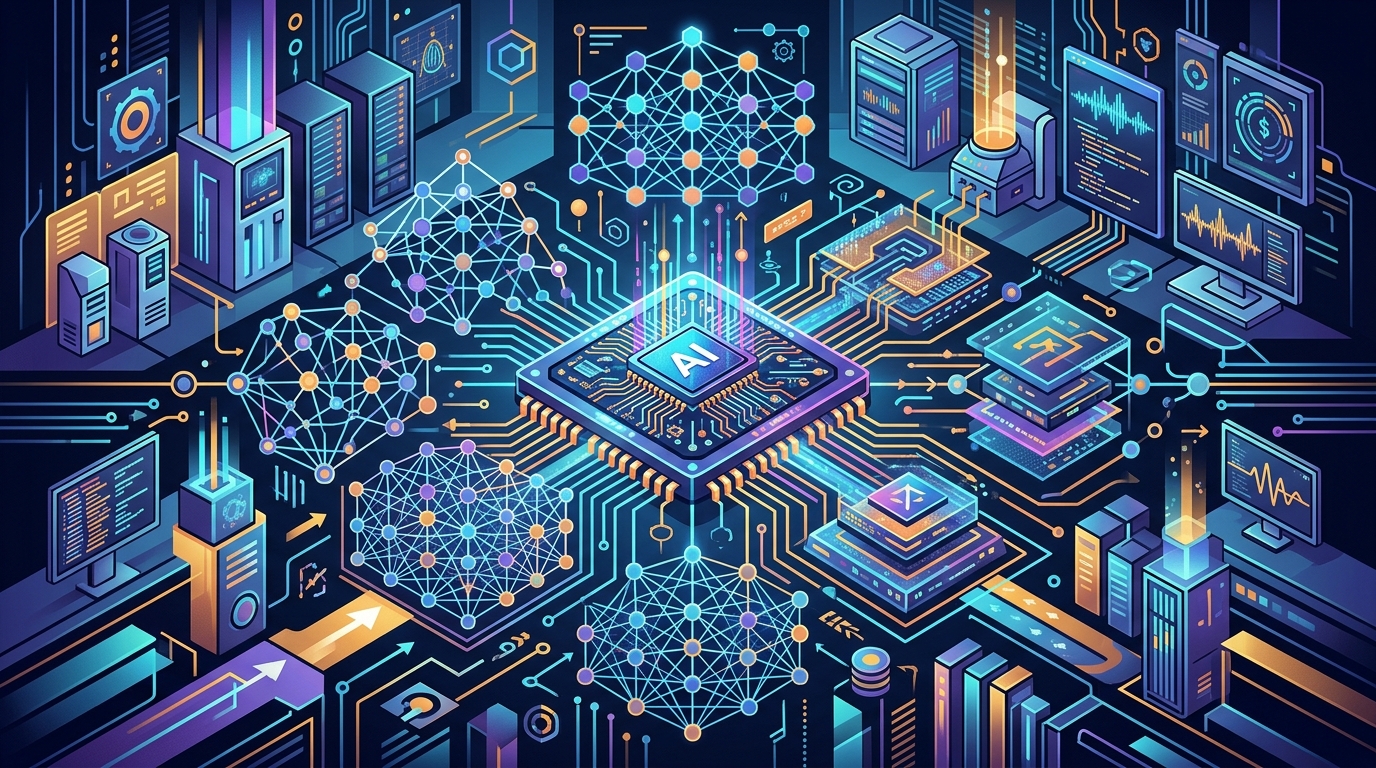
Hypernetworks offer a radical alternative. Instead of using a static model with fixed weights, a hypernetwork is a secondary model designed to generate the weights for a primary "worker" model on the fly. This is not just retrieving data; it is reconfiguring the actual neural pathways of the AI based on the specific task at hand. Think of it as a master craftsman who doesn't just carry a multi-tool, but has the ability to reshape the tool's molecular structure to fit the exact dimensions of the task.
This "dynamic architecture" allows an AI agent to adapt to the specificities of a request without needing to hold massive amounts of data in its active memory. The hypernetwork ingests the context and instantly "compiles" a small, hyper-specialized model for that specific prompt. This eliminates the need for gargantuan context windows and significantly reduces compute costs, as the resulting worker model is often much leaner and more performant than a generalist behemoth like GPT-4o.
Bridging the Gap to True Agentic Autonomy
The move toward hypernetworks is more than a technical curiosity; it is a business necessity for the next generation of agentic workflows. In high-stakes environments—legal, medical, or complex engineering—precision is the only currency that matters. A hypernetwork-driven agent that reconfigures itself based on a specific legal jurisdiction or a patient's unique medical history is fundamentally more reliable than a general model trying to filter through a massive RAG retrieval.
- Reduced Human Overhead: By aligning the model's architecture with the task, the need for "human-in-the-loop" verification is drastically minimized.
- Enhanced Privacy: Sensitive data can be used to inform the weight generation process without being permanently baked into a global model or constantly transmitted in bloated context windows.
- Operational Velocity: While weight generation adds a layer of complexity, the execution of the resulting specialized model is often faster and cheaper than querying a 1-trillion-parameter generalist model.
Conclusion: Intelligence as an On-Demand Service
The transition to hypernetworks marks the end of the "one size fits all" era of Large Language Models. We are moving toward a future where AI is fluid, adaptive, and self-correcting. The challenge for enterprise leaders is no longer just about data collection, but about the orchestration of meta-models that can manage and deploy knowledge dynamically. As highlighted by recent industry analysis, true AI efficiency isn't found in how much a model knows, but in how quickly it can become what the situation demands. For the modern enterprise, this distinction is the difference between a costly experiment and a transformative production tool.