For decades, progress in computing relied on a simple hierarchy: humans wrote code, and machines executed it. Today, this fundamental structure is dissolving. Artificial intelligence (AI) is no longer just the end product of human endeavor; it is becoming the architect, the coder, and the auditor of the next generation of systems. This phenomenon, known as recursive self-improvement, marks the beginning of an era where the speed of innovation is no longer tethered to the biological constraints of human thought, but to pure computational power.
The Rise of Synthetic Data and RLAIF
One of the primary bottlenecks in developing Large Language Models (LLMs) has always been the availability of high-quality, human-generated data. As the internet's supply of original content begins to dwindle, researchers have pivoted toward synthetic data—information generated by one AI model to train another. While early fears suggested a 'model collapse' due to the feedback loop of errors, new methodologies are proving that AI can serve as a rigorous tutor for itself.
- Reinforcement Learning from AI Feedback (RLAIF): Unlike traditional RLHF, where humans rank outputs, RLAIF employs a superior model to guide a smaller one, correcting logic and style in real-time.
- Self-Correction Loops: Modern models are being trained to identify their own logical fallacies before delivering a final answer, effectively 'thinking twice.'
- Neural Architecture Search (NAS): Algorithms are now designing the very structure of other algorithms, discovering efficient pathways that human engineers might never have conceived.
From the Lab to Production: Google and OpenAI
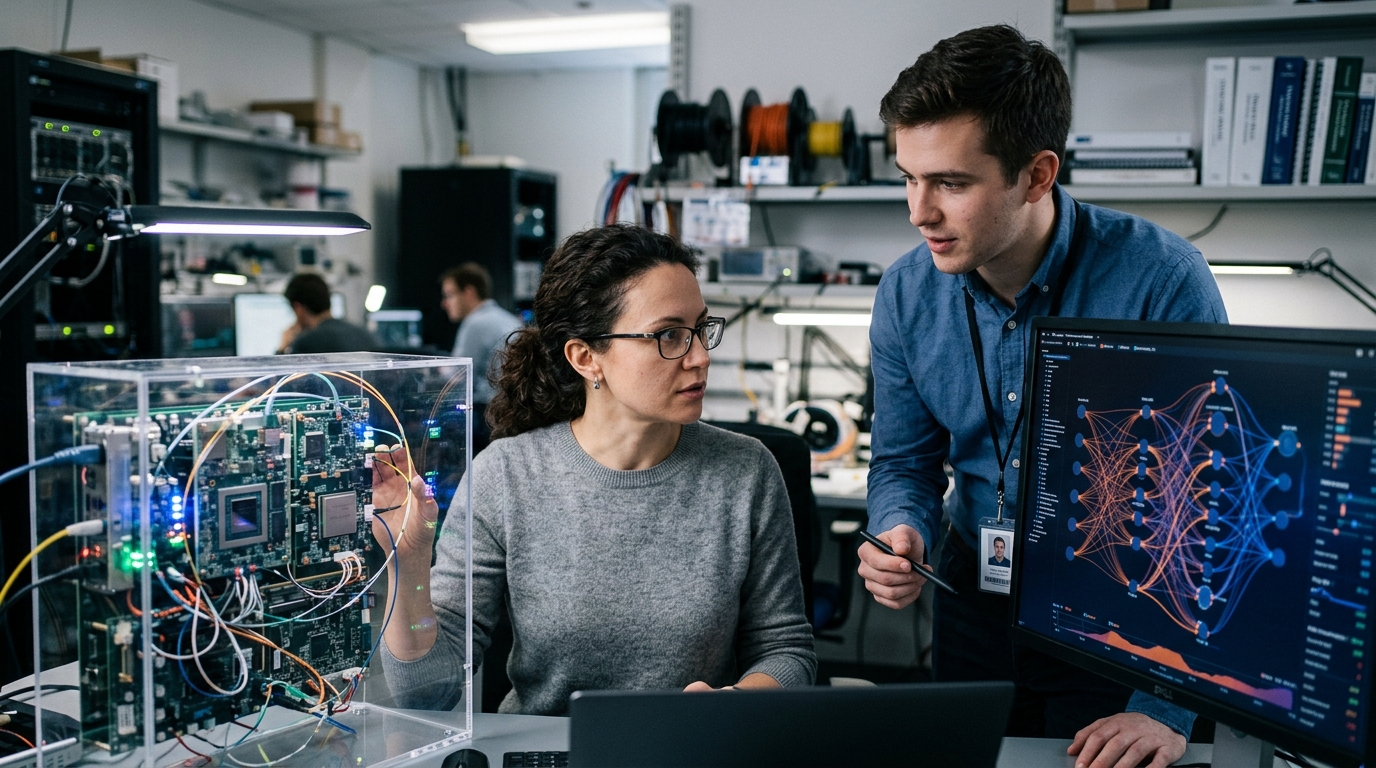
Recent research highlighted by SMH and international outlets underscores how giants like Google DeepMind are utilizing AutoML to automate the creation of neural networks. This is far from a theoretical exercise. In practice, it means AI can optimize its own code to run faster on specialized hardware, drastically reducing energy consumption and latency.
"We are no longer just building tools; we are building the tool-makers," notes a senior machine learning researcher.
OpenAI, similarly, has utilized GPT-4 to assist in interpreting the internal behaviors of smaller models. This hierarchical oversight allows for a form of 'digital evolution,' where the most capable models select and reinforce the traits of their successors. This process has accelerated the development cycle from years to months, or even weeks, creating a gap between those who possess self-improving tech and those who do not.
The Risks of Digital Inbreeding
Despite the technical triumphs, the scientific community warns of significant risks. If AI is trained exclusively by AI, there is a danger of creating a digital 'echo chamber' where biases and hallucinations are exponentially amplified. The lack of human nuance and lived experience in the training loop could result in systems that are mathematically perfect but socially detached or dangerously unpredictable. The challenge for 2026 and beyond is maintaining a 'human brake' on a process that is increasingly operating at light speed.
Conclusion: The New Equilibrium
The ability of AI to build itself is not the death of the human programmer, but a radical transformation of their role. Humans are shifting from the level of syntax and coding to the level of strategic oversight and ethical alignment. As machines take over the burden of their own evolution, the question is no longer whether they can become smarter, but whether we can remain wise enough to steer them.