For decades, digital forensics was built on a fundamental premise: that every digital intervention leaves a trace. Whether it was a metadata alteration, a subtle discontinuity in pixel noise, or an inconsistency in the laws of physics—such as the reflection of light in a human pupil—experts always held the upper hand. However, the summer of 2026 marks a somber turning point. The rapid evolution of generative AI models has led even the most seasoned forensic analysts into a state of existential doubt.
The Collapse of Traditional Detection Methods
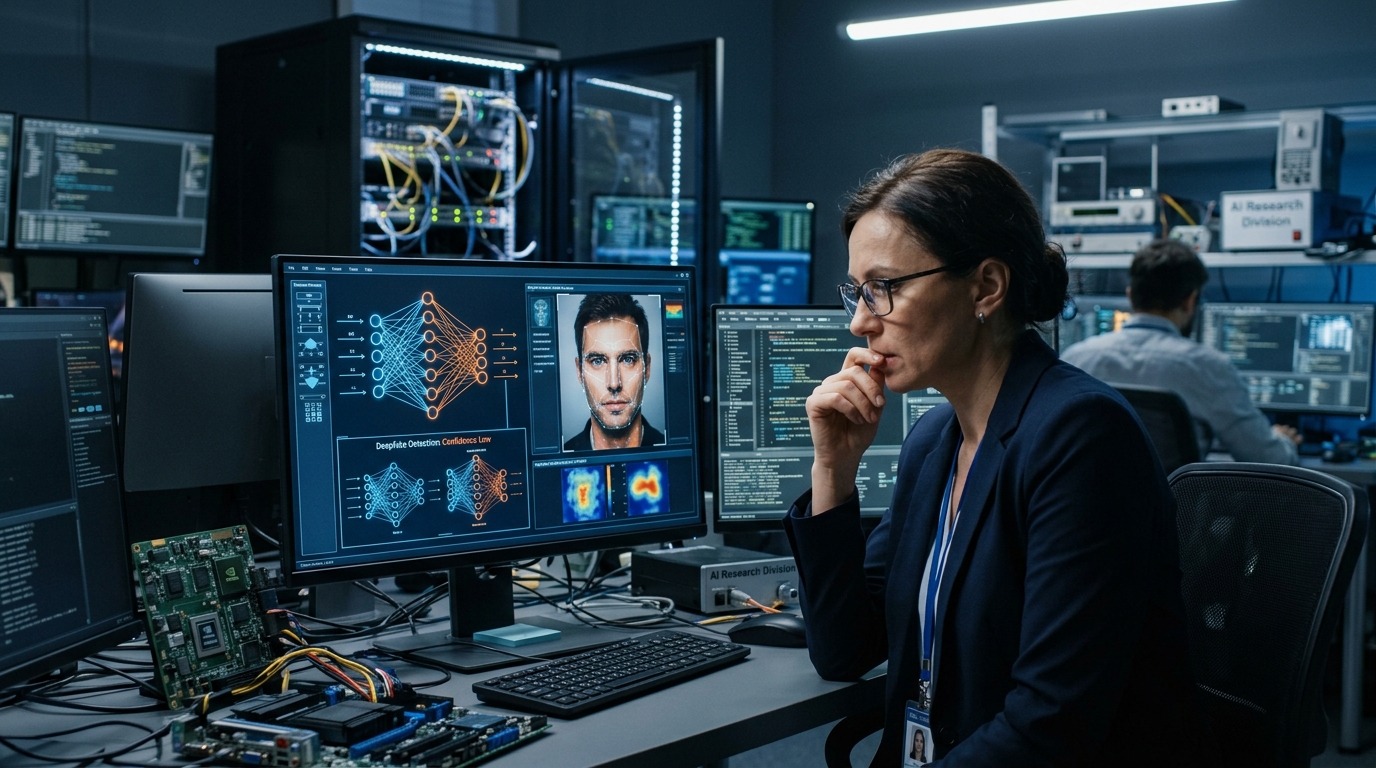
Traditional deepfake detection relied on searching for "artifacts"—small errors made by AI during the synthesis process. In the early days of deepfakes, these were obvious: strange blinking patterns, extra fingers, or unnatural mouth movements. Today, however, diffusion models and Generative Adversarial Networks (GANs) have reached a level of maturity where these errors have been virtually eliminated. Experts now admit that the detection algorithms used to identify synthetic media often produce false positives or false negatives, rendering them unreliable in a court of law.
As noted in recent industry analyses, the process has turned into a "cat and mouse" game where the mouse (generative AI) is now running at a speed the cat (the forensics community) cannot match. The ability of AI to learn from the very tools designed to detect it means that every new detection method automatically becomes the next training dataset for improving deepfakes. This recursive improvement loop has effectively nullified many of the forensic techniques that were standard just 24 months ago.
The "Liar’s Dividend" and Political Instability
Perhaps the most dangerous consequence of this technical failure is not the existence of fake videos themselves, but the casting of doubt upon real ones. What legal scholars Danielle Citron and Robert Chesney termed the "Liar’s Dividend" is now a daily reality. In a world where nothing can be proven indisputably real, public figures can simply claim that an incriminating, yet perfectly authentic video, is a deepfake.
- Erosion of Trust: When citizens can no longer believe their own eyes, the foundation of democratic discourse crumbles.
- Judicial Uncertainty: Video evidence, once considered the "gold standard" of proof, is now treated with suspicion by juries and judges alike.
- Psychological Warfare: The use of deepfakes in revenge porn or corporate espionage causes irreparable harm, as victims struggle to prove a negative.
"This is no longer just a technical challenge; it is a crisis of truth itself. If the expert can no longer guarantee authenticity, then society loses its grip on shared reality," notes a leading digital forensics researcher.
From Detection to Provenance: The New Paradigm
As retrospective detection fails, the industry is pivoting toward provenance. Initiatives like the C2PA (Coalition for Content Provenance and Authenticity) are attempting to create a digital "birth certificate" for every image and video, recorded directly by the camera hardware at the moment of capture. This cryptographic approach aims to verify what is real from the source, rather than trying to guess what is fake after the fact.
However, this solution requires universal adoption by hardware manufacturers, software developers, and social media platforms. It also does little to address the billions of legacy devices and the vast ocean of existing unverified content. Until such systems are ubiquitous, digital forensics experts find themselves in an uncomfortable position. Their admission of doubt is not a lack of skill, but a candid acknowledgment of the sheer power of modern AI. The era of "seeing is believing" is officially over, leaving a void that only strict legislation and heightened critical thinking can hope to fill.