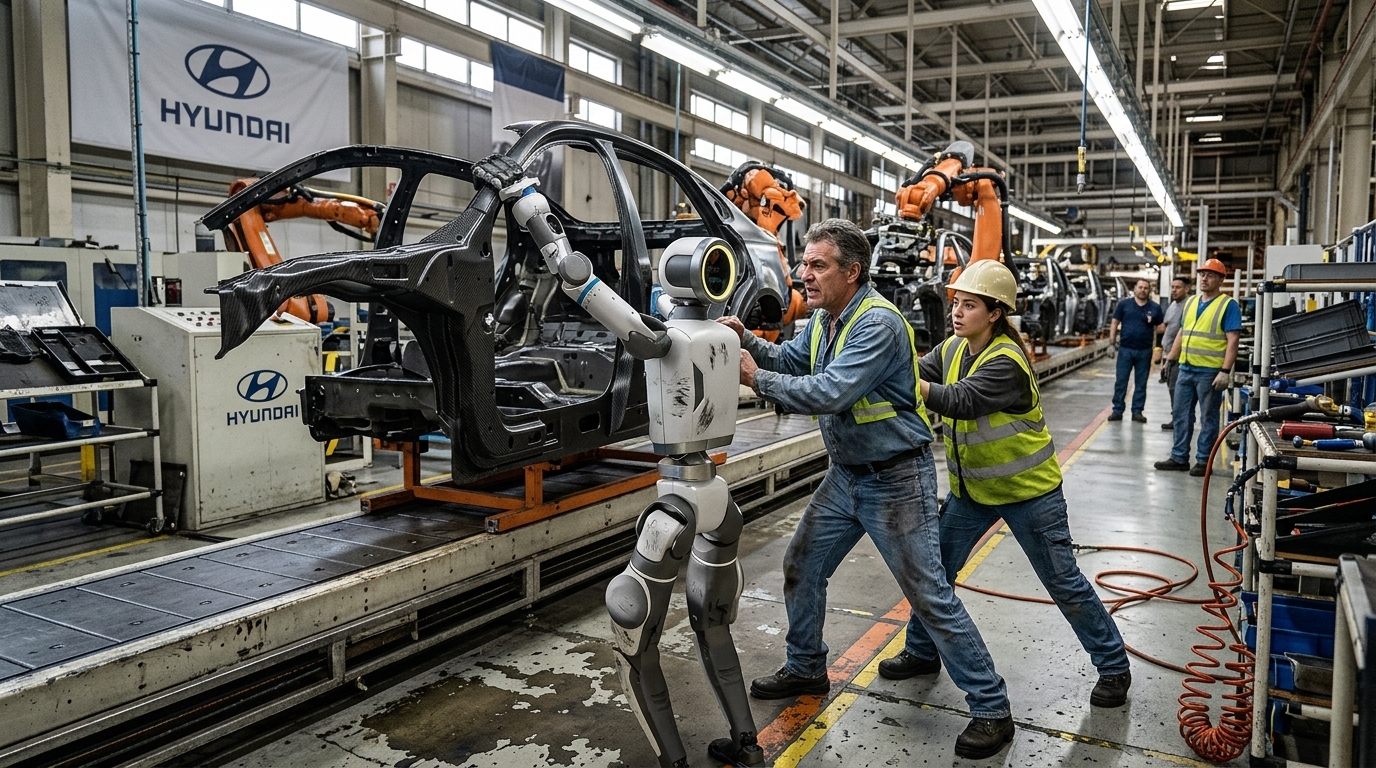
In the realm of robotics, creating an artificial brain through AI has proven, paradoxically, easier than replicating the movement of a human hand. While Large Language Models (LLMs) can now compose poetry or write code in seconds, a robot's ability to tie shoelaces or pick up a fragile egg without breaking it remains the 'final frontier.' Today, China has made solving this problem a national priority, aiming to dominate the global humanoid robot market.
The Complexity of Biological Engineering
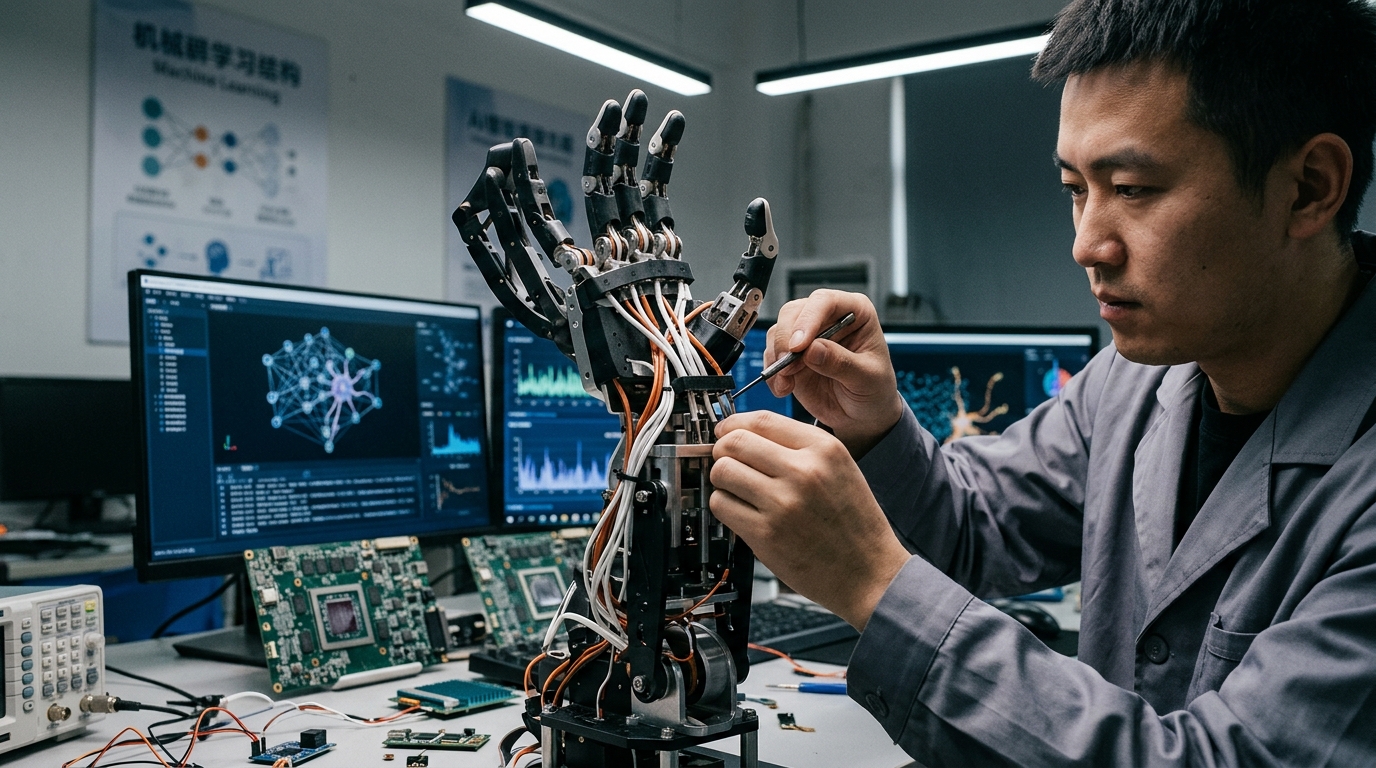
The human hand is a marvel of evolution. It consists of 27 bones, dozens of joints, and a dense network of nerves providing instantaneous sensory feedback. For decades, industrial robots relied on simple 'grippers' that could only perform repetitive movements in controlled environments. However, for a robot to function in a home or an unstructured warehouse, it needs dexterity.
Chinese researchers are now focusing on developing 'smart limbs' that combine advanced actuators with high-resolution tactile sensors. The challenge is not just mechanical but also computational. The robot must 'feel' pressure, temperature, and texture in real-time, processing data at speeds that allow for instantaneous grip adjustment.
Beijing's National Strategy
China's Ministry of Industry and Information Technology (MIIT) recently issued a landmark directive, labeling humanoid robots as a 'disruptive technology' akin to smartphones and electric vehicles. The goal is clear: mass production of humanoid robots by 2025 and global industry leadership by 2027. This state push has mobilized billions of dollars in government subsidies and private capital.
Companies like Unitree, Fourier Intelligence, and UBTECH are at the forefront, showcasing prototypes that can walk on uneven terrain and, more importantly, use their hands for complex tasks. China's strategy relies on its supply chain dominance. Already controlling the production of rare earths and battery components, Beijing aims to manufacture every screw and sensor of future robots within its borders, drastically reducing costs.
AI and the 'Electronic Skin'
One of the most significant innovations coming out of Chinese laboratories is 'electronic skin' (e-skin). These are flexible polymer materials embedded with nanosensors that can detect even the touch of a feather. By combining this material with Reinforcement Learning models, robots learn to handle objects through millions of digital simulations before ever being tested in the physical world.
"Hand dexterity is the link between digital intelligence and physical intervention. Without it, AI remains imprisoned in screens," says a leading engineer from Tsinghua University.
Geopolitical and Social Implications
The race for the robotic hand is not just technological, but deeply geopolitical. As China's population ages and its workforce shrinks, the leadership of the Chinese Communist Party sees robots as the only solution to maintaining industrial output. At the same time, the confrontation with the US and Elon Musk's Tesla (with the Optimus program) gives the research a 'Cold War' character of competition for technological supremacy.
If China succeeds in solving the hand problem, the global economy will be transformed. Millions of jobs in manufacturing, logistics, and even home care could be automated. The question remains whether humanity is ready for an era where machines will not only think like us but will be able to touch and create with the same delicacy as we do.