As we navigate the first half of 2026, the medical community finds itself in the midst of a transformation unseen since the discovery of antibiotics. Artificial Intelligence (AI), once viewed as a mere tool for data organization, has evolved into the oncologist’s most formidable ally. As highlighted by a recent PYMNTS analysis, cancer "never saw the algorithm coming," as the speed at which machine learning identifies patterns invisible to the human eye has become exponential.
The New Eyes of Radiology
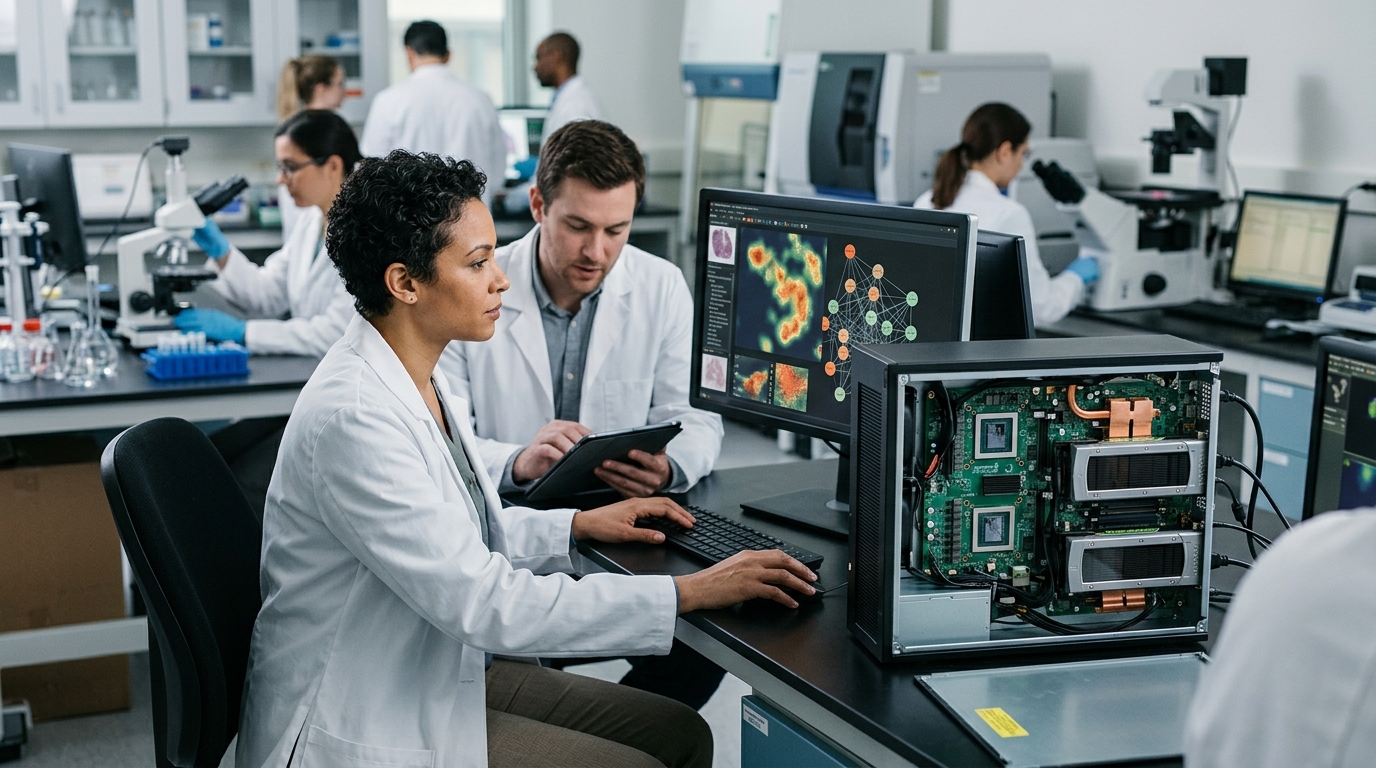
For decades, cancer diagnosis relied heavily on the experience and keen eye of the radiologist. Today, deep learning algorithms trained on millions of medical images—from mammograms to CT scans—can detect malignancies at stages so early they are practically invisible to humans. These systems do not suffer from fatigue or distraction, providing a consistent second opinion that can reduce false negatives by up to 30%.
It’s not just about spotting a tumor; it’s about analyzing its very essence. "Radiomics," a field combining medical imaging with high-throughput data analysis, allows clinicians to predict a tumor's aggressiveness without an initial invasive biopsy. This reduces patient anxiety and healthcare costs while significantly accelerating the commencement of life-saving treatment.
Personalized Medicine: The End of 'One-Size-Fits-All'
Perhaps the most profound promise of AI lies in precision medicine. Until recently, chemotherapy protocols were largely standardized based on the type and stage of cancer. However, every cancer is unique, as is every patient’s genetic makeup. AI algorithms can now sequence a tumor’s genome and cross-reference it with vast databases of clinical trials to recommend the specific drug combination most likely to succeed for that individual.
- Real-time biomarker analysis to monitor treatment efficacy.
- Predicting adverse reactions before the first dose is administered.
- Designing personalized mRNA vaccines that train the immune system to target specific cancer mutations.
This approach shifts the paradigm from "treating the disease" to "caring for the patient." In the near future, an oncologist won't just select a drug; they will collaborate with a digital advisor providing a prioritized list of therapeutic options based on global data updated in real-time.
Ethical Dilemmas and the 'Black Box'
Despite the optimism, the deployment of AI in oncology raises significant ethical concerns. Primary among these is the "black box" problem: algorithms often reach a diagnosis without being able to explain the underlying logic. Can a physician trust a life-or-death decision to a machine that cannot justify its reasoning? The European Union, through the AI Act, is moving to enforce transparency and explainability in high-risk systems like healthcare.
"Technology is not replacing the doctor; it is empowering them. The doctor who uses AI will replace the doctor who does not," industry experts suggest.
Furthermore, there is the risk of algorithmic bias. If AI models are trained predominantly on data from Western populations, how effective will they be for patients from diverse ethnic backgrounds? Ensuring equitable access to these technological breakthroughs is the next great challenge for global health policy.
The Future: From Treatment to Interception
As we look toward 2030, the focus is shifting from treating advanced cancer to interception at the cellular level. Wearable devices and smart sensors will soon be capable of analyzing sweat or blood for circulating tumor cells (liquid biopsies). AI will act as an invisible sentinel, alerting users long before physical symptoms manifest. Cancer may not have seen the algorithm coming, but humanity is finally seeing a path toward a world where the word "cancer" no longer carries a sentence of terminality.