Gastroenterology is standing at the precipice of a radical transformation as the integration of Artificial Intelligence (AI) into daily clinical routines begins to yield results that once seemed like science fiction. A recent study published in the journal Cureus sheds light on a specific yet critical application: the use of AI systems in Transnasal Esophagogastroduodenoscopy (T-EGD). This method, often preferred by patients due to reduced discomfort compared to traditional oral endoscopy, is now gaining the "digital vision" it needed to overcome its inherent technical limitations.
The Challenge of the Transnasal Approach
Transnasal endoscopy has been an attractive alternative for years. As the endoscope enters through the nose, the gag reflex is largely bypassed, allowing the patient to remain awake and often converse with the physician during the procedure. However, the method has always faced a significant drawback: transnasal endoscopes are extremely thin, which limits image quality and the field of view compared to thicker, conventional instruments. This is precisely where Artificial Intelligence steps in.
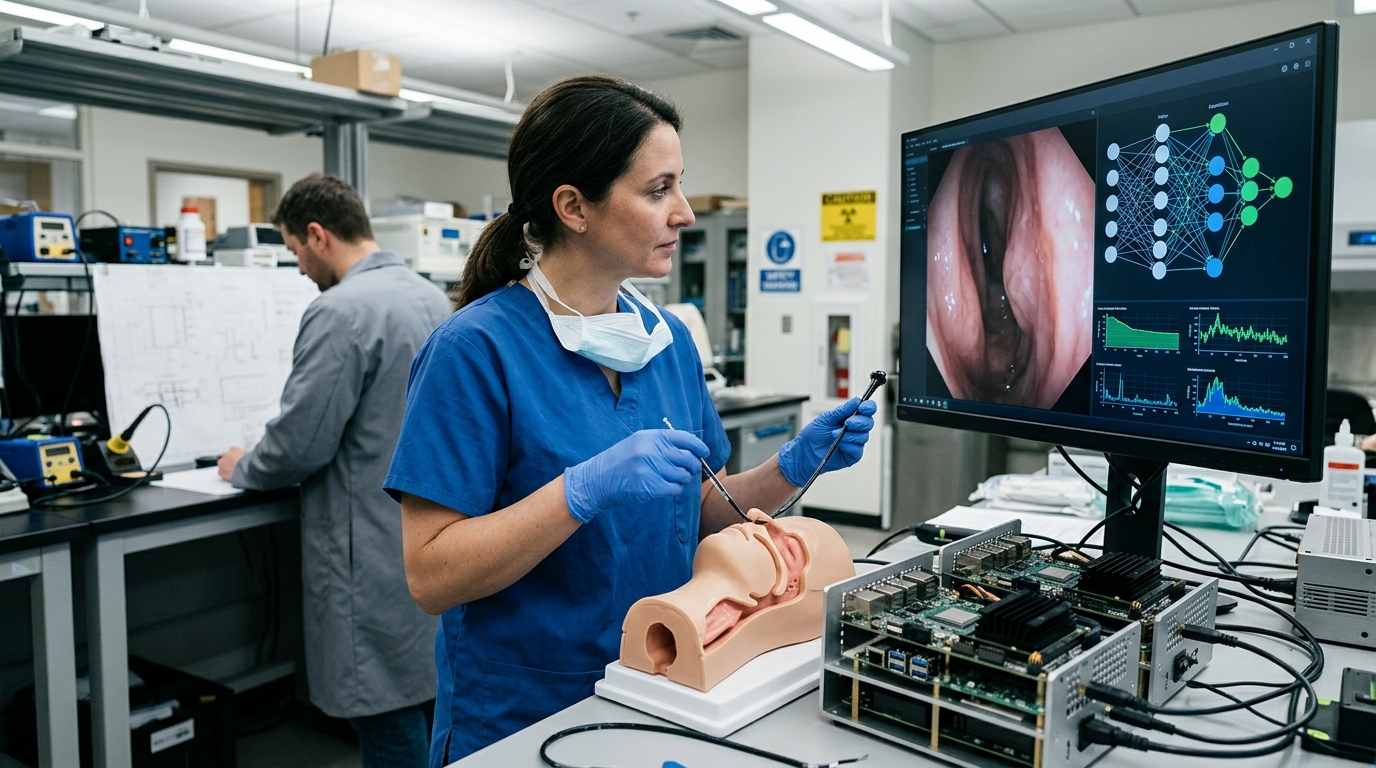
According to the research, Computer-Aided Detection (CADe) and Computer-Aided Diagnosis (CADx) systems act as a tireless second observer. These systems have been trained on millions of endoscopic images, learning to recognize the slightest mucosal alterations that could indicate early gastric cancer or precancerous conditions. In the case of T-EGD, AI compensates for the slightly lower resolution of the thin scopes by highlighting real-time areas of interest that the human eye might overlook due to fatigue or time constraints.
Detecting Early Lesions and Blind Spots
One of the major issues in upper gastrointestinal endoscopy is the presence of "blind spots" – areas of the stomach that are difficult to fully visualize due to anatomy. The Cureus study emphasizes that AI does not only assist in diagnosis but also in ensuring the quality of the examination itself. Some AI systems are now capable of mapping the stomach in real-time, alerting the gastroenterologist if a specific angle has not been sufficiently examined.
Furthermore, the ability of AI to differentiate between benign and malignant lesions (CADx) reduces the need for unnecessary biopsies. This is not only economically beneficial for the healthcare system but also reduces patient anxiety and potential complications from tissue sampling. The accuracy of these systems in identifying early gastric cancer (EGC) has, in some trials, reached levels exceeding 90%, surpassing even experienced endoscopists under high-workload conditions.
The Future of Clinical Practice
The integration of AI into T-EGD is not merely a technological upgrade but a philosophical shift toward "smart" medicine. In the future, the use of these tools is expected to become the standard of care. Researchers point out that AI can also serve as an educational tool for junior doctors, providing immediate feedback during the learning process.
However, challenges remain. The cost of the technology and the need for continuous algorithmic updates are still barriers to widespread adoption in smaller clinics. Additionally, there is the question of legal liability: who is responsible if the AI fails to detect a lesion? Despite these questions, the study concludes that the synergy between human and machine in T-EGD offers a level of safety and diagnostic capability that was unthinkable a decade ago. Transnasal endoscopy, enhanced by AI, is evolving from a "compromise" for comfort into a powerful, cutting-edge diagnostic tool.