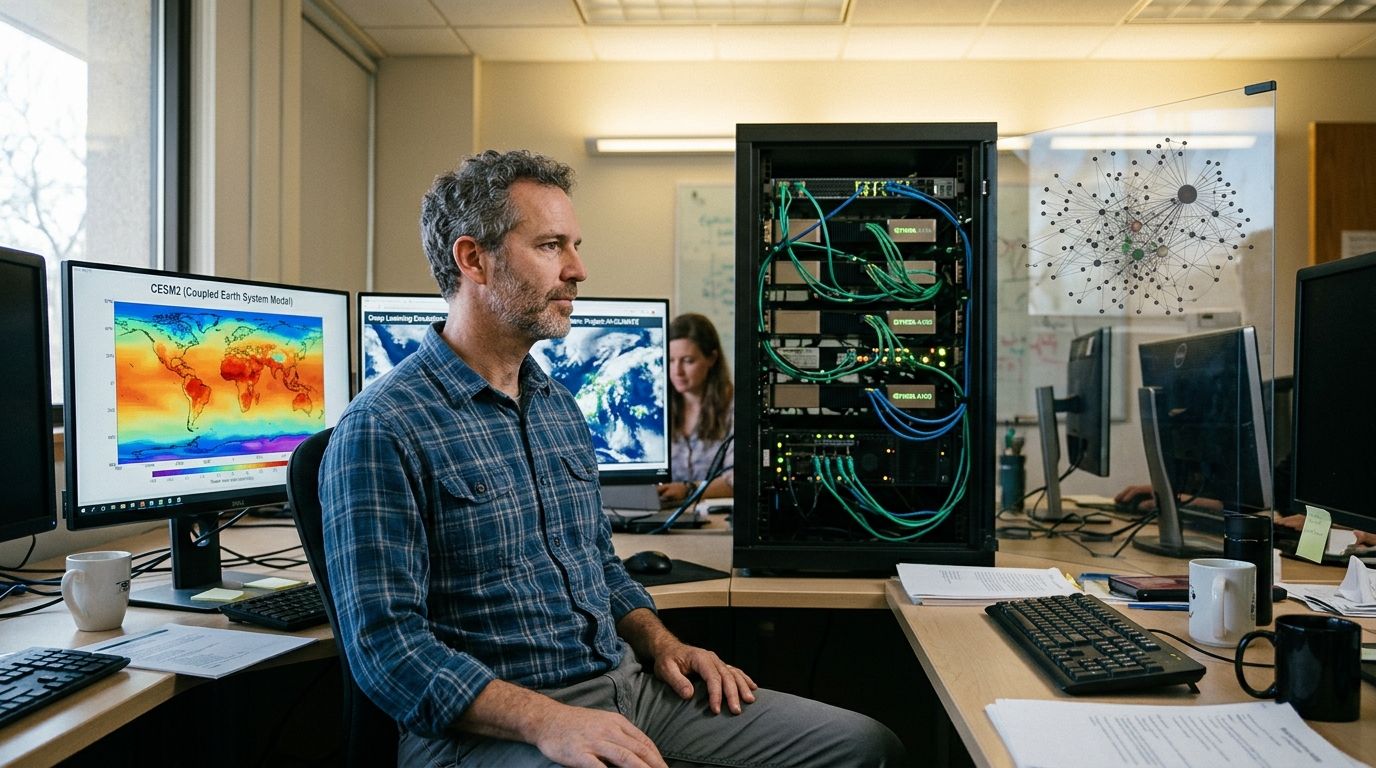
In the era of the climate crisis, the need for accurate and timely projections has never been more urgent. As supercomputers grapple with billions of variables to simulate our planet's future, Artificial Intelligence (AI) is bursting onto the scene, promising results in fractions of a second. However, a new wave of research and analysis, highlighted by international outlets, confirms a sobering reality: AI, despite its staggering computational power, is not yet ready to replace traditional climate models built on the laws of physics.
A Clash of Paradigms: Physics vs. Data
Traditional climate models, known as General Circulation Models (GCMs), are the pinnacle of decades of scientific endeavor. They are rooted in fundamental physical principles, such as the Navier-Stokes equations for fluid dynamics, thermodynamics, and the conservation of mass and energy. These models divide the atmosphere and oceans into a three-dimensional grid, solving complex differential equations for every single cell. The catch? They require immense computational resources and time—often taking weeks on supercomputers to complete a multi-decade simulation.
On the other hand, AI models, such as Google DeepMind’s GraphCast or Huawei’s Pangu-Weather, operate on a different logic. They don't "know" physics. Instead, they are trained on decades of historical weather data (like the ECMWF’s ERA5 dataset) and learn to recognize intricate patterns. Once trained, they can generate a ten-day forecast in seconds on a standard laptop. This speed is seductive, but it carries significant risks. AI is essentially a "statistical parrot" of the past; if the future brings conditions never before recorded—something climate change virtually guarantees—AI may fail spectacularly.
The "Black Box" Problem and Physical Consistency
One of the primary hurdles for AI adoption in climatology is the lack of interpretability. In physical models, if we see a spike in temperature, we can trace the cause back to radiation or heat transfer. In AI, the decision is made within a "black box" of billions of parameters. Furthermore, AI models frequently violate fundamental laws. They might predict a storm but "create" water mass out of thin air or violate the principle of energy conservation. For scientists advising policy for the next 50 years, such inconsistencies are unacceptable.
"AI is brilliant at telling us what will happen tomorrow based on yesterday, but climate change is about a tomorrow that looks like nothing we've ever seen," researchers in the field note.
Moreover, there is the issue of spatial resolution. While AI excels at a global scale, it struggles with localized phenomena, such as cloud formation or microclimatic shifts in mountainous regions, which are critical for agriculture and water management. Traditional models, though slower, incorporate parameterizations based on physical observations for these specific phenomena.
Toward a Hybrid Future
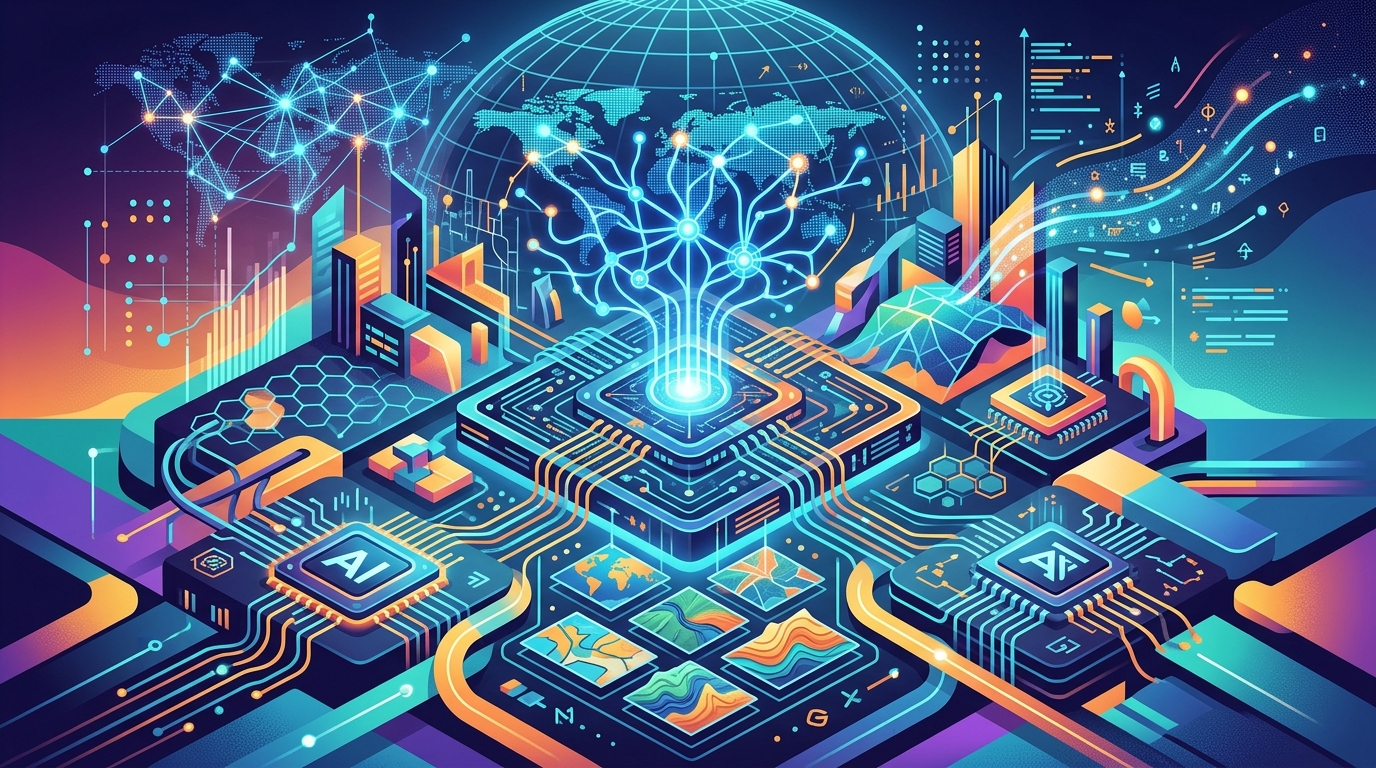
The solution does not appear to be total replacement, but rather convergence. The new generation of climate models is "hybrid." Scientists are using AI to accelerate specific components of physical models—such as radiation calculations or cloud simulation—while maintaining the physical "skeleton" for long-term projections. This allows for the preservation of physical accuracy with a significant reduction in computational cost.
The analysis from Vietnam.vn and other experts underscores that trust in technology must be tempered with skepticism. Climate modeling is not merely a data-processing exercise; it is an attempt to understand the very mechanics of our planet. Until AI can "understand" thermodynamics as well as it understands statistics, supercomputers running physical equations will remain our first line of defense against the uncertainty of the future.
- AI excels in speed but lacks physical reliability for long-term trends.
- Traditional GCMs remains the gold standard for policy-making.
- Climate change creates "out-of-distribution" scenarios that AI hasn't learned.
- The future lies in Physics-Informed Machine Learning (PIML).