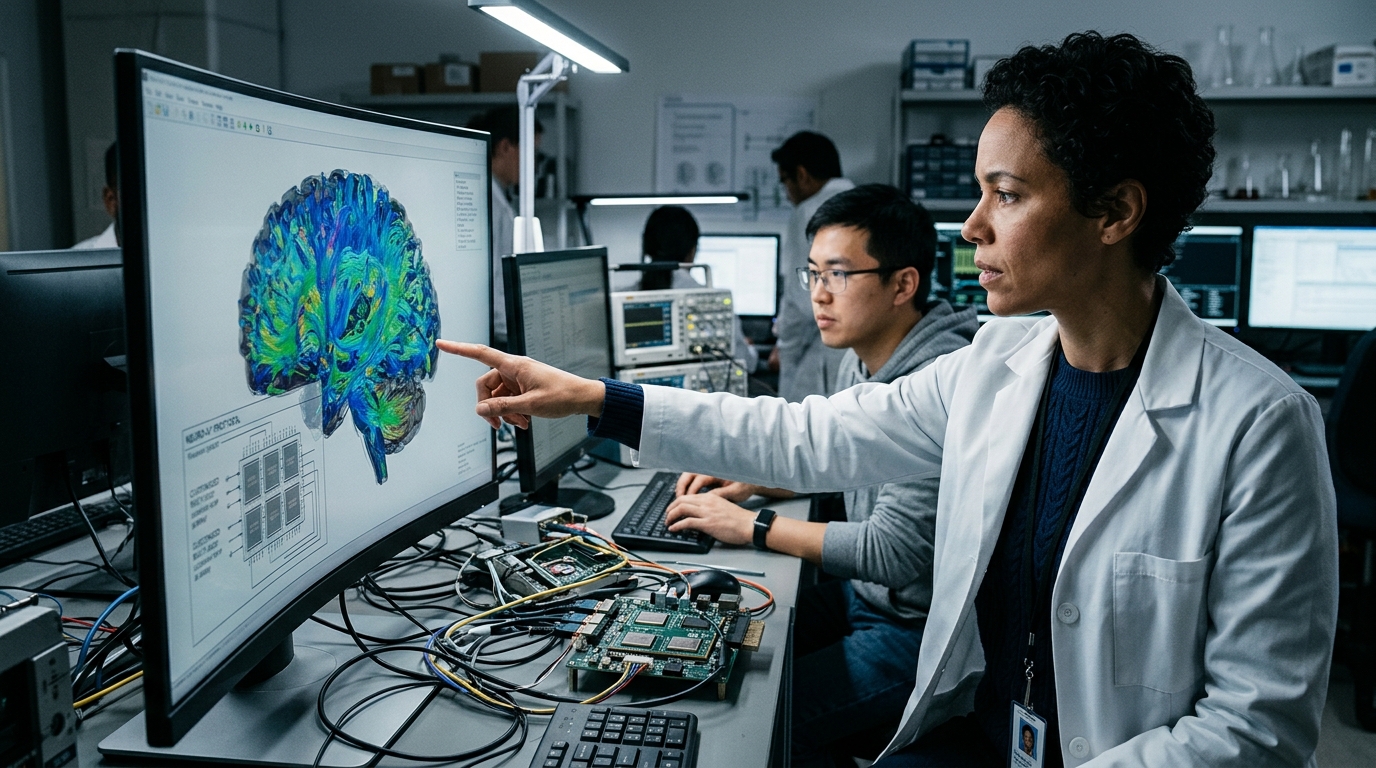
The promise of Artificial Intelligence (AI) in modern science is often messianic: give it enough data, and it will solve every problem, from climate change to the mysteries of consciousness. However, a recent analysis from 'The Transmitter' highlights a harsh reality that tech enthusiasts often overlook. AI is not a magic decoder that can function in a vacuum. In the field of neuroscience, the lack of unified, compatible data represents the single greatest hurdle to understanding the most complex organ in the known universe.
The Tower of Babel in Neuroscience
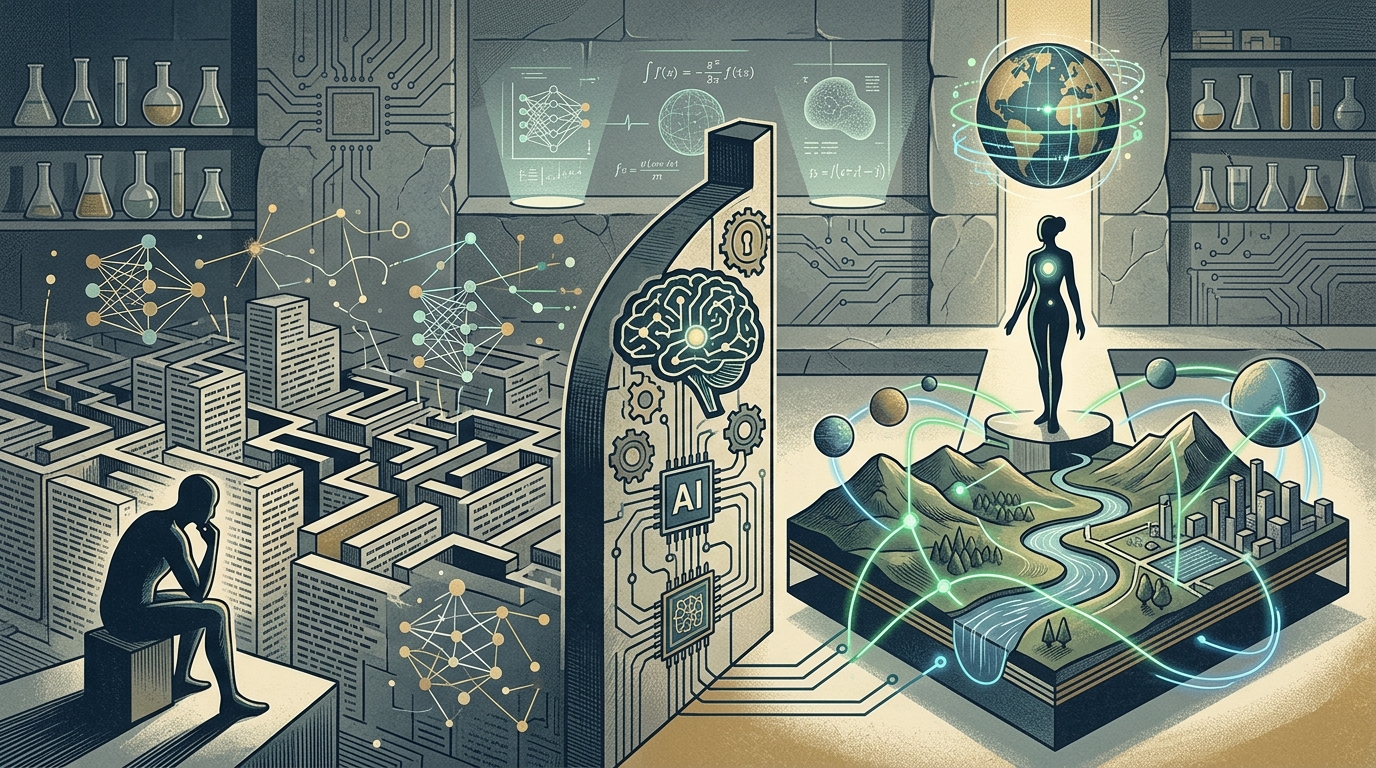
The core issue is not a lack of information, but its fragmentation. Every neuroscience lab in the world often operates as an autonomous island. They use different protocols for recording neural activity, different animal species (from fruit flies to primates), and disparate data storage formats. When a researcher attempts to train an AI model using data from ten different sources, they find that these datasets simply 'do not speak the same language.'
To understand the scale of the challenge, let's compare neuroscience to Large Language Models (LLMs) like GPT-4. The success of LLMs was predicated on the fact that the internet provided a massive volume of text in a relatively standardized format. Words are words, whether they were written in a blog post or a digitized encyclopedia. In the brain, however, an electroencephalogram (EEG) recording is qualitatively different from a functional magnetic resonance imaging (fMRI) scan or a single-neuron spike recording. AI needs a 'bridge' to connect these disparate levels of observation, and that bridge does not yet exist.
The Illusion of Raw Computational Power
There is a widespread perception in Silicon Valley that increased computational power can override data quality issues. The history of neuroscience suggests the opposite. The brain is not a static network; it is a dynamic, plastic system that changes in milliseconds. Without data that captures this dynamics consistently, AI will merely produce 'noise' that looks like science but lacks biological grounding.
The Transmitter's report emphasizes that the need for 'Big Data' in neuroscience must be replaced by a need for 'Broad Data'—data that is interoperable and can be combined to form a holistic picture. This requires a cultural shift in the scientific community: moving from competition for the first publication toward Open Science and the adoption of common standards, such as Neurodata Without Borders (NWB).
Ethical and Political Implications
Beyond the technical aspects, the unification of brain data raises serious questions. Who will own this data? If a global database of human neural activity is created, how will 'cognitive privacy' be protected? Big Tech companies are already investing billions in brain-computer interfaces (BCIs). If the scientific community fails to set its own standards, it risks leaving the definition of 'human cognition' in the hands of private interests seeking profit rather than pure knowledge.
Conclusion
Artificial Intelligence is the telescope that will allow us to look deep into the brain, but for now, the lenses of this telescope are blurred and incompatible. The solution to the brain's enigma will not come from a more powerful algorithm, but from a more organized humanity. Only when our data 'fits together' will AI be able to unlock the understanding of ourselves.