In an era where the speed of scientific discovery is the primary currency of progress, Agilent Technologies has announced a strategic partnership with OpenAI and Boston Consulting Group (BCG). This alliance aims to integrate advanced artificial intelligence (AI) models into everyday laboratory workflows, a move expected to redefine how research is conducted in life sciences and diagnostics.
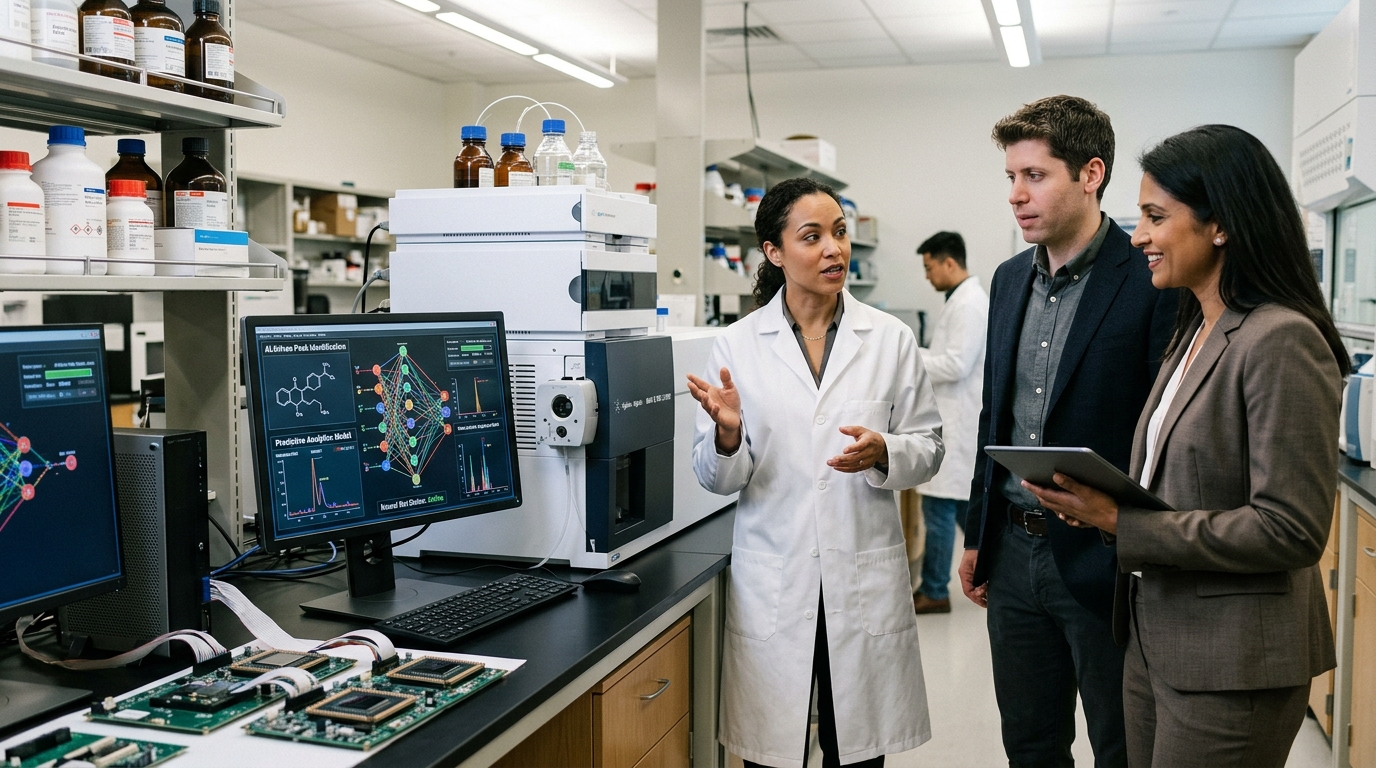
Agilent, a global leader in laboratory instrumentation and software, is not merely looking to add a "chatbot" to its services. Instead, the collaboration with OpenAI, creator of GPT-4 and its successors, and BCG, a leading strategy consulting firm, aims to create an ecosystem where AI acts as a "co-pilot" for scientists. This includes analyzing vast volumes of data from mass spectrometers and chromatographs, automating documentation, and optimizing equipment maintenance.
The Architecture of the Collaboration
This partnership is built on three pillars. OpenAI provides the technological infrastructure of Large Language Models (LLMs), which possess the ability to understand and generate complex scientific text and code. Agilent contributes its deep expertise in laboratory devices and the data they generate, while BCG takes on the role of digital transformation architect, ensuring that AI adoption delivers business and operational value.
According to Agilent executives, the challenge is not just processing data but interpreting it within a scientifically valid context. "Laboratories today are drowning in data but starving for knowledge," a company spokesperson noted. Using AI can reduce the time researchers spend on repetitive tasks by up to 40%, allowing them to focus on experimental design and innovation.
From Wet Lab to Digital Twin
One of the most promising applications of this partnership is the creation of "digital twins" for laboratory processes. Through AI, scientists will be able to simulate experiments before even touching a pipette. This reduces reagent costs and the risk of failure. Furthermore, integrating AI into Agilent's instruments enables predictive maintenance. The system will be able to predict when a component is about to fail, minimizing downtime that costs pharmaceutical companies and diagnostic centers millions.
"Artificial intelligence will not replace the scientist, but the scientist who uses AI will replace the one who does not."
However, this integration is not without challenges. Data security and intellectual property protection are paramount, especially in fields like drug development. OpenAI and Agilent are working on private instances where customer data is not used to train OpenAI’s public models, ensuring full compliance with HIPAA and GDPR regulations.
Ethics and the Challenge of Precision
A critical issue that arises is the phenomenon of AI "hallucinations." In clinical diagnostics, an erroneous result can have fatal consequences. BCG highlights that the implementation strategy includes strict verification protocols (Human-in-the-loop), where the AI suggests and the human scientist validates. Algorithm transparency is the next big hurdle, as the scientific community demands to know the "why" behind every AI prediction.
In conclusion, Agilent's move to ally with OpenAI and BCG is a clear statement of intent. The "Laboratory of the Future" is no longer a theoretical concept but a reality being shaped through the convergence of information technology and biology. The success of this venture will be judged by the ability of the three partners to bridge the gap between rapidly evolving AI and the unyielding precision required by science.