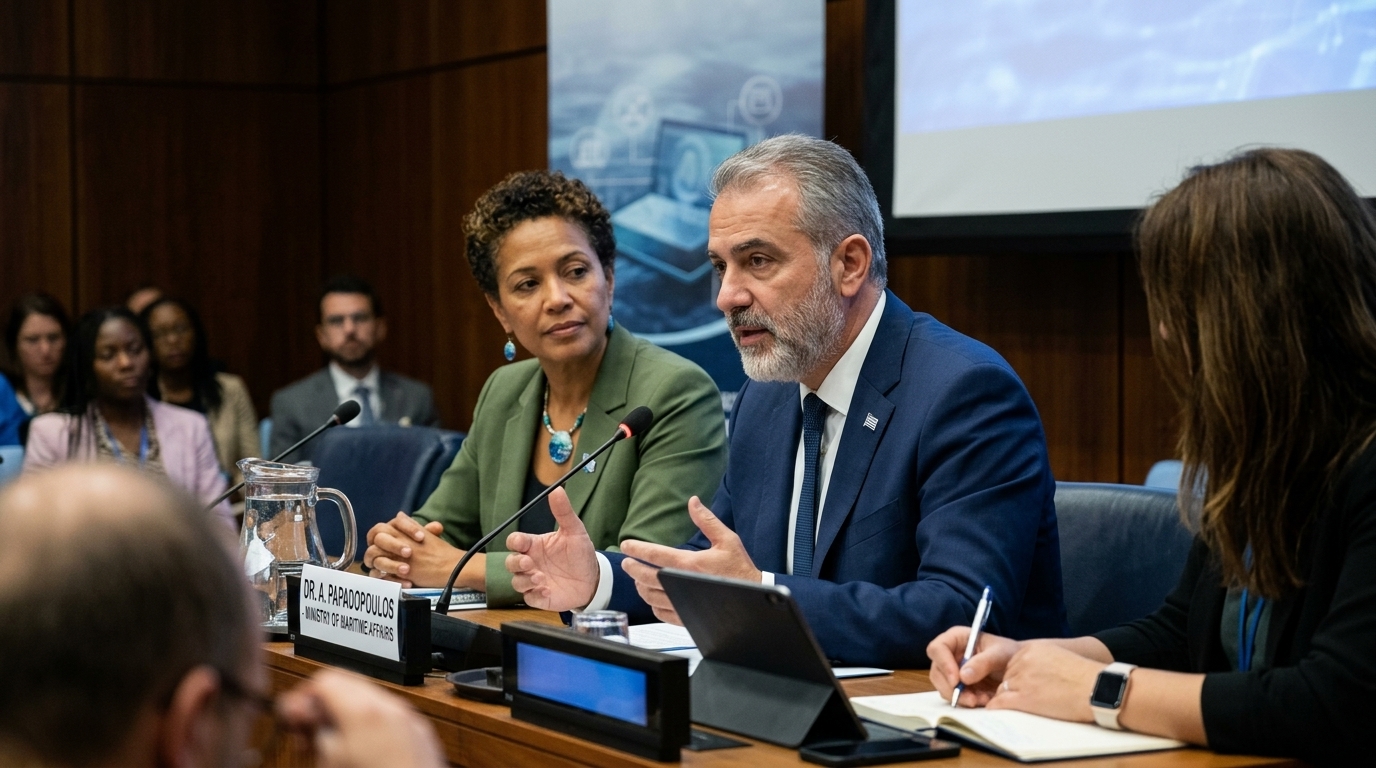
June 8, World Oceans Day, is no longer just a date on the calendar for environmental organizations, but a pivotal moment of reflection for the global economy. This year, in 2026, the Union of Greek Shipowners (UGS) sent a powerful message that transcends the narrow boundaries of the maritime industry, inextricably linking ocean health to global prosperity and food security. In a world rocked by geopolitical instability, the oceans remain the "highways" of globalization, carrying over 80% of world trade, with Greek shipping holding the reins of this effort.
Artificial Intelligence as a Catalyst for the "Blue" Transition
Ocean protection is no longer just a matter of goodwill or strict regulations; it is a matter of advanced technology. The integration of Artificial Intelligence (AI) into maritime operations has radically changed the landscape. From route optimization aimed at reducing fuel consumption to autonomous real-time emission monitoring, AI is the most powerful tool for achieving the International Maritime Organization (IMO) goals for net-zero emissions by 2050.
Greek shipping companies, pioneers in adopting innovation, are investing heavily in "Digital Twins" systems. These systems allow for the simulation of a ship's behavior in different sea conditions, enabling shipowners to make decisions that minimize the environmental footprint. Furthermore, machine learning algorithms analyze data from sensors on ship hulls to detect marine pollution or avoid collisions with large marine mammals, protecting biodiversity in ways that were unthinkable a decade ago.
The Strategic Importance of Greek Shipping
The UGS emphasizes that Greek shipping, controlling approximately 20% of global capacity, bears a disproportionately large responsibility but also a unique opportunity. Maintaining the industry's competitiveness goes through sustainability. "Green" shipping is not just a trend, but a mandate from markets and investors who now evaluate companies based on ESG (Environment, Social, Governance) criteria.
According to the recent UGS report, investments in alternative fuels such as ammonia and hydrogen are accelerating, yet the challenge remains the availability of port infrastructure. Here, Artificial Intelligence plays the role of a "bridge builder," coordinating supply chains to ensure that low-emission vessels have access to necessary fuels without delays that would increase energy costs.
"The oceans are our life, our heritage, and our future. Protecting them is not an option; it is the only path for the sustainable development of humanity," the UGS leadership stated.
Beyond Trade: Protecting Biodiversity with Big Data
World Oceans Day 2026 finds the scientific community and industry in close cooperation. The use of satellite data combined with AI now allows for the monitoring of illegal fishing and plastic dumping on a scale that covers entire oceans. The Greek shipping community actively participates in "Citizen Science" programs, where commercial ships act as floating data collection stations for water temperature and acidity.
This data is critical for understanding climate change. As oceans absorb about 30% of the carbon dioxide produced by humans, maintaining their health is the best defense we have against global warming. AI technology helps model these complex systems, offering predictions that help coastal communities, including the Greek islands, adapt to rising sea levels.
Conclusion: A New Era for the Blue
As this year's celebration comes to a close, the message is clear: ocean protection requires an alliance between tradition and innovation. Greek shipping, with its long history, is leading the way toward a digital and green transformation. Artificial Intelligence is not just a navigation assistant, but the guardian angel of our seas, ensuring that the planet's "blue lungs" continue to fuel life and the economy for generations to come.