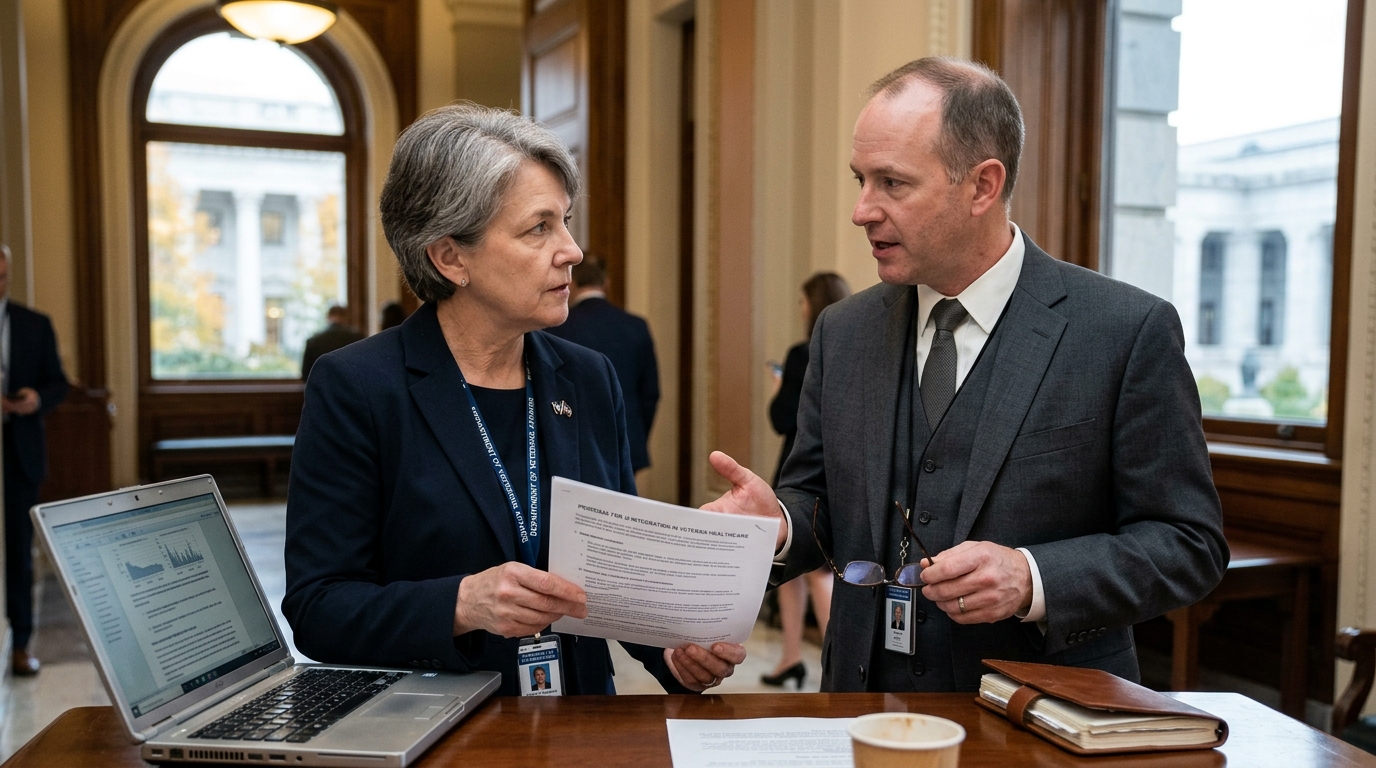
The integration of Artificial Intelligence (AI) into the U.S. Department of Veterans Affairs (VA) is not merely a technological upgrade; it represents a fundamental shift in how the state perceives its duty to those who served. As highlighted by the Small Wars Journal, the transition from the battlefield to civilian life is fraught with complex challenges—physical, mental, and bureaucratic—that AI promises to mitigate. However, this 'digital revolution' carries with it serious questions regarding ethics, privacy, and the preservation of the human touch in a system often accused of impersonal treatment.
The Clinical Revolution: From Diagnosis to Prevention
At the heart of the VA’s strategy lies the use of AI to improve clinical outcomes. Managing one of the largest healthcare systems in the world, the VA has access to a massive volume of longitudinal data. This data serves as the fuel for algorithms that can identify early signs of diseases, such as cancer or cardiovascular issues, with a precision that often exceeds human observation.
A particular emphasis is placed on mental health. The REACH VET program utilizes predictive models to identify veterans at high risk of suicide. By analyzing medical records, prescription history, and social determinants, AI can alert clinicians to intervene proactively. This application of AI shifts the healthcare system from reactive to proactive, literally saving lives before a crisis manifests. Nevertheless, relying on algorithms for such sensitive matters raises concerns about what happens when the model fails or produces 'false positives' that could potentially stigmatize a patient.
Bureaucracy and the Promise of Speed
For many veterans, the greatest enemy is not their injury, but the bureaucracy. Processing benefits and disability claims has historically been a 'black hole' of delays. AI enters here as a tool for automation. Using Natural Language Processing (NLP), the VA can now 'read' thousands of pages of medical documents in seconds, extracting the necessary evidence to substantiate a claim.
This development is critical, especially following the passage of the PACT Act, which expanded benefits for millions of veterans exposed to toxic substances. Without AI, the volume of new claims would have overwhelmed the system. However, the automation of decision-making carries the risk of 'algorithmic bias.' If the historical data on which the AI was trained contains biases against specific groups (e.g., minorities or female veterans), the technology risks replicating and institutionalizing those biases at scale.
Ethical Dilemmas and the Future of Trust
The VA’s use of AI does not occur in a vacuum. It must align with strict White House standards for 'Trustworthy Artificial Intelligence.' The question remains: can a veteran trust an algorithm with their health and their future? Transparency is key. The VA must ensure that AI decisions are explainable and that there is always a 'human-in-the-loop' to oversee and correct machine errors.
Furthermore, protecting the personal data of veterans is of paramount importance. In an era where cyberattacks target critical infrastructure, consolidating so much sensitive information into AI systems presents a security challenge. The VA is called to balance innovation with protection, ensuring that technology does not become a tool for surveillance or exclusion.
In conclusion, AI at the VA is a mirror of the future of public administration. If used correctly, it can heal the wounds of the 'small wars' that persist in the souls and bodies of veterans long after the ceasefire. If it fails, it risks breaking the social contract between the state and its protectors.