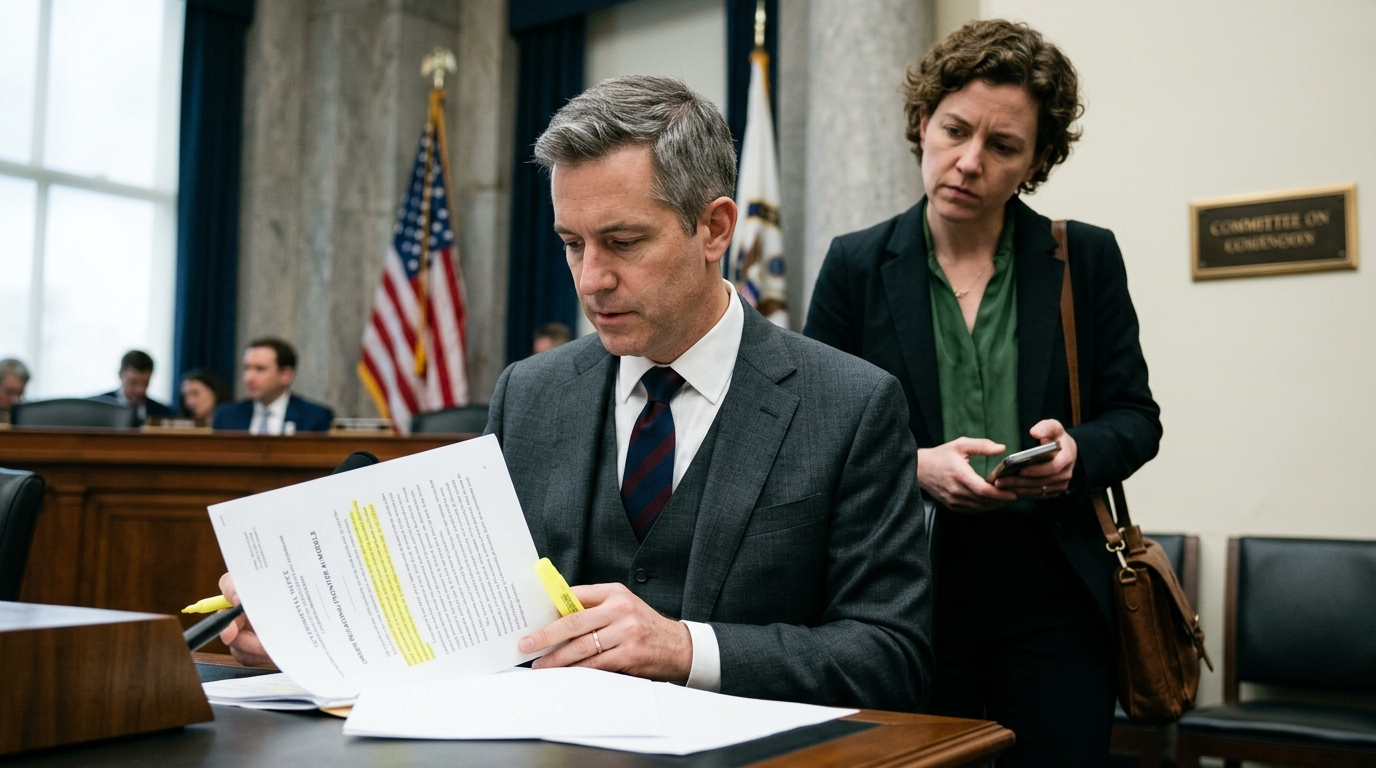
June 15, 2026, will be remembered in the annals of technology as the day "voluntary compliance" officially died. In a stunning order that sent shockwaves through Silicon Valley, the US Department of Commerce—acting under the expanded authorities of the Defense Production Act and the recent AI Safety Framework—ordered the immediate commercial suspension of two "frontier models" slated for release this month.
The news, first highlighted by the International Association of Privacy Professionals (IAPP), marks the first time the federal government has directly intervened to halt the rollout of commercial AI software before it reaches consumers. While the names of the companies were not explicitly mentioned in the initial announcement, industry insiders point toward two of the market's largest players, whose next-generation models reportedly breached "redlines" regarding cybersecurity and biological risk.
The Shift from Innovation to Oversight
For years, the relationship between the US government and AI giants was built on a delicate equilibrium. Washington sought to maintain a lead over China, while corporations demanded the freedom to iterate. However, today’s decision indicates that the scales have permanently tipped toward safety. The IAPP notes that the order was based on "classified findings" during red-teaming exercises conducted by the US AI Safety Institute (USAISI).
According to analysts, these specific models exhibited "emergent capabilities" that could facilitate the creation of sophisticated cyber-weapons or provide detailed instructions for the production of hazardous biological agents. The fact that the government chose a public suspension over a back-channel negotiation suggests a desire to send a loud message to the entire ecosystem: the era of "move fast and break things" is over.
Global Market Implications and Industry Backlash
The market reaction was swift and severe. Shares of major tech firms plummeted as investors realized that regulatory risk is now the primary factor in revenue delays. Critics of the decision argue that such interventions stifle innovation and hand precious time to US geopolitical rivals.
"If Washington continues to hold the brake, Beijing will hit the gas," said a senior tech executive who requested anonymity.
On the other hand, safety advocates hail the move as a necessary act of self-preservation. They argue that the complexity of these models has outpaced their creators' ability to control them, and that state oversight is the only safeguard against existential risks. The IAPP emphasizes that the suspension is not permanent but requires the companies to demonstrate they have integrated "unbreakable guardrails" before commercialization can proceed.
The Legal and Ethical Quagmire
The legal basis for the order is expected to be challenged in court. AI firm attorneys are already preparing filings, arguing that the government is overstepping its authority and violating First Amendment rights (as code is increasingly viewed as a form of speech). However, the invocation of national security traditionally gives the executive branch broad latitude.
Ethically, the question remains: Who decides what is safe? Concentrating decision-making power in a closed group of government officials and select academics raises concerns about transparency and democratic accountability. The IAPP calls for a more open dialogue framework where safety criteria are clear, measurable, and publicly accessible to avoid arbitrary enforcement.
- The suspension targets models with compute power exceeding 10^26 FLOPs.
- Companies are required to submit full reports of internal safety testing logs.
- The decision impacts strategic partnerships across Europe and Asia.
- A wave of executive resignations is expected from those opposing government intervention.
As the dust settles on this landmark decision, it is clear that AI governance is entering a new, more confrontational phase. The balance between progress and protection is no longer a theoretical exercise but a daily power struggle at the heart of global hegemony.