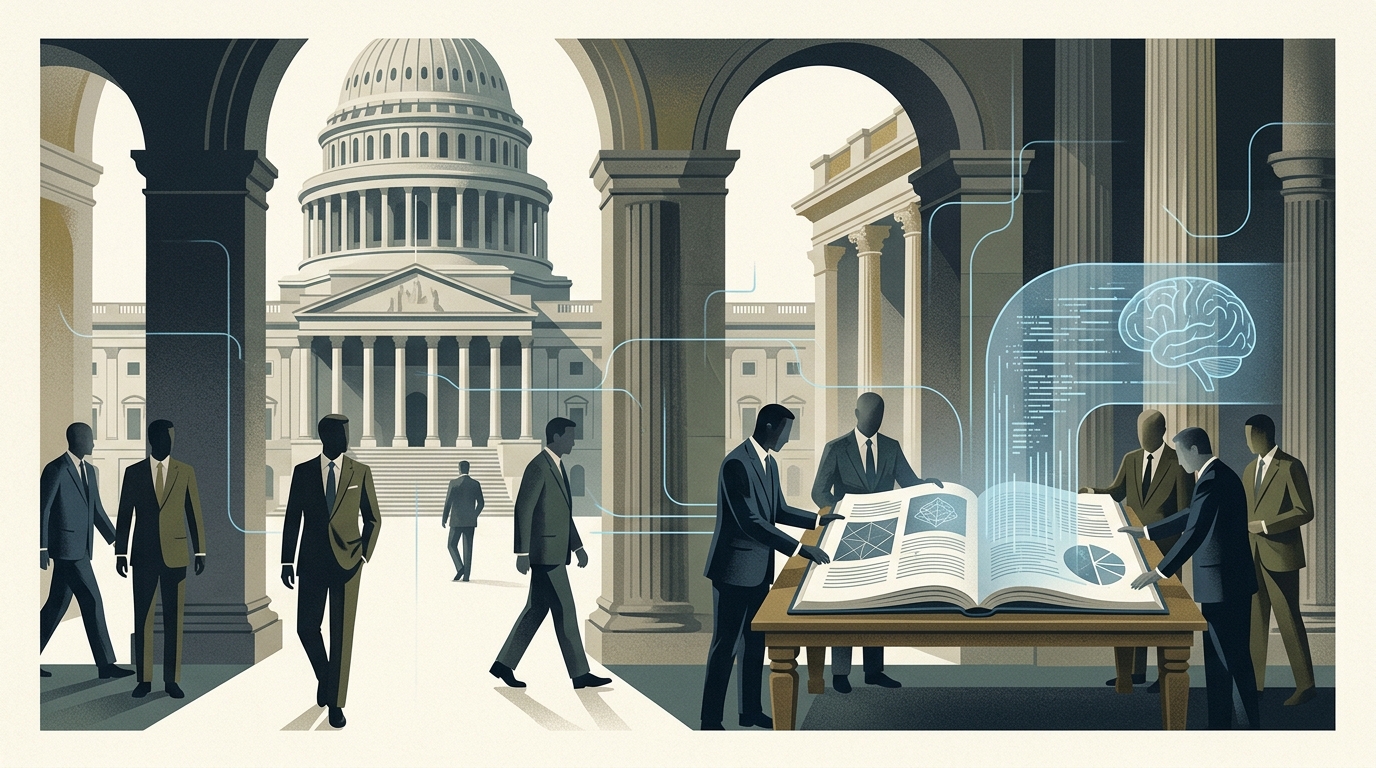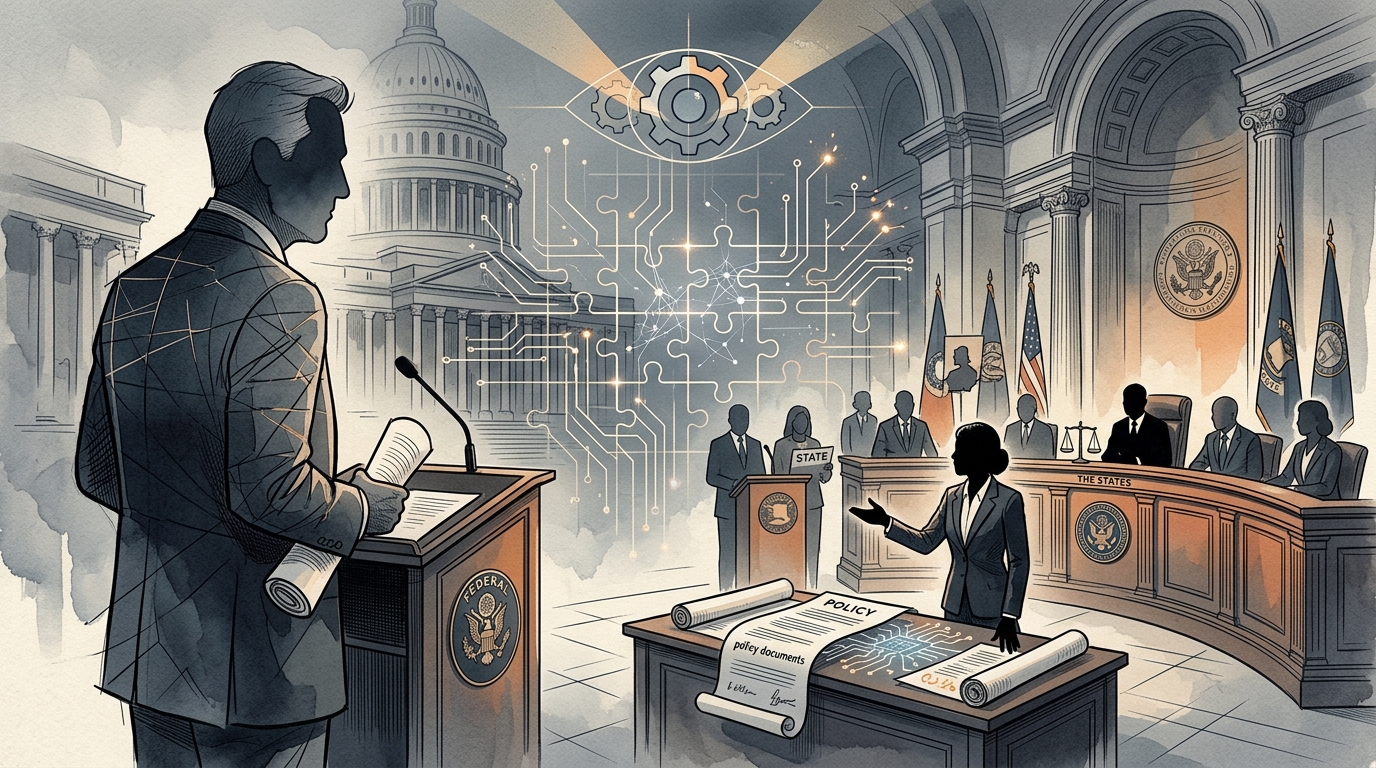
In the mid-2026 landscape of American politics, a fundamental collision is unfolding that will dictate the trajectory of digital humanity. On one side, the Trump administration champions a vision of "unbridled innovation," arguing that any regulatory hurdle placed on Artificial Intelligence is a strategic gift to Beijing. On the other, a coalition of progressive and conservative states refuses to wait for federal guidance, enacting stringent rules on transparency, algorithmic bias, and system safety.
The Doctrine of 'Dominance Through Deregulation'
Donald Trump’s strategy is unmistakable: AI is the new "Manhattan Project." According to sources close to the White House, the administration views state-level laws as a "regulatory patchwork" that stifles startups and forces tech giants to bleed billions into legal compliance rather than research and development. Trump’s attempt to block these laws is not merely a bureaucratic maneuver; it is an ideological statement that national power stems from a lack of constraints.
However, this approach overlooks the tangible risks already being felt by citizens. From automated housing application rejections due to algorithmic errors to the proliferation of deepfakes in local elections, the power vacuum left by Washington is forcing governors to act. This conflict brings to the fore the perennial question of American federalism: Where does a state's right to protect its citizens end, and where does the need for a unified national strategy begin?
The State Insurgency: California and Colorado Lead the Charge
Despite pressure from the Department of Commerce and threats to withhold federal funding, California remains the epicenter of resistance. Following the landmark developments of SB 1047 and subsequent legislative iterations, the Golden State has laid the groundwork for what many call the "California Effect." Because most AI firms are headquartered there, California’s rules effectively become the rules for the entire world. New laws require developers of large-scale models to implement "kill switches" and undergo audits to prevent the creation of biological weapons or massive cyberattacks.
- Algorithmic Transparency: Mandatory disclosure of training datasets and methodologies.
- Consumer Protection: The right for citizens to know when they are interacting with an AI entity.
- Developer Liability: Legal penalties for foreseeable catastrophic uses of AI systems.
Colorado, meanwhile, has focused its crosshairs on anti-discrimination. Its law, which reached full implementation in early 2026, targets "high-risk" AI systems used in healthcare, employment, and banking. The logic is simple: if the federal government cannot guarantee that an algorithm won't engage in racial profiling, the state will.
Industry Response and the Global Context
Tech companies find themselves in a peculiar position. While publicly applauding Trump’s deregulatory agenda, privately they dread the chaos of 50 different legislative frameworks. OpenAI, Anthropic, and Google have already begun aligning their protocols with California’s standards, recognizing that the political reality on the ground is more potent than White House rhetoric. Furthermore, the European Union is watching closely, strengthening ties with U.S. states that align with its own AI Act.
"We cannot sacrifice the safety of our citizens on the altar of a geopolitical arms race," stated a leading California legislator. "Innovation without accountability is not progress; it is a liability."
In conclusion, Trump’s attempt to blunt the momentum of state-level regulation appears to be having the opposite effect: it is accelerating the creation of local "fortresses" of protection. As we move through 2026, the battle for AI governance will not only be fought in the laboratories of Silicon Valley but in the courtrooms and statehouses where technology meets the daily lives of the people.