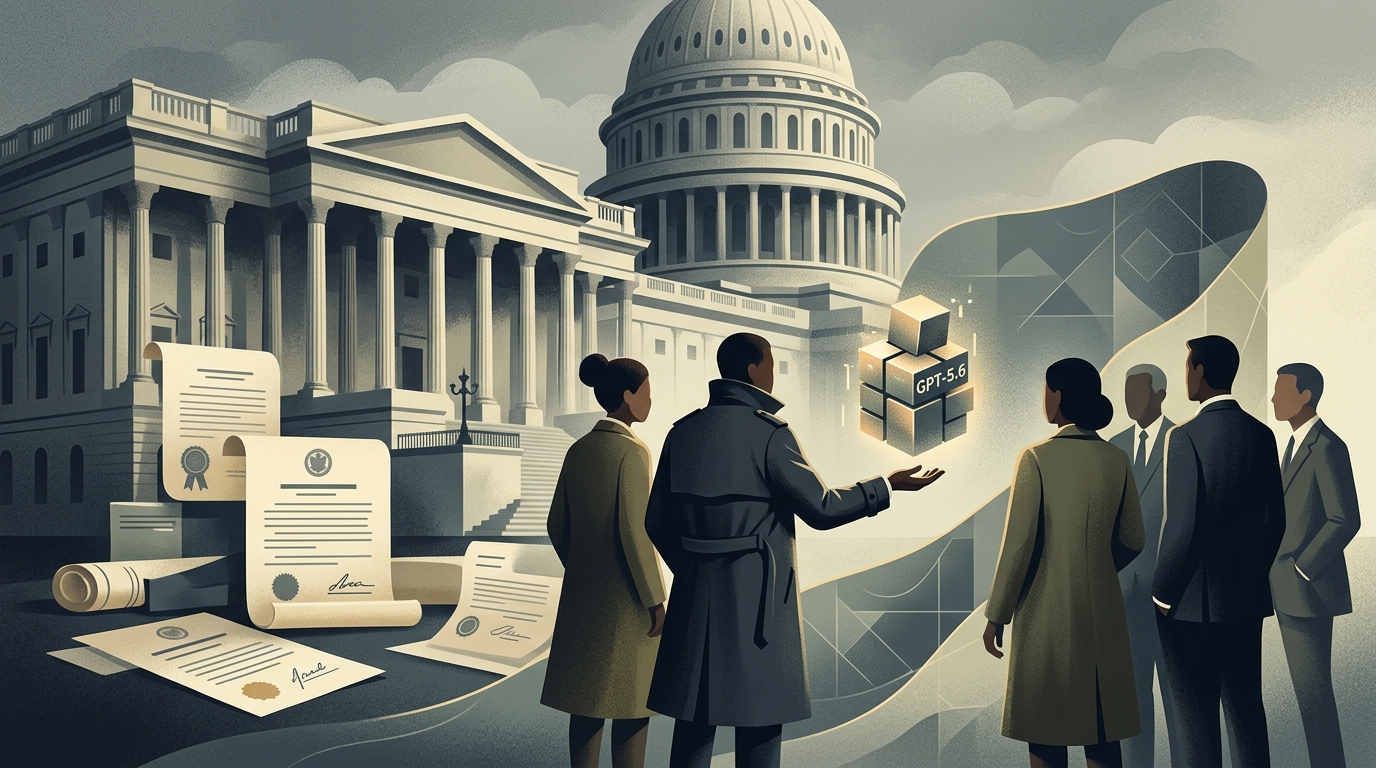
In an unprecedented move that signals a new era of state intervention in technological innovation, the Trump administration has formally requested OpenAI to delay the scheduled launch of its next major model, GPT-5.6. The news, initially reported by the Ukrainian National News (UNN) and subsequently confirmed by sources in Washington, highlights the growing friction between the rapid advancement of artificial intelligence and U.S. national security imperatives.
According to internal documents, the White House intervention is not merely a suggestion but a strategic maneuver linked to the model's capacity to execute complex cyberattacks and influence geopolitical stability. The administration appears concerned that releasing such a powerful tool into the open market, without adequate safety guardrails approved by government agencies, could provide an advantage to adversarial powers, primarily China and Russia.
National Security at the Forefront
GPT-5.6 is far more than an advanced chatbot. It is a model with sophisticated agentic capabilities, able to plan and execute multi-layered tasks autonomously. U.S. intelligence community reports suggest the model exhibits "emergent capabilities" in cryptography and the synthesis of biological threats that exceed current safety protocols. The Trump administration, maintaining an "America First" stance, argues that technological superiority must be coupled with absolute control over exports and access capabilities.
A national security advisor reportedly stated in a closed-door briefing that "releasing GPT-5.6 at this moment would be akin to handing over the keys to our nuclear deterrent to an algorithm we have yet to fully master." This rhetoric reflects a deep-seated distrust of Silicon Valley’s self-regulation, which for years operated under the mantra of "move fast and break things."
OpenAI’s Dilemma and the Innovation Paradox
On its part, OpenAI, led by Sam Altman, finds itself in an extremely precarious position. The company has invested billions of dollars into the development of GPT-5.6, with investors and shareholders clamoring for immediate commercialization. A delay does not only mean lost revenue but also the risk of being leapfrogged by competitors like Anthropic or France’s Mistral, which are not bound by the same U.S. governmental pressures.
- Intense investor pressure for return on capital.
- Risk of talent drain to firms with fewer regulatory hurdles.
- The necessity of maintaining the lead in the global AI market.
However, OpenAI is acutely aware that clashing with the federal government could lead to more draconian legislation or even the nationalization of parts of its technology under the guise of defense necessity. The company has already begun hiring former government officials to bridge the gap, but the current demand for a delay serves as a litmus test for its corporate autonomy.
Geopolitical Impact and the Race with China
The issue is further complicated by the ongoing technological cold war with China. While Washington calls for a delay, Beijing is accelerating its own efforts with the Ernie Bot and other state-subsidized initiatives. There is a palpable fear that a delay in the release of GPT-5.6 could provide the necessary window for China to close the gap, ultimately undermining American AI hegemony.
"Innovation does not wait for bureaucratic stamps of approval. If the U.S. pauses, the rest of the world will run faster," notes an industry analyst.
The Trump administration seems to be betting on a different strategy: the creation of a "closed ecosystem" where the most advanced versions of AI are available only to certified partners and government agencies before reaching the general public. This "controlled release" model could become the new standard for technological development in the 21st century, yet it raises serious questions regarding freedom of information and democratic access to technology.
Conclusion: A New Balance of Power
The demand to delay GPT-5.6 is not just a news story about a software update. It is the confirmation that artificial intelligence has become the most significant geopolitical tool of our age. The collision between free-market dynamics and state security will define not only the future of OpenAI but the trajectory of the global economy and society. As we await the company's official response, one thing is certain: the era where technology developed in a political vacuum is officially over.