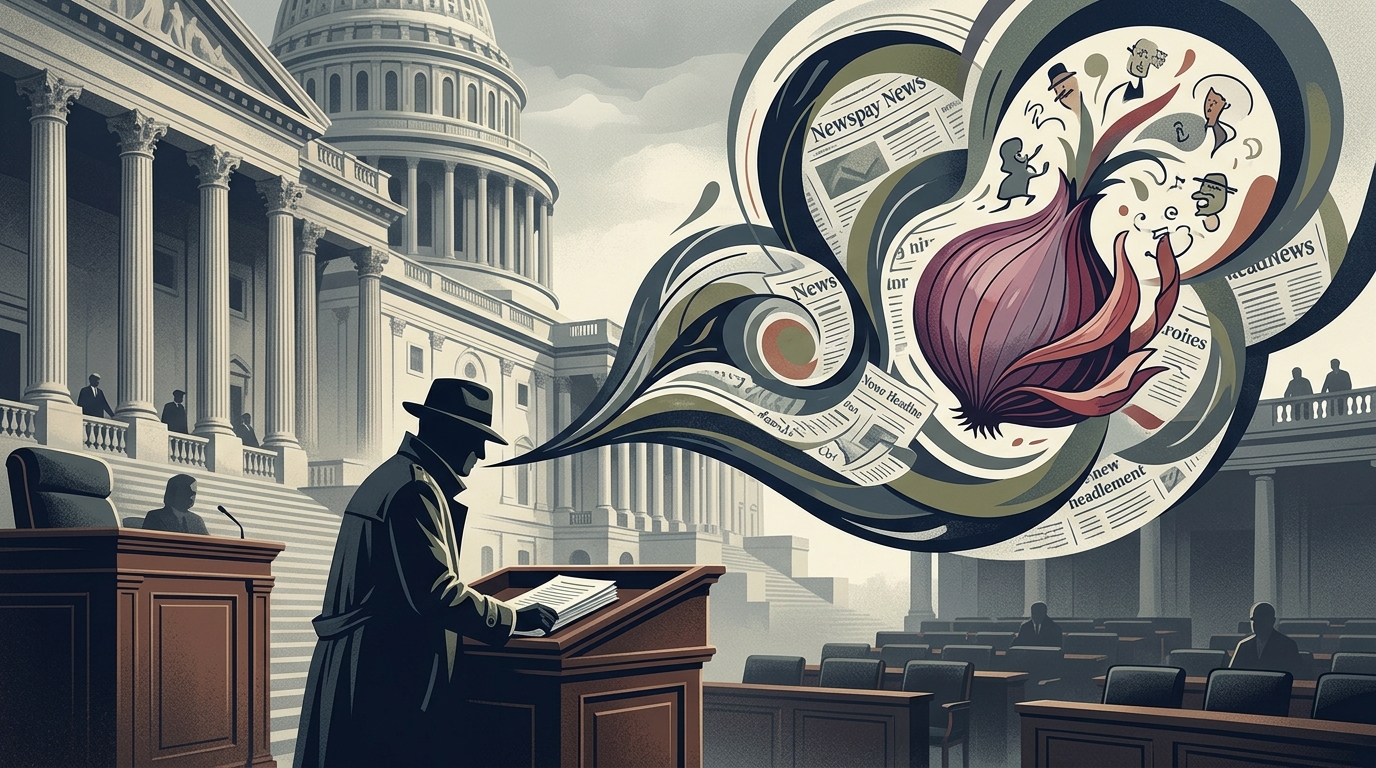
In a media landscape where the line between reality and absurdity has become increasingly porous, the acquisition of InfoWars by The Onion stands as perhaps the most fitting development of the decade. On July 2nd, the platform that once served as the epicenter of America’s most toxic conspiracy theories will return—not as a vehicle for misinformation, but as a global experiment in high-stakes irony. The Onion isn't just relaunching a website; it is reclaiming a cultural battlefield.
A Moral and Legal Reckoning
The journey to this acquisition did not begin in a corporate boardroom, but in the harrowing courtrooms where the families of the Sandy Hook Elementary School shooting victims fought for accountability. After Alex Jones was ordered to pay over $1 billion in damages for his defamatory lies about the tragedy, his media empire, Free Speech Systems, was forced into bankruptcy. The subsequent auction of InfoWars assets provided a unique opportunity for poetic justice.
The Onion, backed by several Sandy Hook families, emerged as the winning bidder. This was not merely a business transaction; it was a strategic move to dismantle a machine of malice. By allowing The Onion to take the reins, the families ensured that the infrastructure Jones built to harass them would be used to mock his very existence. Instead of simply shuttering the site and letting it fade into obscurity, they chose to transform it into a living monument to the absurdity of the conspiracy-industrial complex.
The Satirical Strategy: Infiltrating the Aesthetic
What can audiences expect on July 2nd? According to internal sources at The Onion, the rebooted InfoWars will not be a mere carbon copy of their existing satirical output. Instead, it aims to adopt the frantic, paranoid aesthetic of the original network to deconstruct it from within. The goal is to create a hyper-real parody of right-wing talk shows, complete with over-the-top supplement advertisements and a perpetual state of manufactured crisis.
- The Grift Exposed: The new platform will highlight how conspiracy theories are often just a front for selling dubious health products and survivalist gear.
- Cultural Deconstruction: It will explore the symbiotic relationship between fake news and modern political discourse.
- Archival Subversion: There are plans to utilize Jones’ own vast library of footage, recontextualizing his outbursts to emphasize their inherent ridiculousness.
The challenge for The Onion is formidable. In an era where mainstream news often feels like a parody of itself, satire risks losing its edge. However, by occupying the actual digital space once held by Jones, The Onion gains a psychological advantage. They are not just commenting from the sidelines; they are wearing the enemy's uniform to perform a comedy of the highest order.
Implications for Free Speech and Misinformation
This acquisition sparks a broader conversation about how society deals with persistent purveyors of falsehoods. For years, the primary tools against misinformation have been deplatforming and fact-checking—both of which have had mixed results. The Onion is proposing a third way: the weaponization of ridicule. As one executive noted, "The best way to neutralize a demagogue is not to silence him, but to make him the butt of the joke."
"Satire is the final refuge of sanity in a world that has lost its bearings. With InfoWars, we didn't just buy a domain name; we bought the right to write the punchline to a very dark joke."
Unsurprisingly, Alex Jones has attempted to frame the auction as a "rigged" process, filing legal challenges to halt the transfer. Yet, the July 2nd launch date remains firm. This relaunch will serve as a litmus test for whether satire can still function as a tool for social accountability or if it will simply be swallowed by the very noise it seeks to mock.
Conclusion: A New Paradigm for Digital Media
The Onion’s gamble is both brave and perilous. If successful, it could provide a blueprint for how toxic digital assets can be repurposed for the public good—turning a source of division into a source of derision. If it fails, it may be seen as a cynical stunt that underestimated the resilience of the post-truth era. Regardless of the outcome, on July 2nd, the internet will be watching to see if laughter can truly act as a disinfectant for the digital age.