

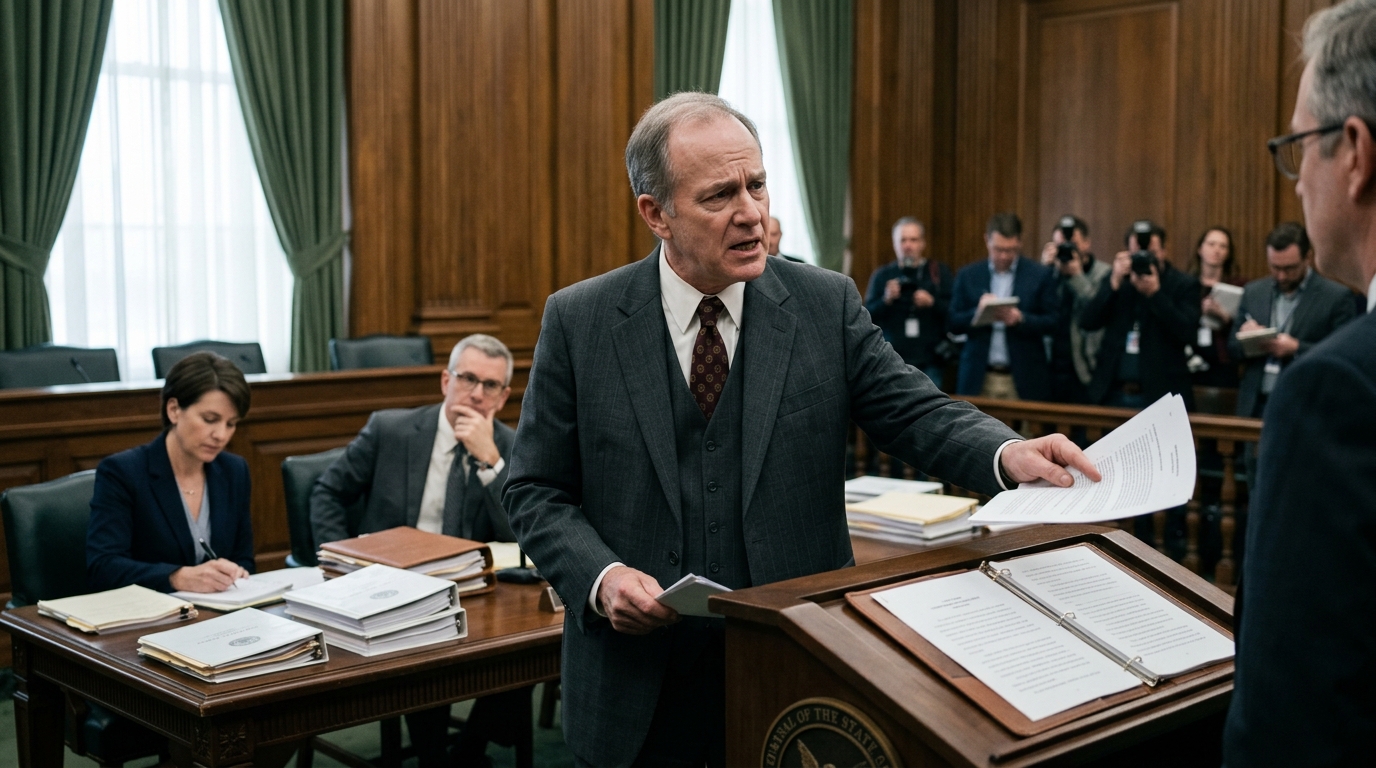
As we navigate the middle of 2026, the global discourse surrounding Artificial Intelligence regulation has transitioned from theoretical ethics to the stark reality of legislative implementation. The so-called FABLE Act (Framework for AI Behavior and Liability Essentials), which began with noble intentions of citizen protection, is evolving into what the R Street Institute describes as an "absolute fiasco." The critique focuses not only on the substance of the law but also on the manner in which bureaucratic mechanisms are attempting to tame a technology that moves at speeds several times faster than legislative processes.
The Theoretical Failure of a "Bad Idea"
The R Street Institute, renowned for its free-market perspectives on economics and technology, argues that the very foundation of FABLE is flawed. The central premise of the bill rests on imposing strict liability on AI model creators for any output their systems produce, regardless of the context of use or third-party intervention. This, according to analysts, constitutes a "bad idea" because it equates artificial intelligence with inherently dangerous materials or fixed-function products.
AI, however, is a general-purpose technology. Holding a developer liable in the same way an explosives manufacturer is liable for an accident ignores the fundamental nature of generative AI. As highlighted in the report, this approach could lead to a "desertification" of innovation, as only tech giants with massive legal departments and deep pockets will be able to weather the risk of releasing new models. Small and medium-sized enterprises (SMEs) and open-source communities are effectively under siege, as liability uncertainty makes software development economically non-viable.
Badly Applied: A Bureaucratic Labyrinth
If the idea was problematic, its application is characterized as disastrous. The R Street Institute describes a compliance mechanism that is as vague as it is demanding. The definitions used in the bill for "high-risk AI behavior" are so broad that they could encompass anything from a simple resume-sorting algorithm to an autonomous driving system. This lack of precision creates an environment of "regulatory capture," where companies are forced to constantly seek clarifications from government agencies that often lack the necessary technical expertise.
- Vagueness in the definitions of "foundation models."
- Excessive requirements for training data reporting that infringe upon trade secrets.
- The creation of new oversight bodies with overlapping jurisdictions.
Furthermore, the proposed certification process is more reminiscent of the bureaucratic bottlenecks of the last century than a modern framework for the digital age. Delays in approving new software versions mean that by the time a model receives the "green light," its technology may already be considered obsolete. This grants a massive advantage to competing economies that choose more flexible regulatory frameworks, leaving behind those who adopt the FABLE model.
Market and Consumer Implications
Beyond the technicalities, the R Street Institute warns of the economic fallout. The increased cost of compliance is inevitably passed down to the end consumer. Moreover, the fear of litigation leads companies toward "safe but mediocre" AI. Instead of tools that solve complex problems, users will end up with over-regulated systems that refuse to answer simple queries to avoid even the slightest possibility of legal entanglement.
"We do not protect citizens by strangling progress. True safety comes from understanding and responsible use, not from prohibition through bureaucracy," the report states.
In conclusion, the "Fable Fiasco" serves as a cautionary tale for lawmakers worldwide. The desire for control must not overshadow the need for functionality. The R Street Institute calls for a radical revision of the bill, proposing a model based on actual harm rather than hypothetical risk scenarios, while promoting transparency without sacrificing innovation. The history of technology has shown that laws failing to adapt to reality end up as obstacles that are simply bypassed, leaving society unprotected and the economy stagnant.





