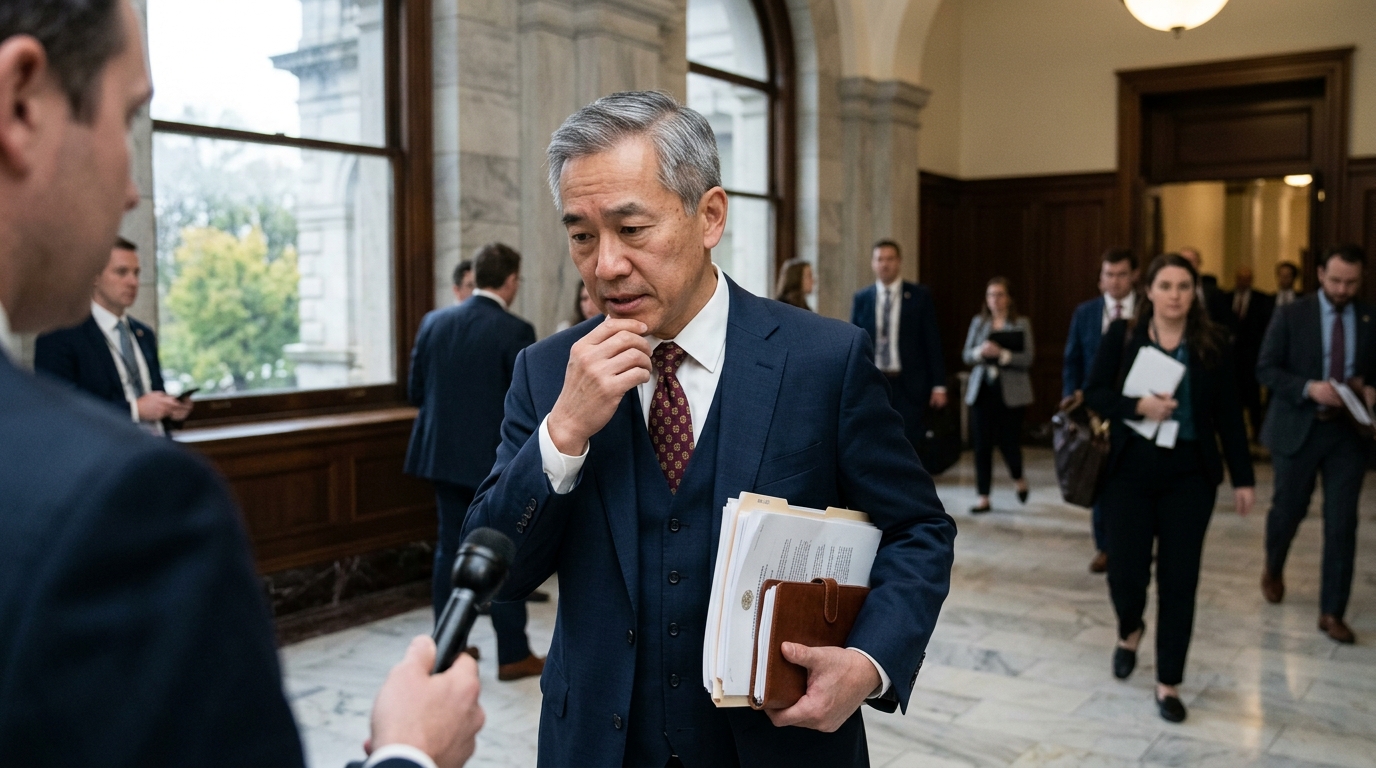
In the hallowed halls of the U.S. Capitol, the term "preemption" has become a flashpoint in the debate over the future of technology. At the center of this burgeoning political storm is Congressman Ted Lieu (D-Calif.), one of the few lawmakers with a computer science background, who is currently facing intense pressure to decide how the federal government should interact with state-level AI regulations. The debate is not merely a dry legal dispute; it is a fundamental struggle over who controls the reins of the most transformative technology of our era.
The Preemption Puzzle
Federal preemption occurs when a federal law overrides or replaces state laws on the same subject. For Silicon Valley giants, preemption is the ultimate goal. They argue that a "patchwork" of 50 different state regulations would create an impossible compliance burden, stifling innovation and handing a competitive advantage to global rivals like China. However, consumer advocates and state attorneys general argue that federal preemption often acts as a "ceiling" rather than a "floor," preventing states from enacting more robust protections against algorithmic bias, privacy violations, and safety risks.
Lieu finds himself in a uniquely precarious position. Representing a California district that is home to a significant portion of the tech industry, he is caught between the economic interests of his constituents and the legislative ambitions of his home state. California has recently moved forward with ambitious AI safety legislation, such as SB 1047, which seeks to impose strict testing and liability requirements on developers of massive AI models. If Lieu supports a federal bill with strong preemption clauses, he risks nullifying California's leadership in the field, a move that could alienate local allies and voters.
Industry Lobbying and the Race for Uniformity
Tech companies have significantly ramped up their lobbying efforts, framing preemption as a matter of national security and economic survival. Their arguments generally fall into three categories:
- Operational Efficiency: The need for a single set of rules to govern models that operate across state and national borders.
- Legal Certainty: Avoiding a wave of inconsistent litigation in state courts that could bankrupt smaller startups.
- Global Leadership: Ensuring the U.S. remains the premier destination for AI development by providing a stable regulatory environment.
The Resistance and the Legislative Landscape
The pushback against preemption is bipartisan but driven by different motives. Progressive Democrats view it as a corporate giveaway that would strip citizens of their rights to sue for AI-inflicted harms. Meanwhile, some conservative Republicans are wary of any federal expansion that encroaches on state sovereignty. Lieu has navigated these waters by advocating for a nuanced approach, but the window for compromise is closing as more states begin to pass their own laws in the absence of federal action.
The internal dynamics of the Democratic party are also at play. Senate Majority Leader Chuck Schumer has been pushing for a bipartisan AI framework, but the inclusion of preemption remains one of the most difficult hurdles. For Lieu, the pressure from Punchbowl News reports and other insiders suggests that the "honeymoon phase" of AI policy—where everyone agreed on general principles—is over. Now comes the hard part: writing the fine print that will determine which laws survive and which are erased.
Conclusion: A Decisive Moment for AI Governance
The outcome of this battle will have profound implications for the global AI ecosystem. If the U.S. opts for strong federal preemption, it will likely create a more business-friendly environment but at the potential cost of consumer safety and state-led innovation. If it allows state laws to flourish, the U.S. may see a more chaotic but more protective regulatory landscape. As Ted Lieu weighs his options, his decision will signal whether Washington is ready to lead on AI or if it will remain paralyzed by the competing interests of the digital age. The world is watching, as the precedent set here will likely influence regulatory frameworks far beyond the borders of the United States.