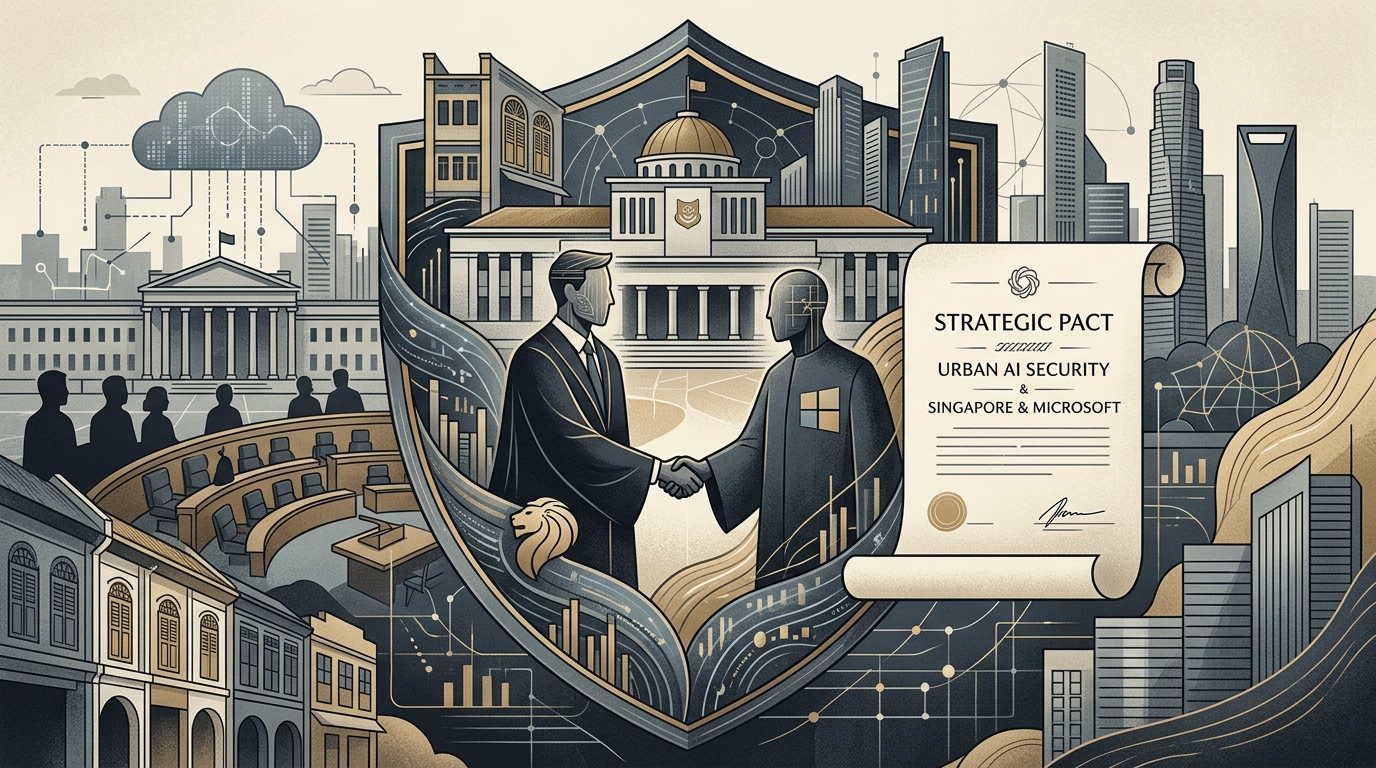
In an era where digital sovereignty and data security have become the new frontier of geopolitical competition, Singapore is once again asserting its role as the global lighthouse of technological governance. The recent signing of a Memorandum of Understanding (MoU) between Singapore’s Infocomm Media Development Authority (IMDA) and technology giant Microsoft for the AI CityXchange initiative is more than just a business deal; it is a foundational step toward defining the rules of engagement in the age of Generative AI.
This partnership focuses on bolstering the safety and security of AI systems that underpin smart city infrastructures. As we move through 2026, cities are no longer mere collections of buildings but living organisms breathing through algorithms. The need to fortify these systems against cyber threats, misinformation, and ethical failures is more pressing than ever.
The AI CityXchange Framework: Innovation Under Supervision
The AI CityXchange initiative aims to create an "ecosystem of trust." A central element of the agreement is the creation of regulatory sandboxes, where new AI applications can be tested under real-world conditions but within a controlled environment. This allows developers and public authorities to identify potential risks before the technology is deployed to the general public.
- Red-Teaming and Resilience: Microsoft will provide its expertise to conduct simulated attacks on AI systems, ensuring that algorithms cannot be easily manipulated or compromised.
- Governance Standards: Joint development of frameworks for the ethical use of AI, building upon Singapore’s already successful Model AI Governance Framework.
- Interoperability: Ensuring that systems from different providers can communicate securely within the urban fabric.
Singapore has invested billions into its Smart Nation initiative, and the partnership with Microsoft grants it access to cutting-edge cloud infrastructure and models like GPT-5, which are now being integrated into the city-state's public services.
Security and Ethics in the Smart City
One of the most critical points of the MoU is addressing the risks inherent in using AI for critical infrastructure. Imagine an AI-driven traffic management system falling victim to "data poisoning." The consequences could be catastrophic. The AI CityXchange collaboration aims specifically to prevent such scenarios through the use of Explainable AI (XAI) technologies, where machine decisions are made understandable and transparent to human overseers.
"Safety in artificial intelligence is not an optional feature, but the very foundation upon which social acceptance of the technology will be built," an IMDA official stated during the signing ceremony.
Furthermore, Microsoft has committed to supporting Singapore’s "AI Verify" program, the world’s first AI governance testing toolkit, which helps companies demonstrate that their algorithms are fair and free from bias.
Geopolitical Implications and the Path Ahead
Singapore’s move to align closely with an American titan also carries political weight. While the European Union follows a more stringent regulatory path with the AI Act, Singapore is choosing a path of market collaboration. This model of "co-regulation" appears to attract tech giants seeking a stable and predictable environment for their investments.
For Microsoft, Singapore serves as the perfect "living lab." If the safety protocols of AI CityXchange prove successful there, they will become the gold standard for export to other metropolises, from London to Tokyo. The battle over who defines the rules of AI is in full swing, and this alliance places Singapore at the forefront of developments for the second half of the 2020s.