

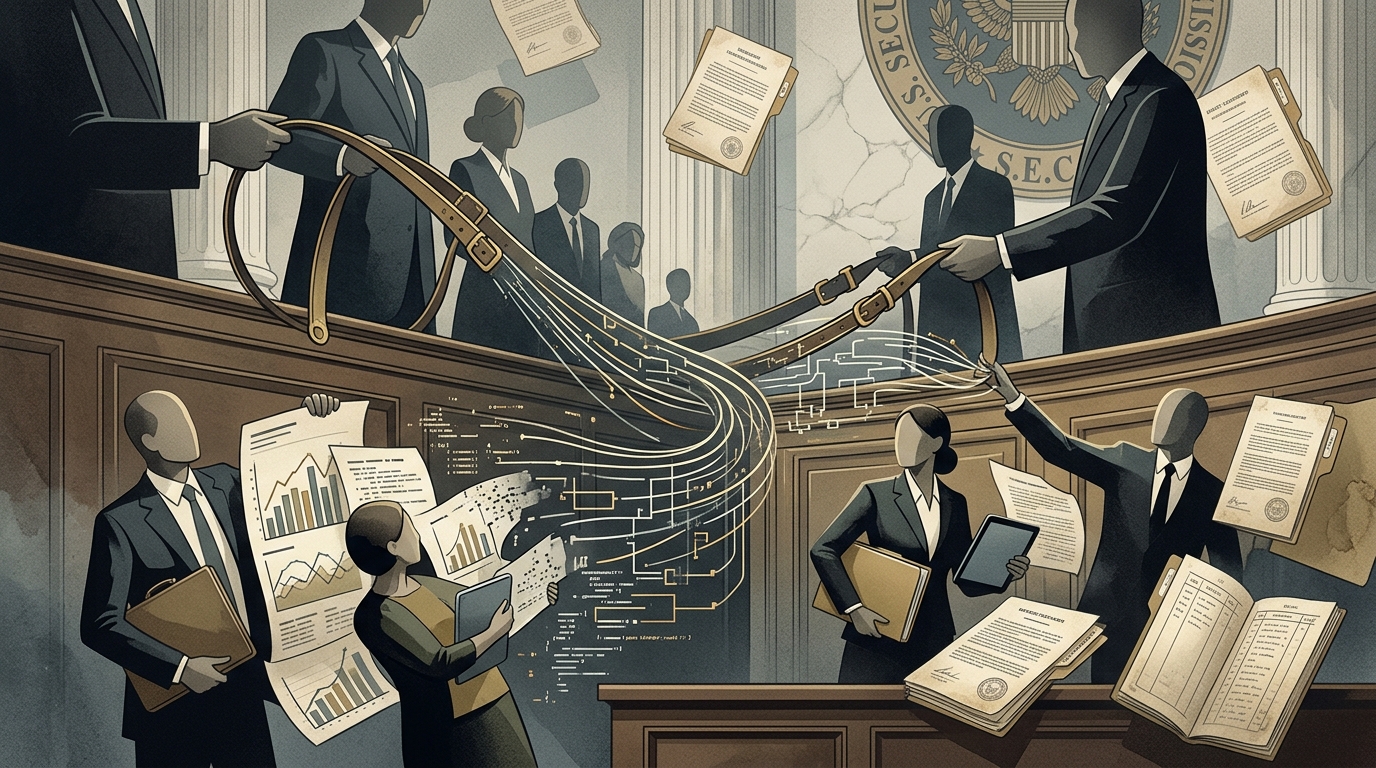
The era of the 'Wild West' for Artificial Intelligence in the wealth management industry is drawing to a close. The U.S. Securities and Exchange Commission (SEC) has moved from general warnings to active enforcement, with its examiners issuing detailed information requests to Registered Investment Advisers (RIAs). The central question is no longer whether a firm uses AI, but how it controls it, how it discloses it to clients, and whether its algorithms operate in the best interest of the investor or the firm itself.
The Phenomenon of 'AI Washing' and Deceptive Practices
A primary goal for the SEC is to crack down on 'AI washing'—the practice where firms exaggerate or misrepresent the capabilities of their AI systems to attract clients. In recent speeches, SEC Chair Gary Gensler likened AI washing to 'greenwashing,' emphasizing that investment advisers must be entirely honest about what their models can and cannot do. Examiners are now requesting copies of marketing materials, social media posts, and official disclosure documents (Form ADV) to cross-reference promises with technical reality.
The regulator's concern stems from the fact that many advisers use 'AI' as a marketing buzzword without having the necessary infrastructure or vetting processes. When an algorithm makes decisions about asset allocation, a lack of transparency can lead to disastrous outcomes for retail investors who trust the technology as an 'objective' source of wisdom.
Conflicts of Interest and Predictive Analytics
Beyond marketing, the SEC is focusing on the substance of algorithmic decision-making. Proposed rules regarding 'Predictive Data Analytics' (PDA) aim to eliminate conflicts of interest that arise when firms use technology that prioritizes firm profits over client returns. For instance, an algorithm that steers clients toward products with higher fees for the firm, rather than the best products for the client's risk profile, is a major red flag for regulators.
- Model Governance: Firms must demonstrate they have written policies for the development, testing, and monitoring of AI models.
- Data Management: The source and quality of data feeding the models are under strict scrutiny.
- Third-Party Oversight: Many firms use AI tools from external vendors. The SEC requires RIAs to have performed due diligence on these providers.
The Compliance Challenge for Smaller Advisers
While major investment banks have armies of legal and compliance experts, smaller RIAs face an overwhelming administrative burden. The requirement for detailed documentation of every algorithmic decision and the need for constant monitoring of 'black-box' models create significant operational hurdles. However, the SEC is clear: using advanced technology does not absolve the adviser of their fiduciary duty. The technology is the tool, but the responsibility remains human.
"You cannot hide behind an algorithm. If your model violates the law, you are the one held responsible," SEC officials have warned in compliance seminars.
In conclusion, the SEC's move to integrate AI governance into its routine examinations marks a new phase of maturity for the market. Investment advisers are now required to invest not only in technology but also in the control structures that will ensure AI remains an ally to the investor rather than an unchecked risk factor.





