

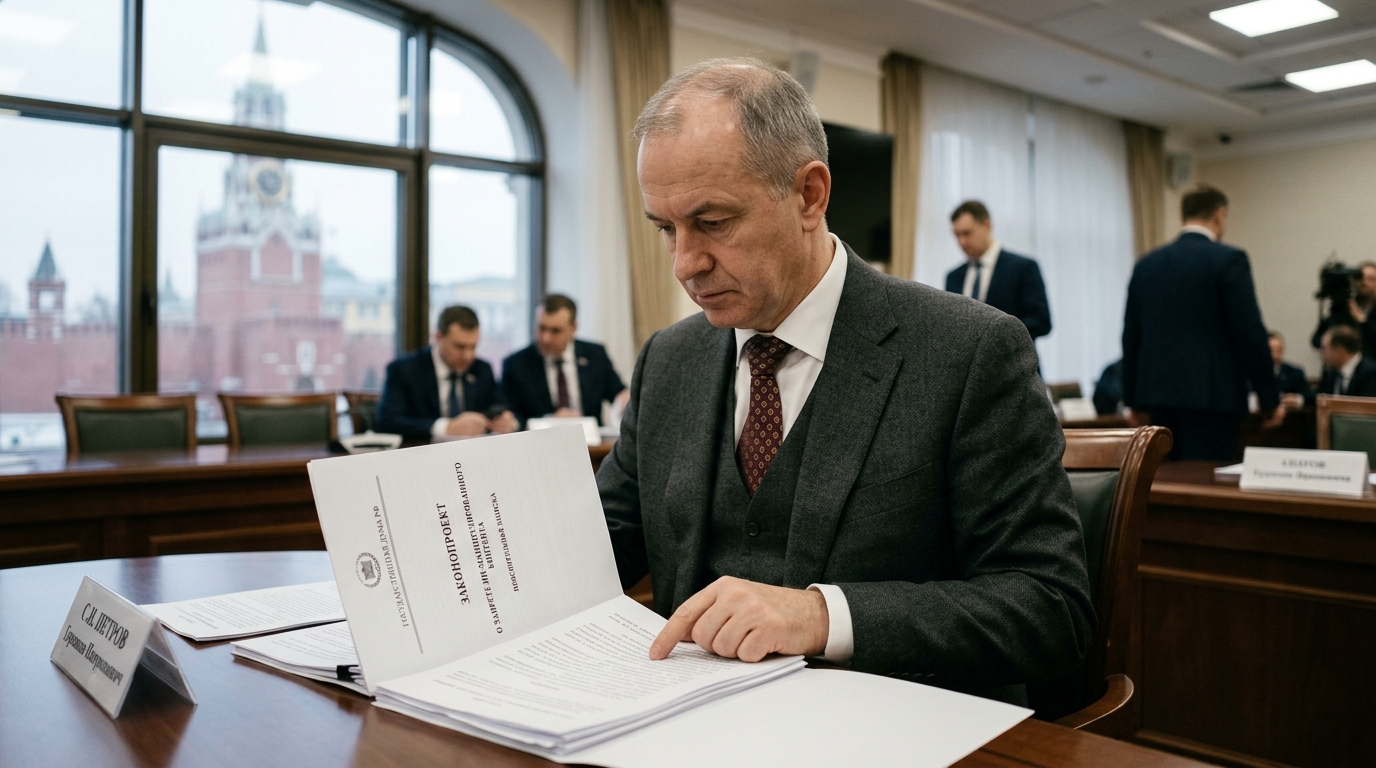
In a move that many analysts are calling the most aggressive attempt to control digital information to date, the Russian government has submitted a proposal for a total ban on content that has been manipulated or entirely created by Artificial Intelligence (AI) on social media platforms. The initiative, announced amidst escalating geopolitical tensions, is being presented by the Kremlin as a necessary measure to protect national security and combat disinformation.
The Legislative Initiative and its Context
The proposal, currently under discussion in the State Duma, stipulates severe penalties not only for the creators of the content but also for the platforms themselves that fail to detect and remove it. According to available information, the definition of "manipulated content" is extremely broad, covering everything from well-known deepfakes to simple image or voice enhancements resulting from algorithmic processing.
Supporters of the bill argue that artificial intelligence has become a "weapon" in the hands of foreign powers seeking to destabilize Russian society. However, the timing of the proposal raises questions. With AI technologies developing rapidly, Russia seems to be choosing the path of isolation rather than regulation, fearing that the loss of control over visual truth could undermine state propaganda.
Technical Challenges and the Issue of Detection
One of the key points of contention in the proposed legislation is the technical feasibility of its implementation. Cybersecurity experts point out that distinguishing between a high-quality deepfake and a real shot is becoming increasingly difficult, even for the most sophisticated detection algorithms. Requiring platforms like VK (Vkontakte) or Telegram to filter every piece of AI content in real-time could lead to massive "over-censorship."
- The difficulty of identifying AI content in encrypted applications.
- The cost of developing detection tools for domestic platforms.
- The risk of false positives that will harm freedom of speech.
Furthermore, this ban directly conflicts with Russia's desire to develop its own AI industry. If Russian developers and content creators cannot use the tools that are now global standards, the country risks falling behind in the global technological race.
Geopolitical Implications and International Comparison
In contrast to the European Union's AI Act, which focuses on transparency and labeling of content, the Russian approach is prohibitive. While the West tries to educate citizens to recognize synthetic content, Moscow chooses to erase it from public discourse. This creates a new kind of "digital border," where the flow of information between Russia and the rest of the world will become even more difficult.
"Truth in the digital age is not protected by bans, but by critical thinking and transparency. Trying to criminalize an algorithm is like trying to stop the rain with a law," says an independent digital rights analyst.
This move is part of the broader framework of the "Sovereign Internet" that Russia has been building in recent years. Following the restriction of Western social media, controlling AI content is the next logical step for a government seeking absolute control of the narrative within its borders.
Conclusions and Future Prospects
The proposal to ban AI content in Russia sets a dangerous precedent. If passed, it will force tech companies to become the "policemen" of digital reality, often with opaque criteria. The question remains whether such a ban can actually be implemented or if it will simply be another tool for the selective prosecution of dissidents. In the world of 2026, where AI is now an integral part of human creativity, Russia's attempt to turn back the clock seems as ambitious as it is problematic.





