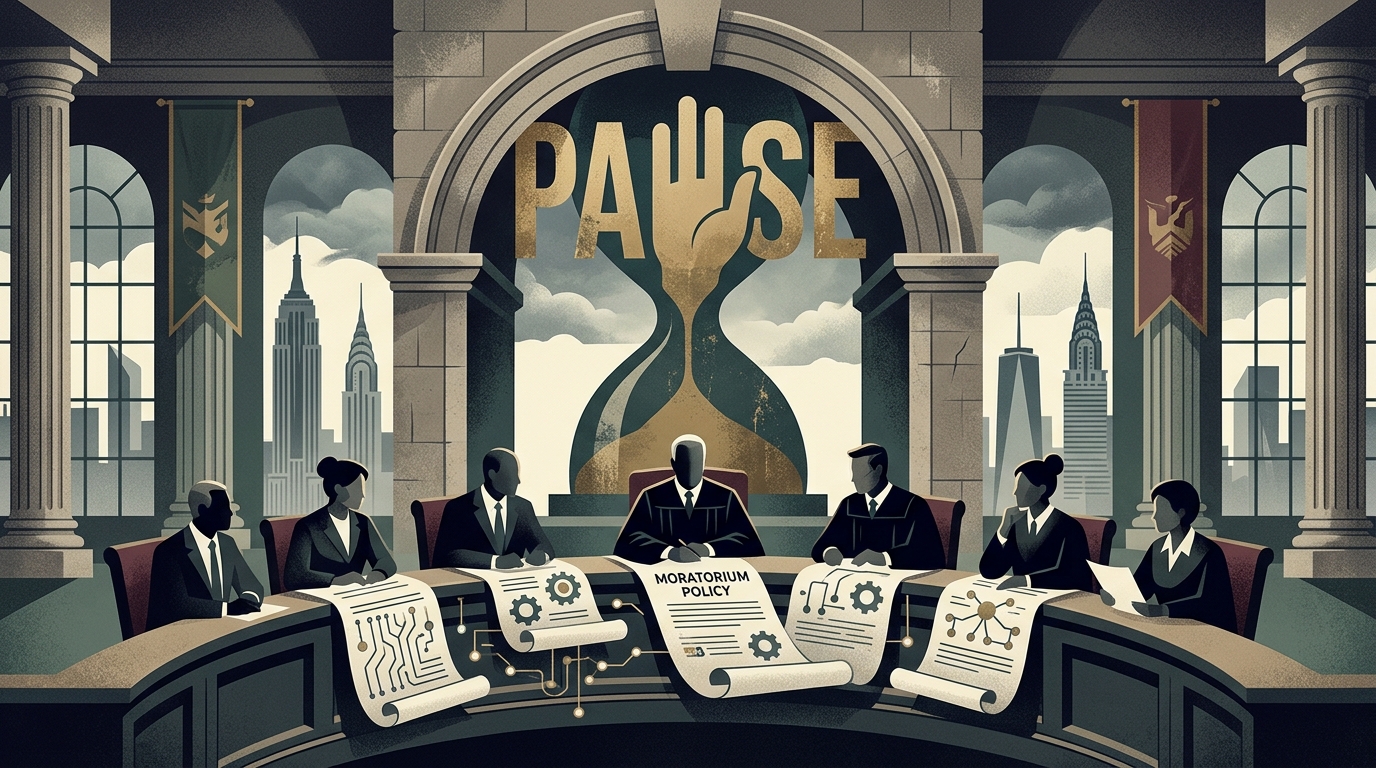
In the twilight of June 2026, the landscape of global policing has undergone a radical transformation—not necessarily through boots on the ground, but through algorithms running in silent server rooms. A recent report by Wausau Pilot & Review highlights a stark reality: the adoption of Artificial Intelligence by law enforcement agencies is growing at an exponential rate, while the rules meant to govern its use remain desperately behind the curve.
From real-time facial recognition to predictive policing, tools that once belonged to the realm of science fiction are now standard operating procedure. However, this technological arms race is occurring in a regulatory vacuum, where efficiency is frequently prioritized over the protection of civil liberties.
The Arsenal of Digital Surveillance
Modern police departments no longer rely solely on evidence gathered by human detectives. Today, AI systems analyze thousands of hours of body-worn camera footage in seconds, identifying behavioral patterns or spotting suspects in dense crowds. The rise of Generative AI has also permeated precincts, assisting in report writing and visualizing crime scenes based on witness testimony.
The fundamental issue, however, lies in the "black box" nature of these algorithms. When an algorithm flags a specific neighborhood as "high risk," police forces concentrate there, leading to more arrests, which in turn feed the algorithm new data, confirming its initial—and often biased—prediction. This feedback loop reinforces systemic inequalities and disproportionately targets specific socioeconomic groups, creating a self-fulfilling prophecy of criminality.
The Regulatory Lag and the Risk of Arbitrariness
Despite the implementation of the EU AI Act, its practical enforcement remains a daunting challenge. In the United States, the situation is even more fragmented, with some states banning facial recognition while others actively encourage its deployment. This lack of a unified federal framework allows tech companies to sell surveillance tools to local police departments with zero transparency regarding their accuracy or ethical construction.
Proponents of the technology argue that AI can save lives by identifying violent offenders faster. Critics, however, warn of the construction of a permanent surveillance state. The question in 2026 is no longer whether AI will be used in policing, but who monitors the monitors. Without strict rules on data retention, bans on biometric discrimination, and the guaranteed right to human intervention, justice risks being reduced to a series of computational errors.
Ethical Dilemmas and the Future of Public Safety
The use of AI in policing is redefining the concept of "reasonable suspicion." If an algorithm predicts that an individual is likely to commit a crime, is that sufficient to justify a preemptive stop or arrest? This shift from reactive to proactive policing shakes the very foundations of the presumption of innocence.
Furthermore, the question of accountability looms large. If an AI system makes a mistake that leads to a wrongful arrest or, worse, a violent confrontation, who bears the responsibility? Is it the developer, the officer who trusted the screen, or the machine itself? The answer remains elusive as legal systems worldwide struggle to adapt to the speed of silicon. The need for a "new social contract" that incorporates digital ethics is more urgent than ever, as technology continues to sprint forward, leaving the law to chase it in vain.