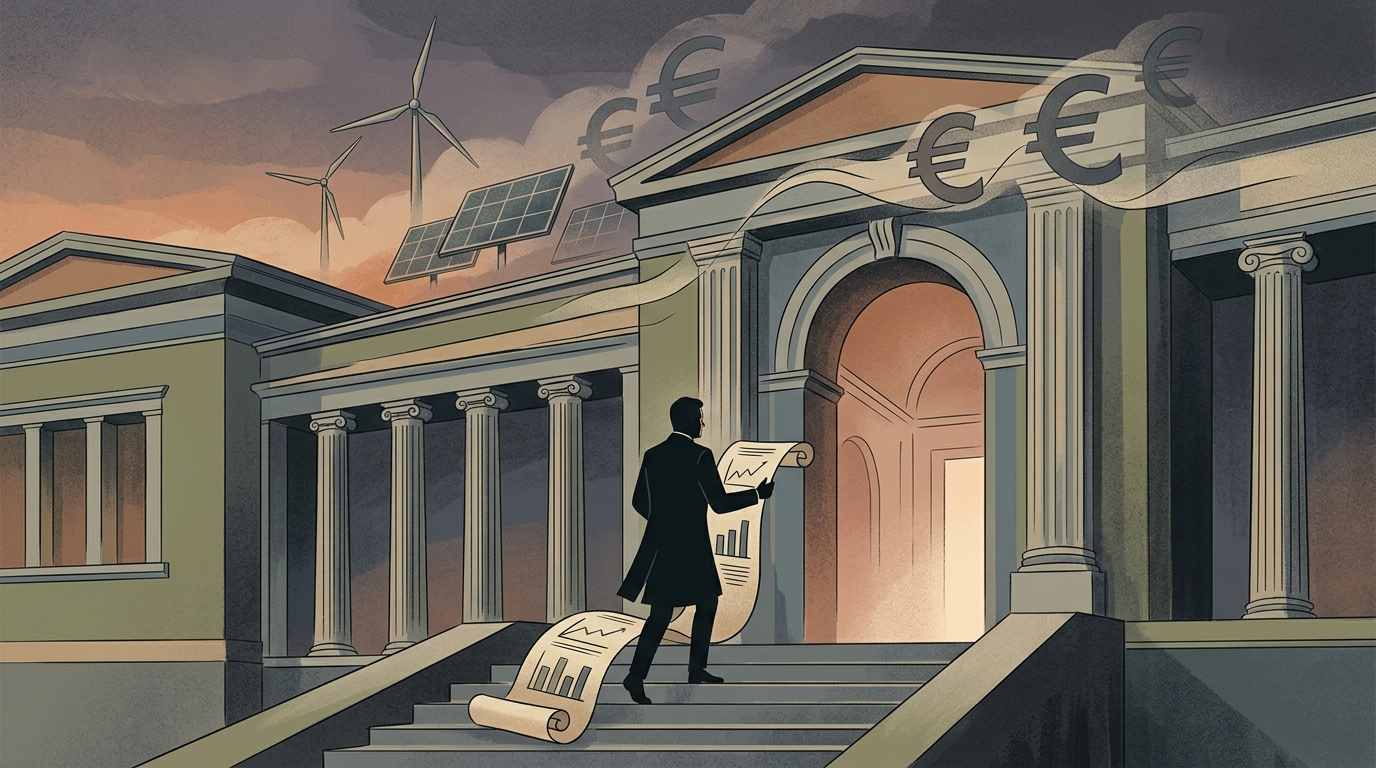
In a defining moment for the Greek economy as the nation enters the latter half of the 2020s, Kyriakos Pierrakakis, in his capacity as Minister of National Economy and Finance, has outlined the strategic roadmap for the 2026-2028 period. The announcement of a specialized 'escape clause'—effectively a fiscal carve-out—for energy projects totaling €1.5 billion is more than a mere accounting maneuver; it represents a calculated effort to fortify the country against future energy volatility.
The New Fiscal Paradigm and Energy Security
This initiative is a direct result of high-level negotiations within the framework of the European Union’s reformed Stability and Growth Pact. Having secured investment-grade status and consistent primary surpluses, Greece has earned the right to exclude specific expenditures related to the green transition and energy security from its net expenditure ceilings. According to the Minister, this €1.5 billion envelope will be channeled into infrastructure designed to transform Greece into a net exporter of green energy to Central Europe.
The investment plan focuses on upgrading electrical interconnections, strengthening transmission grids to accommodate higher penetration of Renewable Energy Sources (RES), and, crucially, integrating Artificial Intelligence for demand-side management via smart grids. "We are not just investing in cables; we are building a digital nervous system for energy," Pierrakakis noted, bridging his previous expertise in Digital Governance with current economic imperatives.
Private Debt: June’s Legislative Offensive
Beyond long-term energy strategy, the Minister identified the resolution of private debt as an immediate priority. By late June 2026, a comprehensive bill is expected to be tabled in Parliament to streamline debts toward the state and financial institutions. This upcoming legislation aims to clear the backlog in the out-of-court workout mechanism by utilizing advanced algorithms to assess debtor viability more rapidly and accurately.
- Automated debt restructuring for individuals and businesses with proven financial hardship.
- New incentive structures for consistent borrowers, including interest rate rewards.
- Stricter enforcement against strategic defaulters through real-time data cross-referencing via the MyData platform.
The government’s objective is to finally heal the scars of the previous decade’s financial crisis, unlocking liquidity and allowing thousands of businesses to rejoin the formal, healthy economy. Pierrakakis emphasized that the banking system’s current stability provides the necessary buffer for these more aggressive restructuring moves.
The Strategic Importance of the 2026-2028 Triennium
The 2026-2028 period is viewed as a 'golden window' for the Greek economy. It coincides with the final disbursement of Recovery and Resilience Facility (RRF) funds and the full deployment of the new NSRF cycle. The €1.5 billion 'escape clause' acts as a fiscal bridge, ensuring that investment momentum remains uninterrupted by the return to stricter EU fiscal rules. These investments are projected to contribute at least 0.5% to annual GDP growth while significantly lowering energy costs for industry and households in the long run.
"Greece is no longer asking for exceptions due to weakness, but for fiscal space due to potential. This €1.5 billion is our ticket to next-generation energy autonomy," the Minister declared.
In conclusion, the strategy presented by Kyriakos Pierrakakis reflects a newfound national confidence. Coupling fiscal discipline with growth-oriented energy investments has become the new cornerstone of Greek economic policy, positioning the country as a pivotal player in a Europe striving to maintain its global competitiveness.