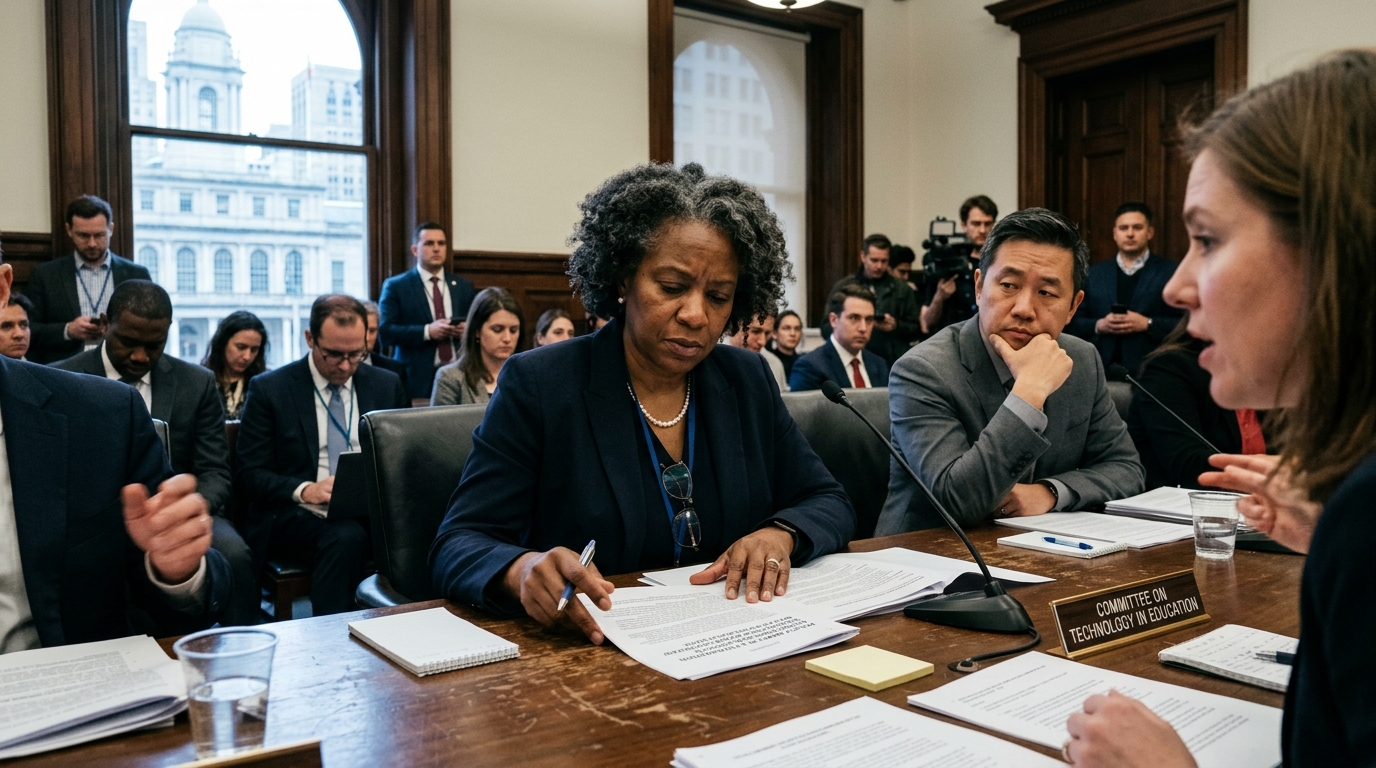
New York City, a global bellwether for educational trends, is currently navigating a pivotal moment in the history of public instruction. As the New York City Department of Education (NYCPS) moves to finalize its comprehensive policy on Artificial Intelligence, a palpable sense of unease has taken hold among the parent body. What began as a reactionary ban on tools like ChatGPT in early 2023 has evolved into a complex, and some say rushed, effort to integrate generative AI into the curriculum of the nation’s largest school district.
The Privacy Paradox: Data as the New Commodity
The primary source of parental anxiety is not the technology itself, but the data that fuels it. In an era where information is more valuable than oil, parents are rightfully concerned about the 'digital shadows' being cast by their children. Every prompt entered into an AI interface and every algorithmic assessment generates a data point. Without explicit, ironclad protections, there is a fear that this data will be harvested by EdTech giants to train commercial models or, worse, to create permanent academic and behavioral profiles that could haunt students long after graduation.
Advocacy groups are calling for 'data sovereignty' for students, demanding that the NYC school board ensures no student data is used for commercial purposes outside the classroom. The lack of granular detail in the draft policies regarding third-party vendor contracts has only fueled the fire. For parents, the promise of personalized learning feels like a Trojan horse for unprecedented corporate surveillance of minors.
Pedagogical Shifts: Critical Thinking vs. Algorithmic Ease
Beyond the technicalities of privacy lies a deeper philosophical concern regarding the future of the human mind. Education has traditionally been about the struggle with ideas—the difficult process of synthesis, analysis, and creation. Generative AI threatens to bypass this friction. If an AI can generate a coherent essay on the causes of the Civil War in seconds, what happens to the student’s ability to conduct independent research and build a logical argument?
The NYCPS leadership argues that 'AI literacy' is the new essential skill. They posit that students must learn to prompt effectively, verify AI-generated claims, and understand the ethical implications of the technology. However, many educators fear that the system is not ready. Without significant investment in teacher training, the AI might become a replacement for instruction rather than a supplement. There is a looming risk of a 'pedagogical divide' where affluent students receive human-led critical thinking instruction, while those in underserved communities are relegated to AI-managed learning platforms.
The Influence of Big Tech and the Economic Stakes
The push for AI in schools cannot be viewed in isolation from the economic interests at play. The EdTech market is projected to reach hundreds of billions of dollars by the end of the decade. For companies like Microsoft, Google, and specialized AI startups, securing a contract with NYC Public Schools is the ultimate validation. This has led to accusations that the policy-making process is being unduly influenced by corporate interests seeking to lock the district into specific ecosystems.
Key points of contention include:
- The transparency of the algorithms: How are they making decisions about a student's progress?
- The potential for bias: Generative AI is known to reflect the biases of its training data, which could disproportionately affect minority students.
- Accountability: Who is responsible when an AI tool provides harmful or incorrect information to a child?
Conclusion: A Precedent for the World
As NYC Public Schools finalizes its framework, the eyes of the world are watching. This is more than just a local policy update; it is a test case for how modern democracies will integrate powerful, disruptive technologies into the foundational institution of the school. The balance between embracing the future and protecting the vulnerability of childhood is incredibly delicate. If New York gets it right, it could provide a blueprint for ethical AI in education. If it fails, it risks turning the classroom into a laboratory for corporate experimentation at the expense of the next generation's privacy and intellectual autonomy.