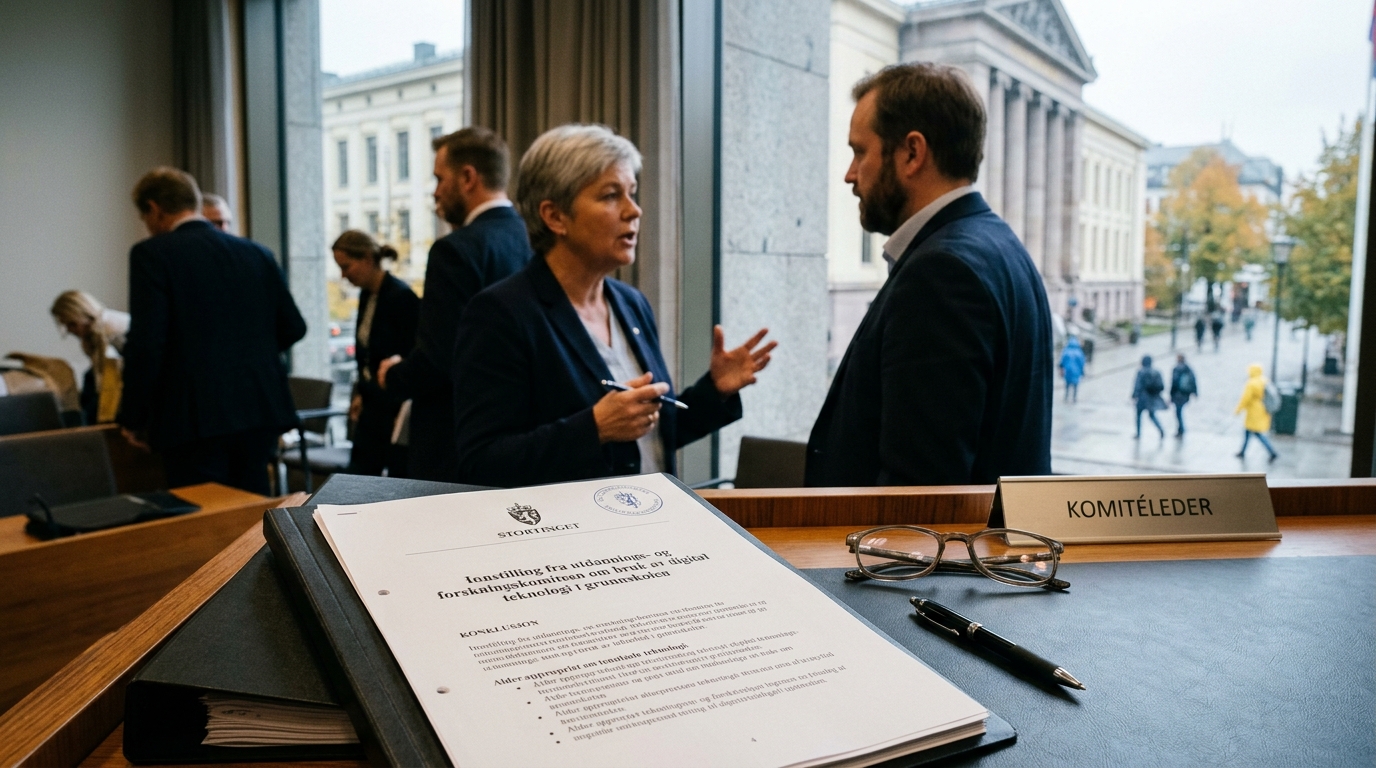
In a move that is sending shockwaves through the global educational landscape, Norway—a nation that once led the charge in classroom digitization—has decided to draw a definitive line regarding Artificial Intelligence in primary education. This decision is not merely a technical regulation but a profound philosophical shift aimed at protecting the foundational stages of human learning. The Norwegian Ministry of Education, in collaboration with child psychologists and neuroscientists, has concluded that premature exposure to Generative AI tools could undermine the development of critical thinking and linguistic competence in young children.
The Neuroscience of the Ban
The primary concern of Norwegian authorities centers on how a child’s brain learns to process information. When a first or second-grade student uses an AI tool to compose a text or solve a problem, they bypass the essential process of "productive struggle." Research indicates that the haptic connection between handwriting and the brain is vital for memory retention and cognitive mapping. AI, by offering instant answers, removes the trial-and-error element necessary for neural plasticity.
Furthermore, Norway is reintroducing physical textbooks to classrooms. After a decade of tablet dominance, a worrying decline in reading comprehension was observed. Students have become conditioned to "scan" screens rather than deep-read texts. The AI ban in primary schools is part of a broader "de-digitalization" strategy for early ages, aimed at reclaiming the focus and patience required for traditional study.
Data Privacy and Ethical Dilemmas
Beyond pedagogy, the decision is rooted in significant security concerns. AI models function as "black boxes." Feeding them data from minor students raises massive questions regarding privacy and the commercialization of childhood behavior. Norwegian authorities argue that schools should not be training grounds for Big Tech algorithms at the expense of children’s private lives.
"Education is the process of forming a free human being, not adapting them to an algorithm," a Ministry of Education spokesperson noted.
This stance reflects a broader European trend, where the EU AI Act classifies AI systems in education as "high risk." Norway, while not an EU member, aligns with these principles, seeking to ensure that technology remains a tool in the teacher's hands rather than a replacement for them.
Market Reaction and the Path Forward
Naturally, the decision has not gone unnoticed by the EdTech industry. Critics argue that the ban will create a "digital divide," leaving children who do not learn to use AI at school at a disadvantage later in life. However, the Norwegian government counters that AI can be introduced in secondary education, once students have already established their core cognitive skills.
In conclusion, Norway is sending a clear message: progress is not always linear. Sometimes, taking a step back toward tradition is the only way to ensure the next generation has the intellectual tools to navigate the future. Norway's "analog pivot" may well become the blueprint for many other Western societies struggling with the consequences of over-digitization.