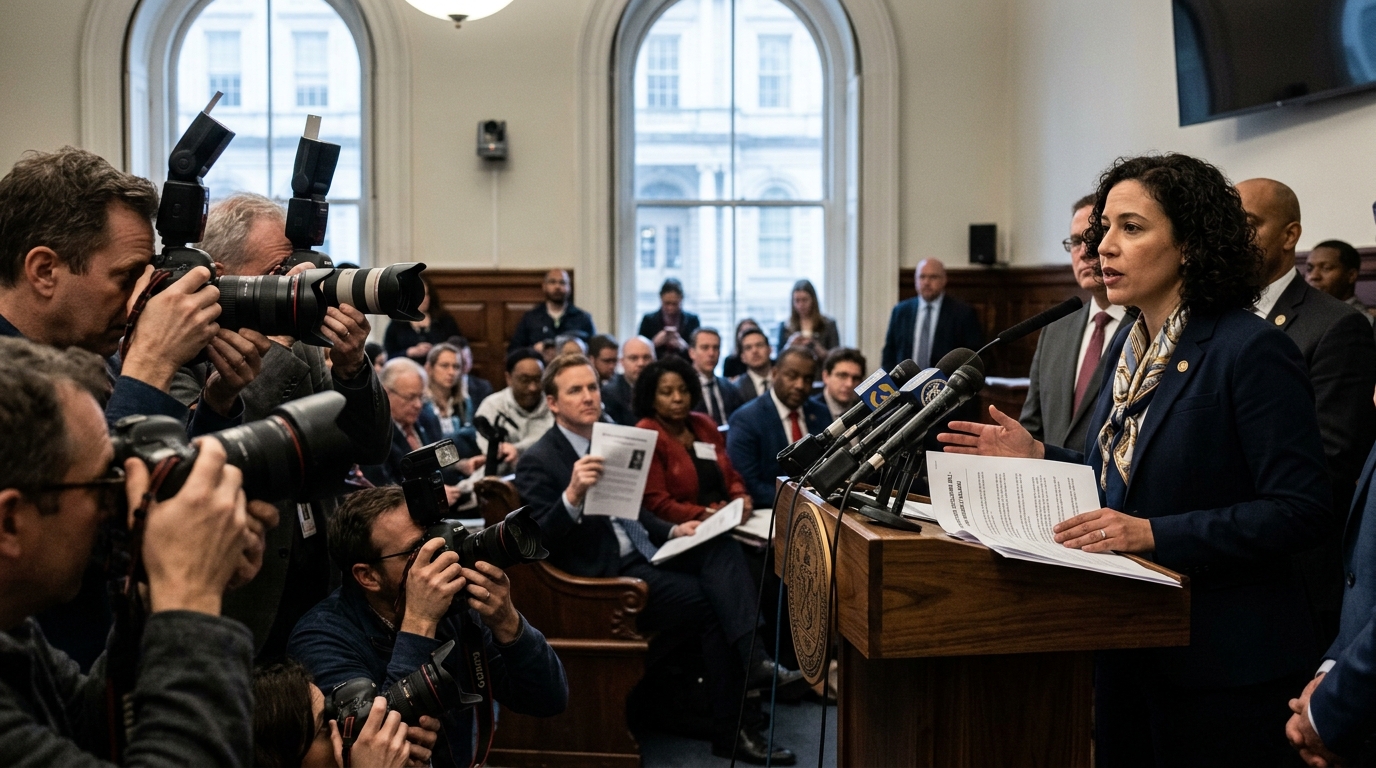
In a watershed moment for digital regulation, New York State has officially implemented legislation requiring mandatory labeling of Artificial Intelligence (AI) content in advertising campaigns. This law, among the most stringent and comprehensive in the United States, aims to combat misinformation and protect consumers from the increasingly blurred line between reality and synthetic creation.
The Anatomy of the New Legislation
The new regulation mandates that any advertisement—whether a political campaign or a commercial product promotion—utilizing "substantially modified" content via generative AI tools must carry a clear and conspicuous disclaimer. This includes deepfakes of individuals, synthetic voices, and digitally constructed environments that could be perceived as real by the average viewer.
Violators face escalating fines starting from a few thousand dollars and reaching six figures for repeat offenses, particularly in the case of political ads that influence electoral processes. The New York Attorney General’s office has already established a specialized task force to enforce these new rules, sending a clear message to tech platforms and advertising agencies alike.
Political Pressure and Safeguarding Democracy
The timing of this law’s implementation is no coincidence. With major elections on the horizon, concerns over the use of deepfakes in political communication have reached an all-time high. New York is leading the way in trying to shield the democratic process from "digital forgery." The legislation requires political ads to explicitly state if AI tools were used to alter a candidate's appearance or speech, or to depict events that never actually occurred.
Proponents of the law argue that transparency is the only antidote to the crisis of trust plaguing social media. However, some skeptics question whether these labels are enough to deter the psychological impact of a well-crafted false image, noting that the human brain often retains the impression of an image even if it knows it is artificial.
Challenges for the Advertising Industry
For advertising agencies and content creators, the law brings a new reality of operational costs and legal liability. The use of AI to enhance productivity—from automated editing to background generation—is now ubiquitous. Determining what constitutes a "substantial modification" remains a gray area expected to be clarified through future court rulings.
- Companies must revise their contracts with technology vendors to ensure compliance.
- The integration of robust, tamper-resistant watermarking is now a priority.
- Training legal departments on these new requirements has become mandatory for major firms.
Despite the hurdles, many analysts believe New York’s move will serve as a "Gold Standard" for other states and the US federal government, which is closely monitoring the results of this implementation.
Conclusion: Toward an AI Ethics Framework
The enactment of this law marks the end of the "Wild West" era for AI in advertising. As technology evolves at speeds that outpace legislation, New York is choosing a path of proactive protection. The ultimate question is whether labeling will prove to be a sufficient tool for public awareness or if it will become a mere formality that users learn to ignore, much like website cookie banners. In either case, the need for a new ethics of digital truth has never been more urgent.