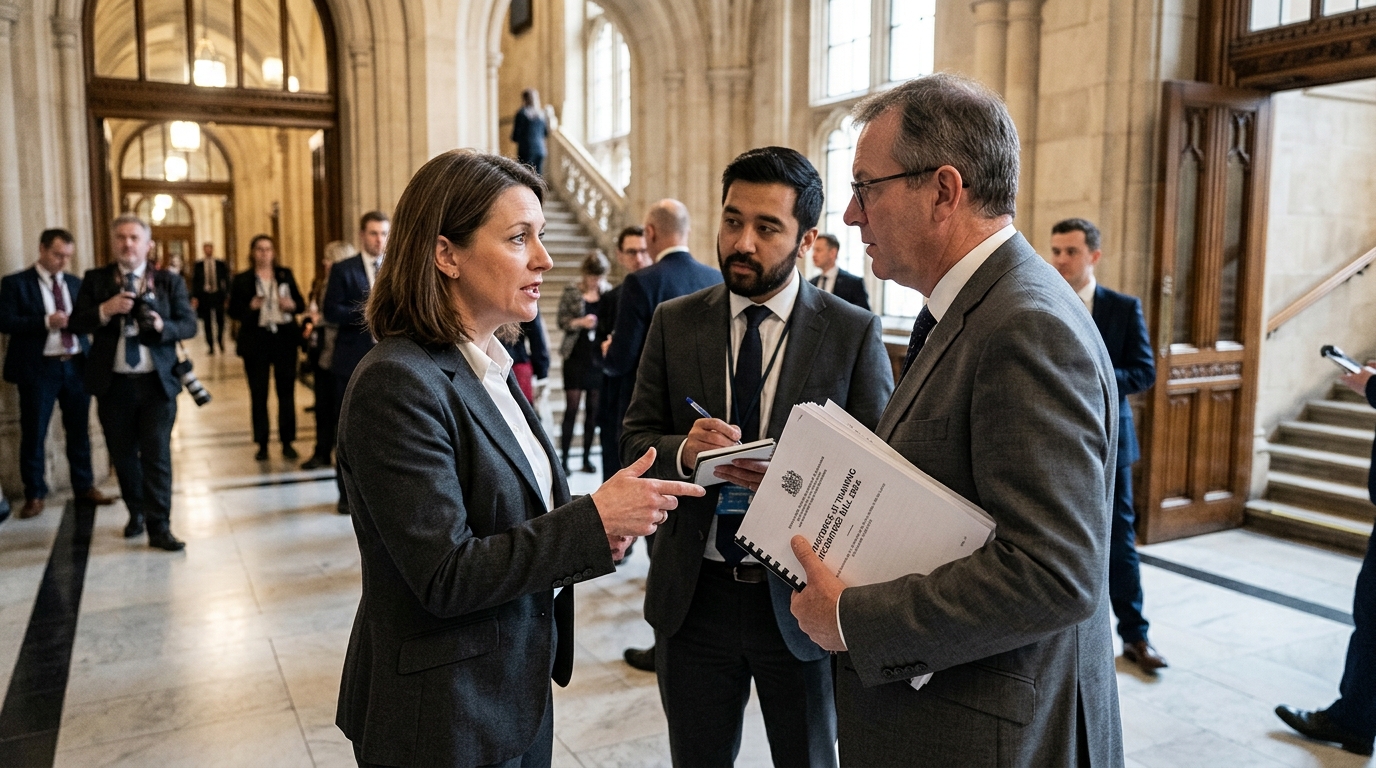
The meteoric rise of Artificial Intelligence (AI) has frequently been framed as a zero-sum game: a binary choice between technological progress and human employment. However, a significant new legislative push, originating from the Bay Area and now gaining momentum on the national stage, seeks to dismantle this binary. The proposed bill aims to transform AI from a perceived job-killer into a catalyst for workforce evolution by offering robust incentives to companies that prioritize the training and hiring of humans to oversee and refine algorithmic systems.
Human-Centric Policy in the Age of Automation
As we navigate the middle of 2026, the legislative focus is shifting from mere regulation of AI outputs to the preservation and enhancement of the human inputs that make AI possible. The bill introduces a framework where corporate responsibility is measured by the investment in 'human infrastructure.' Companies that can demonstrate a commitment to certifying and upskilling their current workforce—rather than replacing them with automated scripts—stand to gain significant tax credits and federal subsidies.
This is not merely a defensive measure against unemployment; it is a strategic repositioning of what constitutes a 'tech worker.' By incentivizing roles such as data ethicists, human-in-the-loop supervisors, and AI interaction managers, the bill acknowledges that the most effective AI systems are those guided by human nuance and cultural context.
Bringing 'Ghost Work' into the Light
For too long, the AI industry has relied on a globalized, often exploited workforce—frequently referred to as 'ghost workers'—who perform the grueling task of data labeling and content moderation for minimal pay. This bill seeks to professionalize and domesticate this labor. By requiring transparency in how AI models are trained and offering rewards for domestic hiring, the legislation aims to create a new tier of high-quality vocational jobs within the United States.
- Tax credits of up to 25% for documented workforce retraining expenses.
- Direct grants for public-private partnerships between tech firms and vocational institutions.
- Preferential status in government procurement for companies meeting high 'human-employment' benchmarks.
The Economic and Ethical Stakes
The economic logic behind the bill is that a massive wave of unemployment caused by AI would lead to social instability that would ultimately hurt the market. Therefore, preventing displacement is a matter of fiscal prudence. However, the proposal is not without its detractors. Critics argue that these incentives might function as a 'corporate handout' to wealthy tech giants who would have trained their staff anyway. There is also the logistical challenge of auditing these training programs to ensure they provide transferable, high-level skills rather than just temporary instruction on proprietary software.
"We are at a crossroads where we must decide if technology serves humanity or if humanity is merely a resource to be optimized out of existence," noted a senior policy advisor involved in the drafting. "This bill is our stake in the ground for the former."
Furthermore, the bill addresses the 'black box' problem of AI. By rewarding the hiring of human auditors, the government hopes to mitigate algorithmic bias at the source. If humans are incentivized to be part of the training process, the resulting AI is more likely to reflect human values and ethical standards. This represents a shift from reactive regulation to proactive, structural reform of the AI development pipeline.
The Path Ahead
As the bill moves through the legislative process, its success will depend on its ability to adapt to the fast-changing technical landscape. The definition of the 'AI workforce' must remain fluid enough to encompass roles that don't even exist yet. Ultimately, this legislation signals a growing global realization: the AI revolution is not just about silicon and code; it is, and must remain, a human endeavor. The challenge for 2026 and beyond will be ensuring that the dividends of automation are shared by the many, not just the few who own the algorithms.