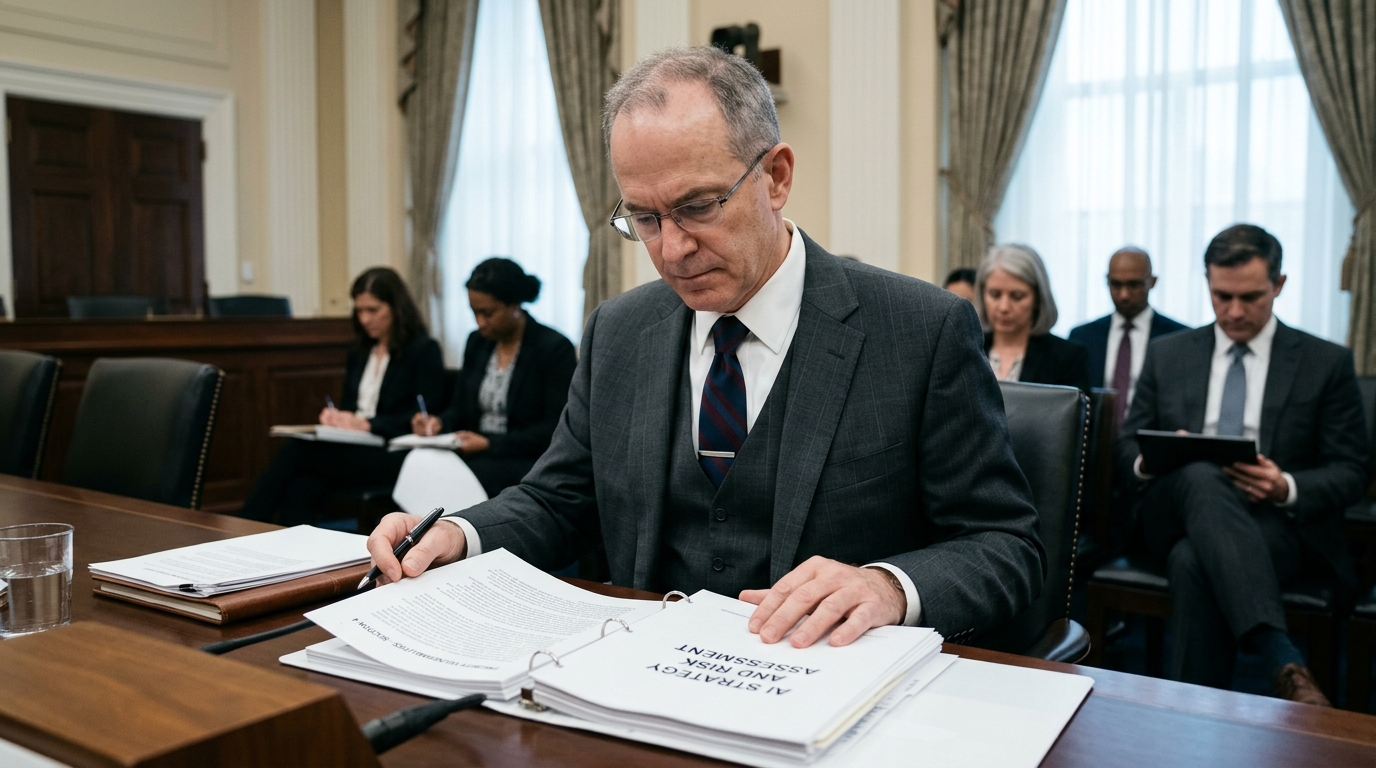
In an era where the volume of digital threats is growing at exponential rates, the traditional approach of 'universal patching' is reaching its breaking point. The recent federal directive, highlighted by the Federal News Network, signals a fundamental shift in United States cybersecurity strategy—one that is expected to set global benchmarks. The core concept is simple yet transformative: using Artificial Intelligence to identify and immediately remediate vulnerabilities that pose the 'highest risk,' while deprioritizing less critical issues.
The Crisis of Vulnerability Overload
For decades, IT and security teams have been locked in a never-ending race. Tens of thousands of new Common Vulnerabilities and Exposures (CVEs) are recorded every year. The attempt to cover every security gap often leads to 'alert fatigue,' where truly critical threats are lost in a sea of secondary technical glitches. The new directive acknowledges that not all vulnerabilities are created equal. Some require physical access to hardware, while others can be exploited remotely by state-sponsored hackers to paralyze critical infrastructure.
Artificial Intelligence enters this landscape as the ultimate triage expert. Through advanced machine learning algorithms, systems can now analyze in real-time which security gaps are being actively exploited 'in the wild' by malicious actors. This dynamic prioritization allows federal agencies to direct their limited human and financial resources toward where the threat is immediate and existential.
The Framework of the New Directive
According to the directive, the focus shifts from the quantity to the quality of protection. Agencies are encouraged to adopt AI tools that can predict the likelihood of a vulnerability being exploited even before it is used on a wide scale. This includes analyzing data from the dark web, hacker forum activity, and the historical behavior of similar code sequences.
- Prioritization based on the Known Exploited Vulnerabilities (KEV) catalog.
- Automated impact analysis on critical operations.
- Reduction of Mean Time to Remediation (MTTR) for high-risk threats.
- Strengthening public-private partnerships for threat data exchange.
This move is not just about technology; it is about governance. It mandates a culture of risk management rather than a culture of mere compliance. In the past, an agency might be considered 'secure' if it had installed 90% of updates. Today, if the remaining 10% includes a vulnerability that allows access to nuclear data or the personal information of millions of citizens, the agency is considered to have failed.
Geopolitical Implications and Challenges
The decision to use AI as the tip of the spear in cyber-defense does not occur in a vacuum. We live in a time where cyberspace is the fifth domain of warfare. State actors from China, Russia, and Iran are already using AI to discover vulnerabilities faster than human analysts. The new directive is essentially a response to this algorithmic arms race.
"We cannot fight 21st-century threats with 20th-century tools. AI is the only means we have to balance the speed of attacks," sources close to the federal government state.
However, this approach is not without risks. Over-reliance on AI can create blind spots. If an algorithm fails to recognize a new, novel attack method (zero-day) because it doesn't fit past patterns, the consequences could be catastrophic. Furthermore, there is the issue of transparency: how can we be sure that the AI prioritizing the vulnerabilities has not itself been compromised or does not exhibit bias in its assessments?
Conclusion: The Dawn of a New Era
The new AI directive in cybersecurity is a milestone. It shows that the state is beginning to perceive the complexity of the digital world not as a problem solved by more personnel, but as a problem requiring smarter management. Focusing on 'highest risk' vulnerabilities is an admission that absolute security is impossible, and that survival depends on our ability to protect what truly matters, at the moment it matters most.