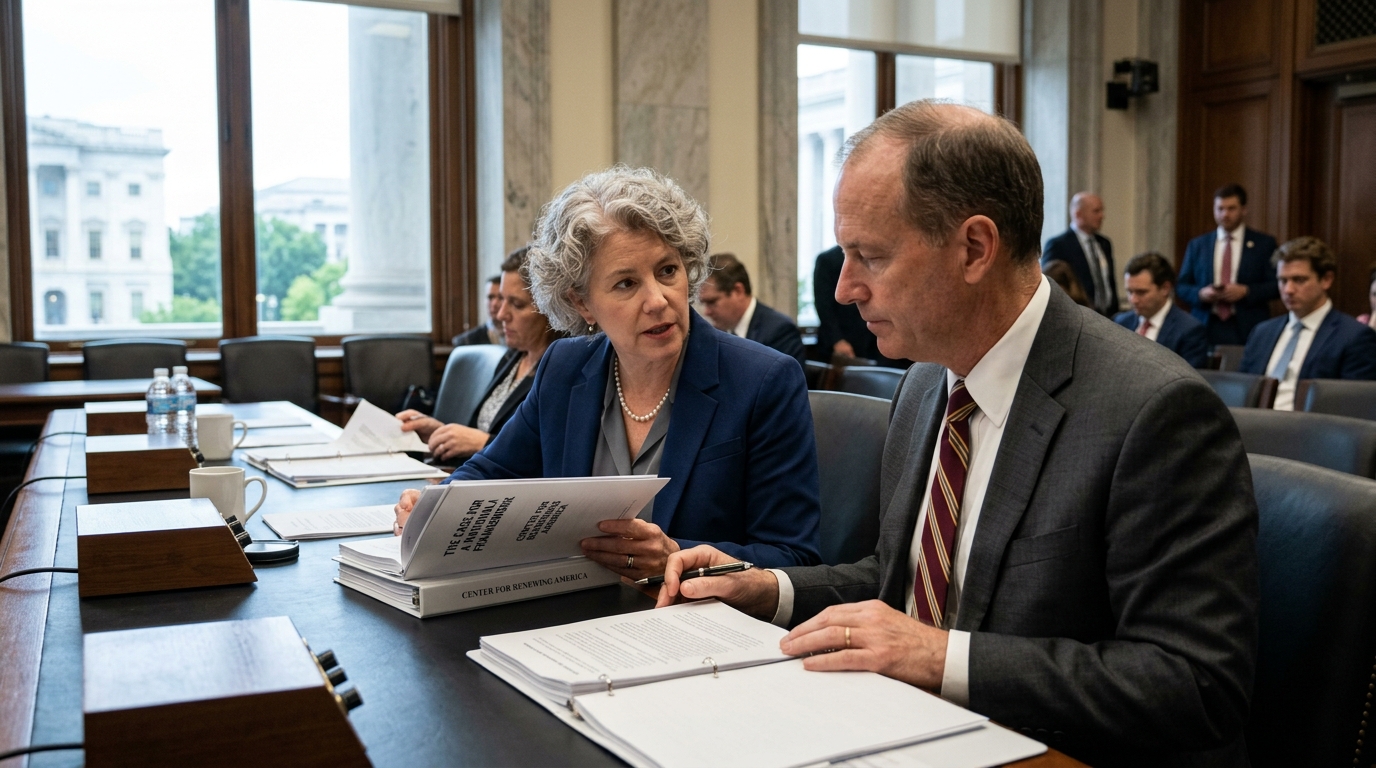
As we move through the first half of 2026, the discourse surrounding Artificial Intelligence (AI) governance has shifted from abstract ethical concerns to the hard reality of geopolitical competition. The Center for Renewing America (CRA), a think tank with significant influence in U.S. conservative circles, recently published a primer advocating for a "National Framework on Artificial Intelligence." This proposal is not merely a set of regulatory rules but a manifesto for reclaiming technological sovereignty in a world threatened by authoritarianism and internal ideological entrenchment.
A Clash of Visions: Globalism vs. National Sovereignty
The CRA argues that the current approach to AI governance is dangerously fragmented and often undermined by a "globalist" elite that prioritizes international agreements at the expense of U.S. national interests. According to the analysis, Artificial Intelligence is not a neutral tool but a power multiplier. If the United States fails to define a framework that protects its fundamental values, it risks being left at a disadvantage against China, which uses AI as a tool for absolute social control.
The proposed framework focuses on three pillars: infrastructure security, the protection of individual liberties from state and corporate censorship, and energy sufficiency. The logic is simple: without cheap and abundant energy, the development of Large Language Models (LLMs) will become impossible, handing the reins to those who control the resources.
Energy and Infrastructure: The Fuel of Intelligence
One of the most radical aspects of the Center for Renewing America’s proposal is the link between AI policy and energy policy. The CRA contends that the "green agenda" of recent years has weakened the American power grid, making it incapable of supporting the massive data centers required for the next generation of AI. The proposal calls for a return to nuclear energy and the utilization of fossil fuels as a necessary prerequisite for technological supremacy.
"You cannot have world-class AI with a third-world energy grid," the report states pointedly. This approach directly clashes with current Silicon Valley trends toward "clean energy," prioritizing efficiency and national power over environmental targets. The argument is that in a race for survival, the carbon footprint of a GPU cluster is secondary to the strategic advantage it provides.
Protecting Free Speech and Countering "Woke" AI
Perhaps the most controversial point of the framework is the battle against ideological bias in AI systems. The CRA warns that AI is already being used to enforce a "woke" agenda through algorithms that censor conservative viewpoints or distort historical reality. The proposal calls for legislative measures to ensure that AI remains a tool for free expression rather than a digital arbiter of truth.
The text highlights the danger of the "weaponization" of the bureaucracy, where government agencies could collaborate with tech giants to stifle dissent. A national framework, according to the CRA, must set strict limits on this relationship, protecting citizens' right to information without ideological filters. They advocate for transparency in training data and the removal of "safety" guardrails that function as political censorship.
Conclusion: Technology as a Battlefield
The Center for Renewing America’s proposal is a stark reminder that Artificial Intelligence is no longer just a matter for engineers and programmers; it is the central battlefield for the future of Western democracy. Whether one agrees with the CRA's conservative premises or not, the need for a coherent national plan that transcends corporate profits is now indisputable. 2026 will be the year when nations must decide whether they will control technology or let technology—and those who control it—define their future. The era of laissez-faire AI development is ending, replaced by a new age of digital realpolitik.