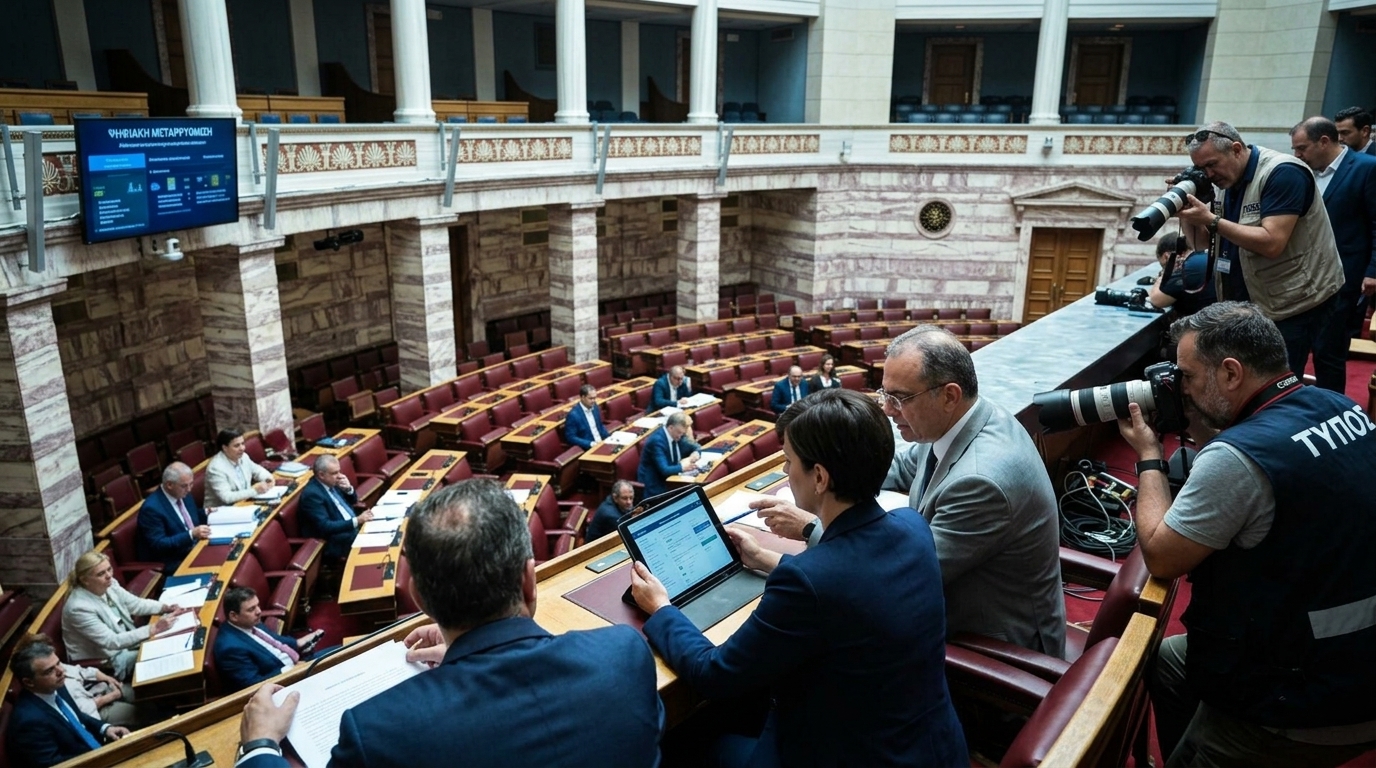
The introduction of the new Local Government Code to the Greek Parliament in June 2026 marks a pivotal moment for the country’s administrative landscape. After decades of fragmented regulations and bureaucratic bottlenecks, the Ministry of Interior is attempting a comprehensive reset of how Greece’s 332 municipalities and 13 regions operate. This legislation is not merely a codification of existing laws but a radical overhaul aimed at transforming local government into a modern, digital, and financially autonomous pillar of growth.
The Digital Revolution and AI in Public Service
A central axis of the new Code is the complete digitalization of services. For the first time, provisions are introduced for the use of Artificial Intelligence systems to predict infrastructure needs, manage traffic, and provide automated citizen support. The goal is to eliminate the need for physical presence at town halls for 90% of administrative acts. Municipalities are now required to employ "digital assistants" to guide residents, while a "municipal digital signature" is established for the instantaneous issuance of certificates and permits.
However, the digital transition is not just about convenience. The Code mandates the creation of a central real-time monitoring system for municipal projects. Every citizen will be able, via a dedicated app, to track the progress of works in their neighborhood, the funds being spent, and the delivery schedules. This "open governance" initiative seeks to restore public trust in local officials, which has been shaken by instances of mismanagement in the past.
Financial Autonomy and the New Accountability Model
The most contentious issue the new Code addresses is the financial viability of municipalities. The new framework introduces the concept of "dynamic funding," where resources from the central state will be linked to specific Key Performance Indicators (KPIs). Municipalities that achieve targets in recycling, energy upgrading of buildings, and the absorption of EU funds will be rewarded with additional financing.
At the same time, the framework for municipal debt is being tightened. A permanent restructuring mechanism is established, which will intervene automatically whenever a municipality shows systemic deficits. The innovation here lies in the introduction of the "Local Development Pact," allowing municipalities to enter partnerships with the private sector to leverage municipal property under the strict supervision of a new Local Government Audit Council.
The Decalogue of Changes
The ten core pillars of the reform, as outlined in the bill, include:
- Simplification of Procedures: Abolishing 150 redundant administrative steps for issuing building and business permits.
- New Electoral System: Stabilizing terms and changing the way municipal councils are elected to ensure greater governability.
- Civil Protection: Mandatory creation of local climate disaster response plans using satellite data.
- Waste Management: Nationwide implementation of the "pay-as-you-throw" system.
- Social Policy: Strengthening "Home Help" structures and establishing municipal mental health centers.
- Meritocracy: Hiring through the Supreme Council for Civil Personnel Selection (ASEP) with special residency criteria for mountainous and island municipalities.
- Energy Communities: Enabling municipalities to produce their own clean energy to reduce lighting and heating costs.
- Transparency: Mandatory posting of all expenditures over 500 euros on a dedicated open data platform.
- Metropolitan Governance: Special provisions for Athens and Thessaloniki to coordinate transport and infrastructure.
- Participatory Budgeting: Institutionalizing the right of citizens to decide on 5% of their municipality's investment budget.
Challenges and Political Reactions
Despite these ambitious goals, the reform faces skepticism from the opposition and some local government unions. Critics focus on the risk of creating "two-tier municipalities," where wealthy and digitally advanced areas thrive while small provincial municipalities sink into underfunding due to an inability to meet performance targets.
"Local government is not a business to be judged solely by financial indicators. It is the citizen's last refuge in times of crisis," stated representatives of the Central Union of Municipalities of Greece (KEDE).
The debate in Parliament is expected to be heated, as the stakes involve not just administrative efficiency but the very democratic functioning of local communities in an era of significant technological and climatic challenges.