

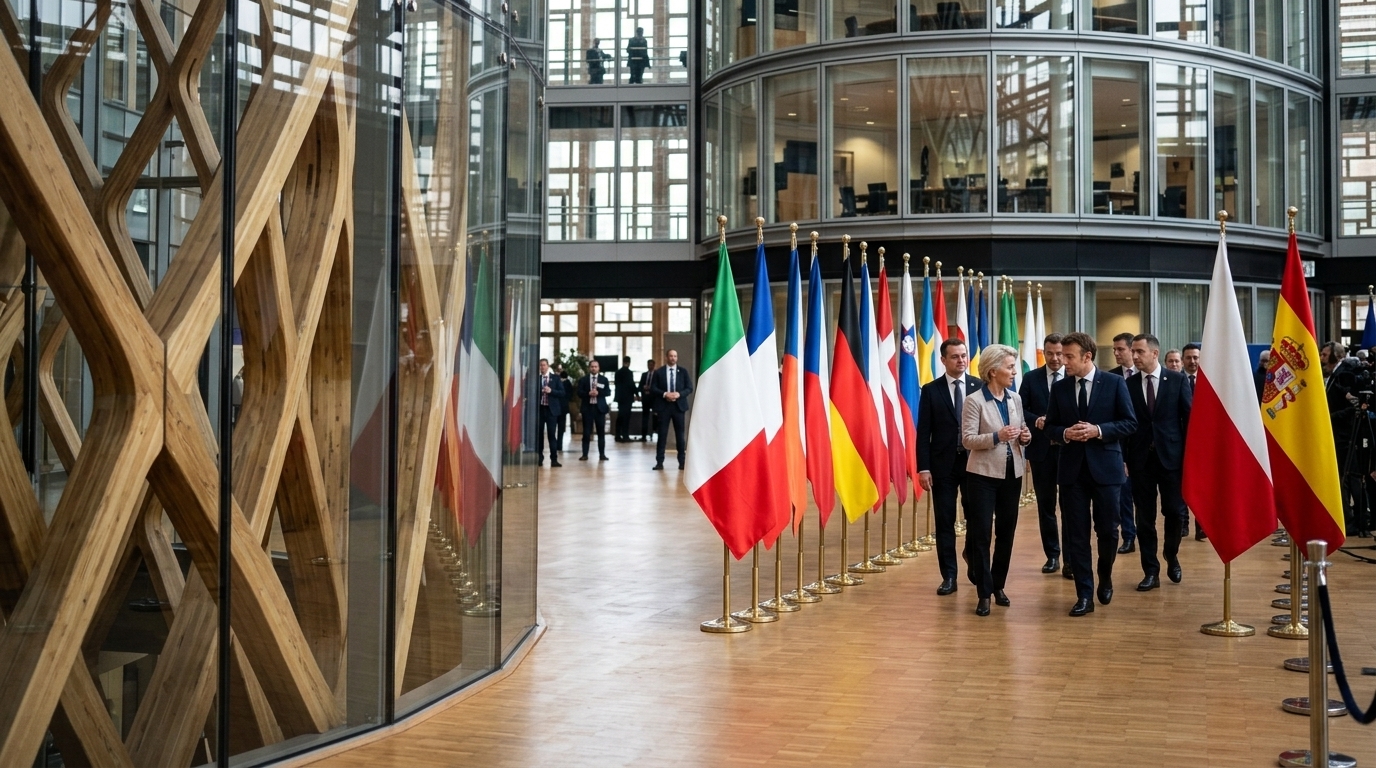
As we navigate the summer of 2026, the geopolitical architecture that sustained the West since 1945 is not merely shaking; it is being fundamentally reconstructed. Europe, traditionally tethered to the chariot of American security and economic might, now finds itself at a critical crossroads. The resurgence of "Trumpism" in Washington—whether as active government policy or a dominant ideological trend—has acted as a violent catalyst for a European awakening. What was once termed "strategic autonomy" and served as a subject for academic debate in Brussels is now transforming into an existential necessity.
Defense as the Foundation of Sovereignty
For decades, Europe enjoyed the so-called "peace dividend," outsourcing its security to NATO and the United States. Today, Donald Trump's rhetoric regarding transactional diplomacy—where protection is granted only to those who "pay the bill"—has sent shivers of concern across the continent. The EU's response is no longer just verbal. We are witnessing an unprecedented shift toward joint defense procurement and the strengthening of the European defense industry.
According to recent analyses, Europe is required to fill a gap of billions of euros in armaments and technology. The creation of a "European Defense Fund" with real teeth and the integration of the fragmented defense systems of member states are top priorities. The stake is not just the deterrence of external threats, but ensuring that Europe can act independently when its interests do not align with those of Washington.
Economic Protectionism and the EU Response
In the economic sphere, the threat of universal tariffs from a potential Trump administration has put the European Commission on high alert. The era of naive free trade appears to be ending. The EU is preparing an "arsenal" of countermeasures, including targeted tariffs on American products, but also a deeper pivot toward the internal market. The Draghi report on competitiveness, published last year, now serves as the gospel of this new economic policy.
- Strengthening European supply chains to reduce dependence on the US and China.
- Incentivizing the reshoring of critical technology production to European soil.
- Creating "European Champions" in sectors such as energy and telecommunications.
The challenge is twofold: Europe must protect itself from the protectionism of others without sliding into a full-blown isolationism that would damage its export-oriented nature. The balance is delicate and requires a political unity that is often lacking in the bloc of 27.
Technological Sovereignty and Artificial Intelligence
As The AI Chronicle, we must focus on the role of technology in this transition. Europe has realized that dependence on American Big Tech companies poses a risk to its national security and democratic processes. The development of "Sovereign AI" is no longer a slogan but a strategic goal.
"Technological sovereignty is not about excluding foreign investment, but about ensuring that our European values and data are not hostage to the decisions of a foreign power or a private company in Silicon Valley," says a senior Brussels official.
Investments in European data centers, the promotion of open-source AI models, and the strict enforcement of the AI Act are the tools through which Europe is attempting to carve its own path. The goal is to create an ecosystem that allows European businesses to innovate without having to "digitally migrate" to the US.
Conclusion: The Coming of Age of a Continent
Preparing for an America without Trump—or rather, for an America that no longer cares for Europe—is the process of the EU's coming of age. It is a painful process, as it requires higher spending, difficult political decisions, and the abandonment of the safety provided by the "Pax Americana." However, it is also a unique opportunity. Europe has the chance to emerge as an autonomous pole of power, capable of defending its interests and promoting a governance model that combines technological progress with social justice and human rights. The future is no longer something that happens to Europe, but something Europe is called to shape itself.





