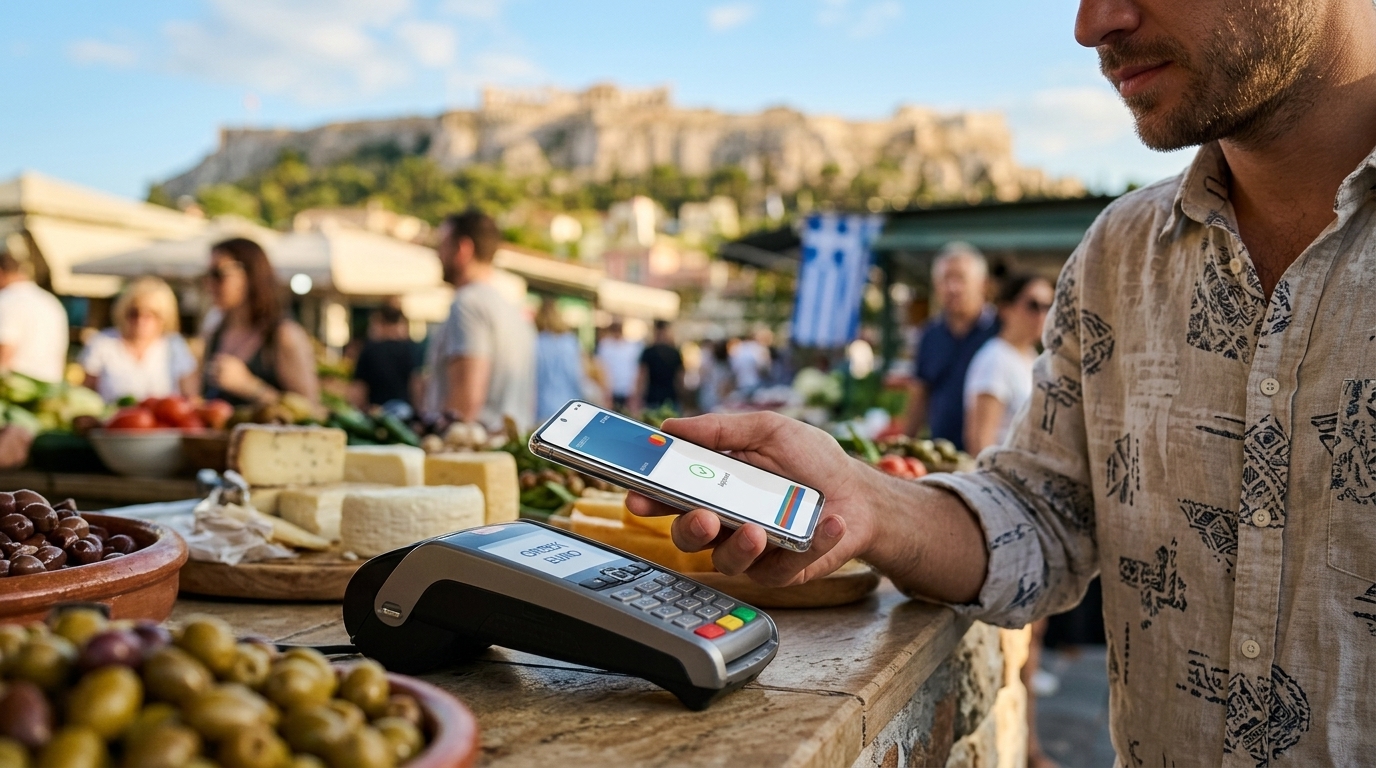
Greece, a country historically tethered to physical currency, has been undergoing a digital transformation at a pace that would have seemed unthinkable a decade ago. The official launch of Samsung Wallet in the Greek market is not merely the addition of another payment app; it is the culmination of a journey toward the complete digitalization of the Greek consumer's daily life. Samsung, having established itself as the leading smartphone manufacturer in the domestic market, now brings an integrated ecosystem that promises to replace the traditional physical wallet.
The End of Plastic Money?
Samsung Wallet is not a new service in the strictest sense, but rather the evolution and unification of two pre-existing platforms: Samsung Pay and Samsung Pass. In Greece, the delay in its appearance had created a vacuum, which Google (with Google Pay) and Apple (with Apple Pay) were quick to fill. However, Samsung enters the arena with a significant advantage: a massive user base that already owns its devices and has been waiting for a native solution that fully leverages their hardware capabilities.
Its operation is based on NFC (Near Field Communication) technology, allowing users to make contactless transactions simply by bringing their smartphone or smartwatch close to a POS terminal. The difference lies in the holistic approach. Samsung Wallet is not limited to credit and debit cards. Its goal is to house everything: from movie tickets and airline boarding passes to digital keys for homes or cars and loyalty cards. This convergence of identity and payment is what sets it apart from simple transaction apps.
Security Architecture and Samsung Knox
In an era where cyberattacks and data breaches are a daily threat, the security of digital wallets is the primary concern for users. Samsung addresses this with Knox, a defense-grade security platform embedded directly into the devices' hardware. Every time a payment is made, Samsung Wallet does not share the actual card number with the merchant. Instead, a unique digital code (tokenization) is used, making the transaction extremely secure and virtually impossible to intercept and reuse.
Furthermore, access to the wallet is protected by biometric data, such as fingerprint or iris recognition. In the event of device loss, the SmartThings Find service allows the user to remotely lock or wipe the contents of their wallet, ensuring that their financial data does not fall into the wrong hands. This level of security provides the necessary confidence to the Greek public, which, despite its rapid adoption of tech, remains cautious about digital financial tools.
Competition and the Greek Banking System
The entry of Samsung Wallet into Greece finds the banking system in a phase of intense restructuring. Major systemic banks (Alpha Bank, Eurobank, National Bank of Greece, Piraeus Bank) have already integrated Google and Apple services while simultaneously promoting their own mobile banking applications. Samsung is now moving to claim its share by gradually partnering with domestic institutions and the fintech companies (such as Revolut and Viva Wallet) that dominate the digital space.
The question arises whether the market can sustain so many players. The answer lies in the user experience. Consumers tend to choose the application that is most easily accessible from their phone's home screen. With Samsung Wallet pre-installed on millions of Galaxy devices, penetration is expected to be rapid. Moreover, the potential for future integration with state documents (in collaboration with the Gov.gr Wallet initiative) could make it the ultimate tool for the Greek citizen, bridging the gap between private finance and public identity.
The Future: Towards a Cashless Society?
The arrival of Samsung Wallet in Greece is another step toward a cashless society. While cash is not expected to disappear anytime soon, the convenience of digital payments is fundamentally altering consumer habits. From the morning coffee to major purchases, the smartphone is becoming the epicenter of economic activity. The challenge is now shifting from technology to user education and ensuring that no segment of the population is left behind in this digital race. As digital wallets become more sophisticated, the line between our physical and digital identities continues to blur, promising a future of unprecedented convenience but also requiring heightened vigilance.