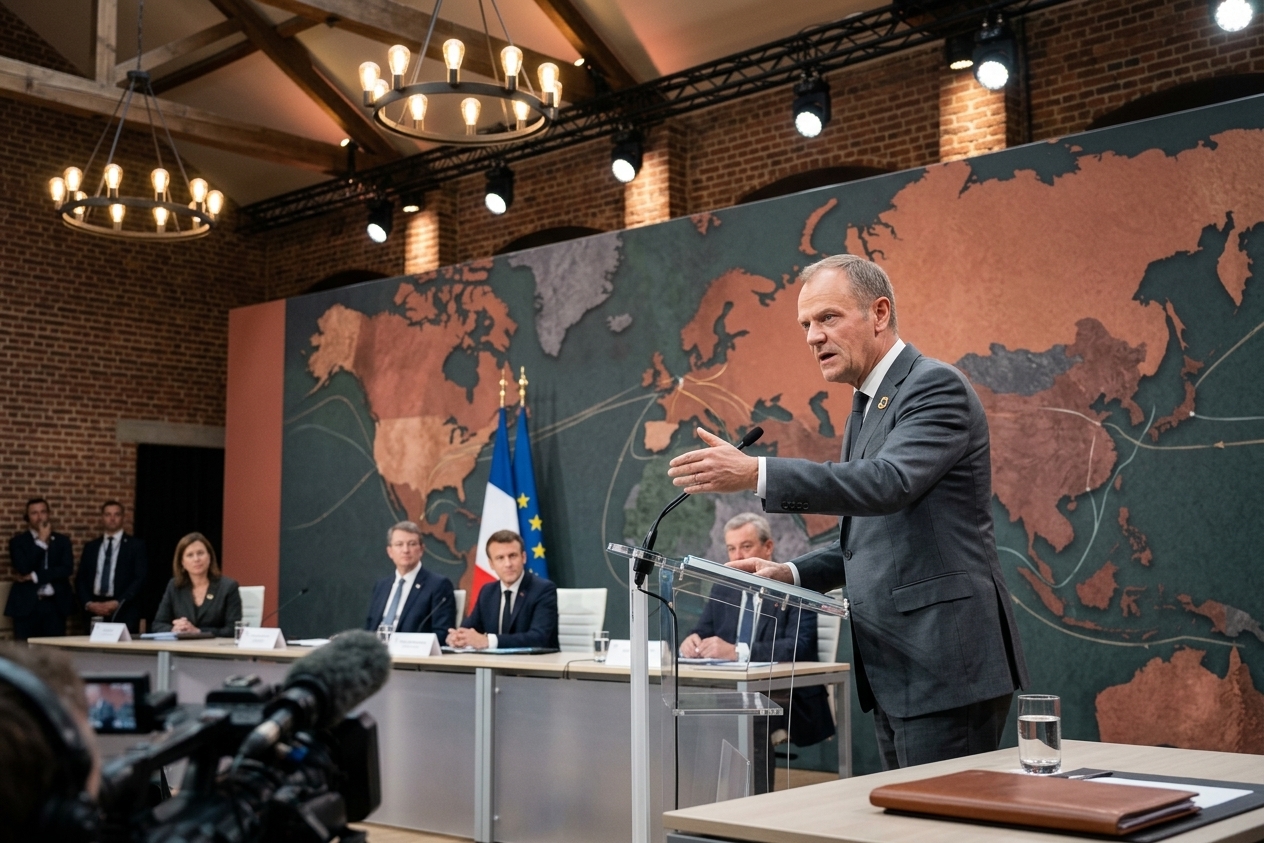
In the geopolitical arena of 2026, a nation's power is no longer measured solely by the size of its military or its GDP, but by its access to the elements of the periodic table. The recent G7 summit has prioritized a "de-risking plan" from China regarding critical raw materials (CRMs), such as lithium, cobalt, and rare earths. These materials form the backbone of modern technology, from AI processors to electric vehicle batteries and renewable energy systems.
The Chinese Monopoly and the West's Awakening
For decades, the West allowed China to dominate not just the mining but, more importantly, the processing of these materials. Today, Beijing controls approximately 60-90% of global rare earth processing. The G7 now recognizes that this dependence constitutes a strategic vulnerability that can be used as leverage in times of crisis. China's decision last year to restrict exports of gallium and germanium was the wake-up call that forced leading economies to seek alternatives.
The new plan is not about a full decoupling, which is deemed economically unfeasible, but a strategy of "de-risking." The G7 is promoting the creation of a "Critical Raw Materials Club," which will bring together consumer countries with producer nations in the Global South, offering infrastructure investments in exchange for a steady flow of resources.
Investment and "Friend-shoring"
The strategy is based on three pillars: domestic production, "friend-shoring" (moving operations to friendly countries), and the circular economy. The US, through the Inflation Reduction Act, and the EU, through the Critical Raw Materials Act, are funneling billions in subsidies to create processing plants on European and American soil. However, production costs in the West remain significantly higher due to stricter environmental and labor standards.
- Development of new mines in Scandinavia, Canada, and Australia.
- Strategic partnership agreements with countries like Chile, Namibia, and Vietnam.
- Investment in battery recycling technologies to recover lithium and nickel.
The challenge is immense. A new mine takes an average of 10 to 15 years to become operational. The G7 is trying to accelerate these processes through "fast-track" permitting, which is drawing fire from environmental groups fearing a degradation of protection standards.
The Technological Dimension and AI
The rise of AI has skyrocketed the demand for specialized metals. Cutting-edge semiconductors require ultra-pure materials currently processed mainly in Asia. The G7 agreed to joint research funding for "substitute materials"—synthetic elements that could replace rare earths in wind turbine magnets and electric motors. Technology, therefore, is not just the consumer of these resources but also the potential solution to their scarcity.
"Energy security in the 21st century runs through the mines. We cannot replace dependence on Russian gas with a total dependence on Chinese minerals," a leading European Commission official noted during the summit.
In conclusion, the G7's move marks the end of the era of "innocent" globalization, where the lowest price was the sole criterion. Now, supply chain security trumps cost, a fact expected to lead to higher prices for tech products in the near future but also to a more resilient global economy.