In a move that signals the dawn of a new era for European education, the French government has announced the full integration of Artificial Intelligence (AI) into its official secondary education curriculum starting in 2027. This initiative is not merely a technical addition but a profound structural shift aimed at redefining what 'literacy' means in the 21st century. France, under the leadership of Emmanuel Macron, seeks to become the European hub for AI, and education is the cornerstone of this strategy.
The Strategy of Digital Sovereignty
The decision to introduce AI into schools was not made in a vacuum. It is part of the broader 'France 2030' plan, which envisions billions in investments in cutting-edge technologies. The French leadership recognizes that reliance on American or Chinese AI models poses a risk to national sovereignty. By educating the next generation not just in usage, but in understanding the architecture and ethical implications of AI, France hopes to cultivate a new generation of engineers, philosophers, and citizens who can master the tools of the future.
The curriculum will be divided into three core pillars: technical understanding (algorithms and data), critical analysis (ethics and social impact), and practical application (using AI tools for problem-solving). Starting in 2027, Lycée (high school) students will be assessed on topics related to machine learning, while Philosophy—a traditional bastion of French education—will include modules on machine consciousness and human uniqueness.
Challenges and Training Requirements
Despite the enthusiasm, implementing such a venture involves significant challenges. The greatest of these is teacher preparation. The French Ministry of Education has already launched one of the largest training programs in the country's history, aiming to train over 300,000 teachers by 2027. Many educators express skepticism, fearing that AI could undermine traditional learning or facilitate plagiarism.
- Staff Training: Specialized seminars on using generative AI in the classroom.
- Infrastructure: Upgrading school networks and providing access to domestic AI models (such as Mistral).
- Data Protection: Ensuring that AI use in schools fully complies with GDPR and protects the privacy of minors.
Furthermore, there is the risk of a 'digital divide.' The government has pledged that the program will be implemented uniformly across all regions, from central Paris to rural Provence, so that AI does not become another tool for class segregation.
Ethics and Humanism: The French Model
What differentiates the French approach is the emphasis on humanism. Unlike the technocratic model of Silicon Valley, France seeks to integrate AI within the framework of the humanities. The goal is for the student not to be a passive consumer of algorithms, but a critical thinker who recognizes when AI is biased or when it violates fundamental rights.
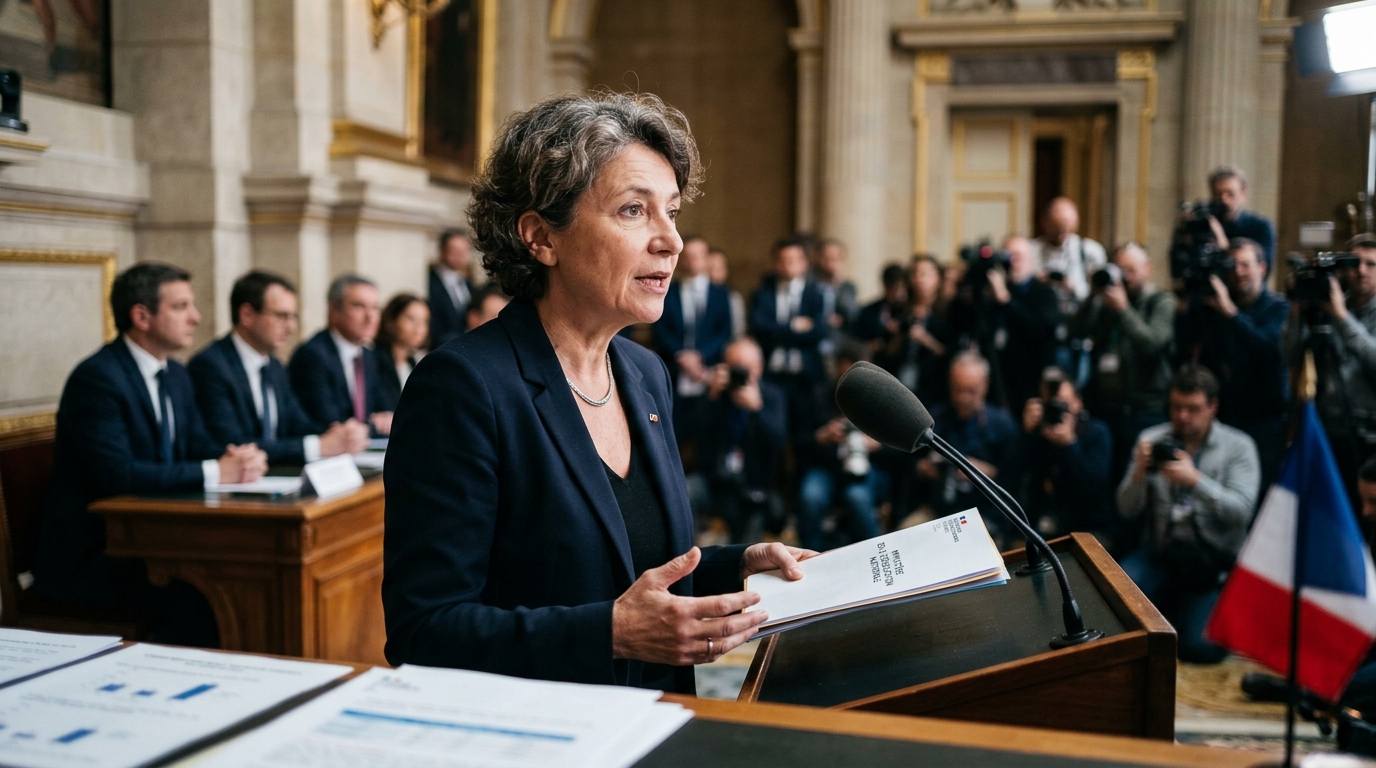
"Technology must serve the Republic, not the other way around. Educating our children in Artificial Intelligence is the modern form of civic education," the French Minister of Education recently stated.
In conclusion, France's move to introduce AI into the official curriculum in 2027 is a bold experiment. If successful, it will serve as a blueprint for the entire European Union, ensuring that the old continent does not remain a mere spectator to technological developments but shapes the future on its own terms and values.