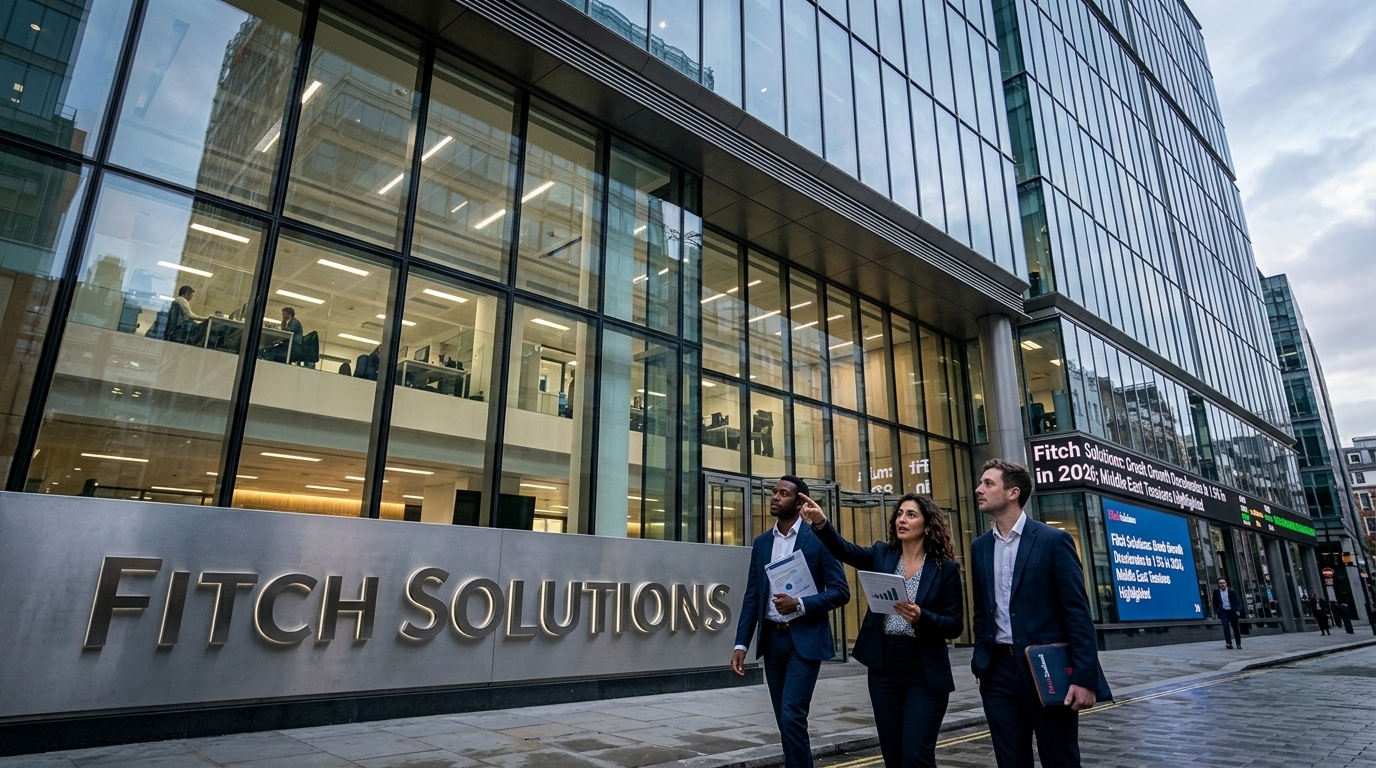
As we navigate the final days of April 2026, the Greek economy is confronting a new reality that deviates from the overly optimistic forecasts of previous years. The latest report from Fitch Solutions confirms the fears of many analysts, setting the growth bar for the current year at 1.9%. This retreat is not a bolt from the blue; rather, it is the result of prolonged geopolitical instability in the Middle East, which has caused a "stranglehold" on global supply chains and sent commodity costs soaring.
The Geopolitical Trap and the Persian Gulf
The primary cause of the slowdown is located far beyond Greek borders. Disruptions in the supply of commodities from the Persian Gulf, which intensified in recent months, have created a domino effect of negative impacts. According to Fitch Solutions, these disruptions are expected to persist until the end of this month, provided that the emerging agreement between the US and Iran is finalized and upheld. Greece, an economy with significant reliance on energy imports and a shipping sector directly exposed to international maritime routes, is feeling these pressures more acutely than other European nations.
Energy costs remain the "invisible enemy" of Greek industry and households. Despite efforts toward an energy transition, reliance on natural gas and oil to meet manufacturing needs remains high. The increase in fuel prices is directly passed on to production costs, reducing the competitiveness of Greek exports and squeezing consumers' disposable income.
The Role of the Recovery Fund and Domestic Consumption
While the Recovery and Resilience Facility (RRF) served as the main engine of growth in previous years, the situation in 2026 has become more complex. Although the absorption of funds continues, project implementation is now hitting hurdles such as increased raw material costs and a shortage of skilled labor. Fitch Solutions points out that fixed capital investments, while remaining in positive territory, are insufficient to offset the losses from external demand.
At the same time, private consumption, which has traditionally supported Greek GDP, is showing signs of fatigue. Inflation, though lower than during the 2022-2023 crisis, remains persistent in food items and essential services. Greek consumers are now appearing more cautious, limiting their spending on non-essential goods, a fact that directly impacts retail and small-to-medium enterprises (SMEs).
Tourism: Resilience Under Pressure
Tourism, the "heavy industry" of the Greek economy, is also at a critical juncture. While bookings for the summer of 2026 began with positive omens, geopolitical unrest in the broader Eastern Mediterranean region is causing skepticism among travelers from long-haul markets, such as the US and Asia. Fitch Solutions estimates that tourist traffic will remain strong, but revenue growth rates will be significantly more moderate compared to the record-breaking years of 2024 and 2025.
"The Greek economy is called upon to prove its resilience in an environment where exogenous shocks are becoming the new normal. 1.9% is not a failure, but a reminder that growth cannot be taken for granted without structural reforms," the report notes.
Outlook and the US-Iran Agreement
The key to the second half of 2026 lies in diplomatic developments. If the agreement between Washington and Tehran is reached within April, a gradual de-escalation of oil prices and a normalization of shipping routes in the Persian Gulf is expected. This would allow the Greek economy to regain some lost ground toward the end of the year. However, Fitch Solutions remains cautious, emphasizing that risks remain tilted to the downside, as any breakdown in negotiations could lead to a further downward revision of GDP toward 1.5%.
In conclusion, 2026 is shaping up to be a year of "landing" for Greece. After a period of vigorous recovery, the country must manage the consequences of a volatile international environment, focusing on internal productivity and the efficient utilization of European resources to avoid the trap of stagnation.