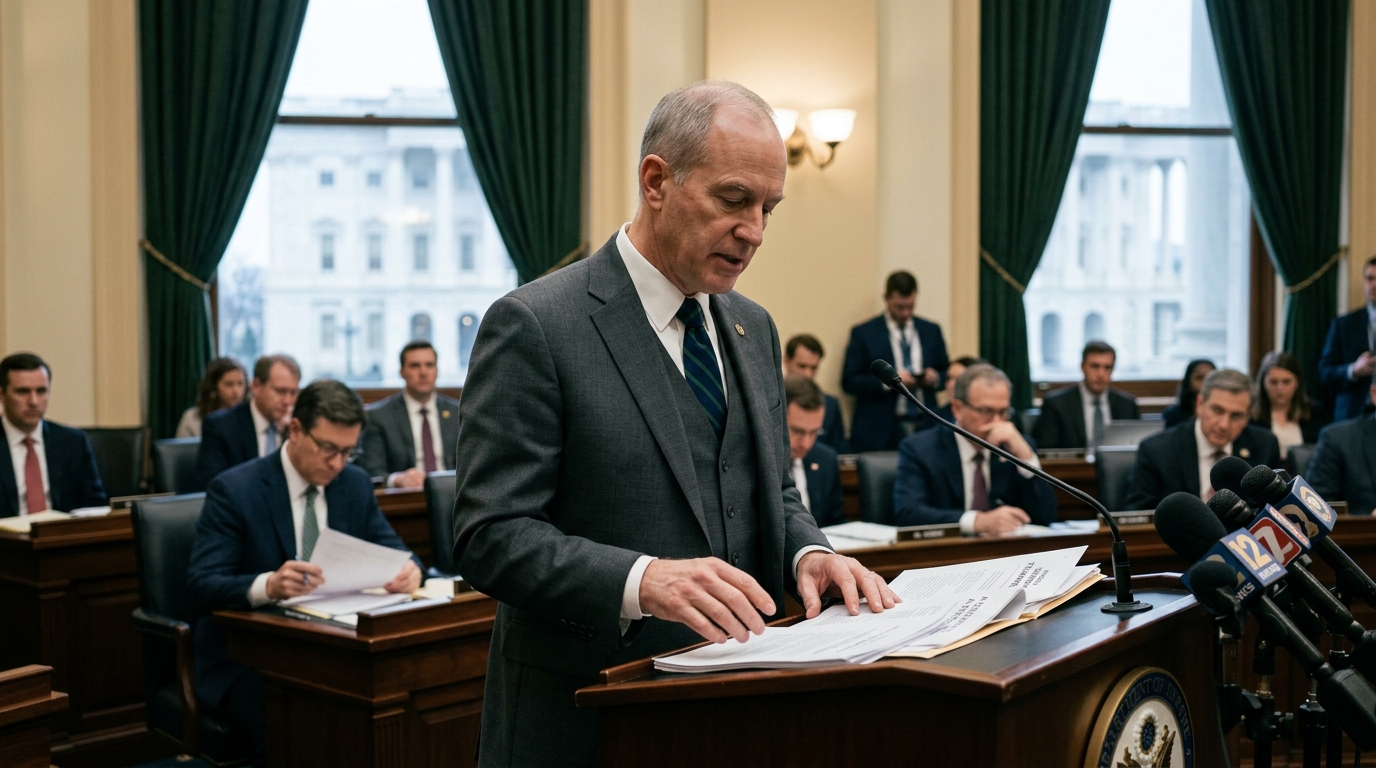
The meteoric rise of Artificial Intelligence (AI) demands more than just sophisticated algorithms and billions of parameters; it requires an unprecedented amount of electricity. In a move that signals a historic pivot in US energy policy, the Federal Energy Regulatory Commission (FERC) has taken steps to accelerate the process of connecting data centers to the electrical grid. This decision comes in response to mounting pressure from tech giants who see their ambitious AI roadmaps colliding with an antiquated and overburdened distribution network.
The Collision of Innovation and Infrastructure
For decades, electricity demand in the United States remained relatively flat. However, the advent of Generative AI has upended all projections. A single query to ChatGPT consumes up to ten times more energy than a standard Google search. As companies like Microsoft, Google, and Amazon construct massive server complexes, the need for stable, continuous, and massive power supplies has become a matter of national security and economic competitiveness.
The primary bottleneck to date has been the so-called "interconnection queues." This is a bureaucratic and technical waiting list where new projects—ranging from wind farms to data centers—wait for years to receive approval to hook into the grid. FERC’s new direction aims to prioritize projects that are "shovel-ready," theoretically bypassing speculative plans that merely take up space in the queue. This "fast lane" for AI data centers is seen as essential for the US to maintain its lead over global competitors, particularly China, in the technological arms race.
The Thorny Issue of Costs and Equity
Despite the tech industry's enthusiasm, this regulatory shift is sparking intense pushback from consumer advocacy groups and some state regulators. The central question is simple yet painful: Who pays for the grid upgrades? When a new data center requires energy equivalent to a mid-sized city, the transmission infrastructure must be significantly reinforced. There is a profound fear that the costs of these upgrades will be shifted onto ordinary residential consumers, who are already facing higher bills due to inflation and climate-related grid hardening.
Furthermore, the issue of "behind-the-meter" co-location has become a flashpoint. This practice involves data centers connecting directly to power plants (such as nuclear facilities), effectively bypassing the public grid. While this speeds up AI deployment, it deprives the public grid of valuable baseload power, making it less stable and more expensive for everyone else. FERC is now tasked with balancing the urgent need for innovation with its core mandate of protecting the public interest and ensuring just and reasonable rates.
Environmental Implications and the Carbon Backslide
Another silent but troubling aspect of this acceleration is its impact on climate goals. The sheer volume of energy demanded by AI is forcing some utilities to delay the retirement of coal-fired plants or invest in new natural gas facilities. While Big Tech companies maintain their "net zero" promises, the reality on the ground suggests that the thirst for compute may override the green transition, at least in the short term. The grid is being asked to do two contradictory things: decarbonize rapidly and expand capacity exponentially.
In conclusion, the federal move to open the energy floodgates for AI is an acknowledgment that this technology is the new backbone of the global economy. However, without a fair distribution of costs and a rigorous commitment to green energy, the path to digital supremacy could prove extraordinarily expensive for society and the environment alike. FERC stands at the center of a geopolitical and social storm, where its decisions will define the energy landscape for decades to come.