On the night of May 28th, 2026, under the floodlights of Cape Canaveral Space Force Station, Blue Origin’s New Glenn rocket stood as a monolith of ambition. Its mission: to deploy the first major batch of Amazon’s Kuiper satellites. Yet, behind this orbital spectacle lies a much more terrestrial and cutthroat conflict: the struggle for control over the $42.45 billion federal BEAD (Broadband Equity, Access, and Deployment) program.
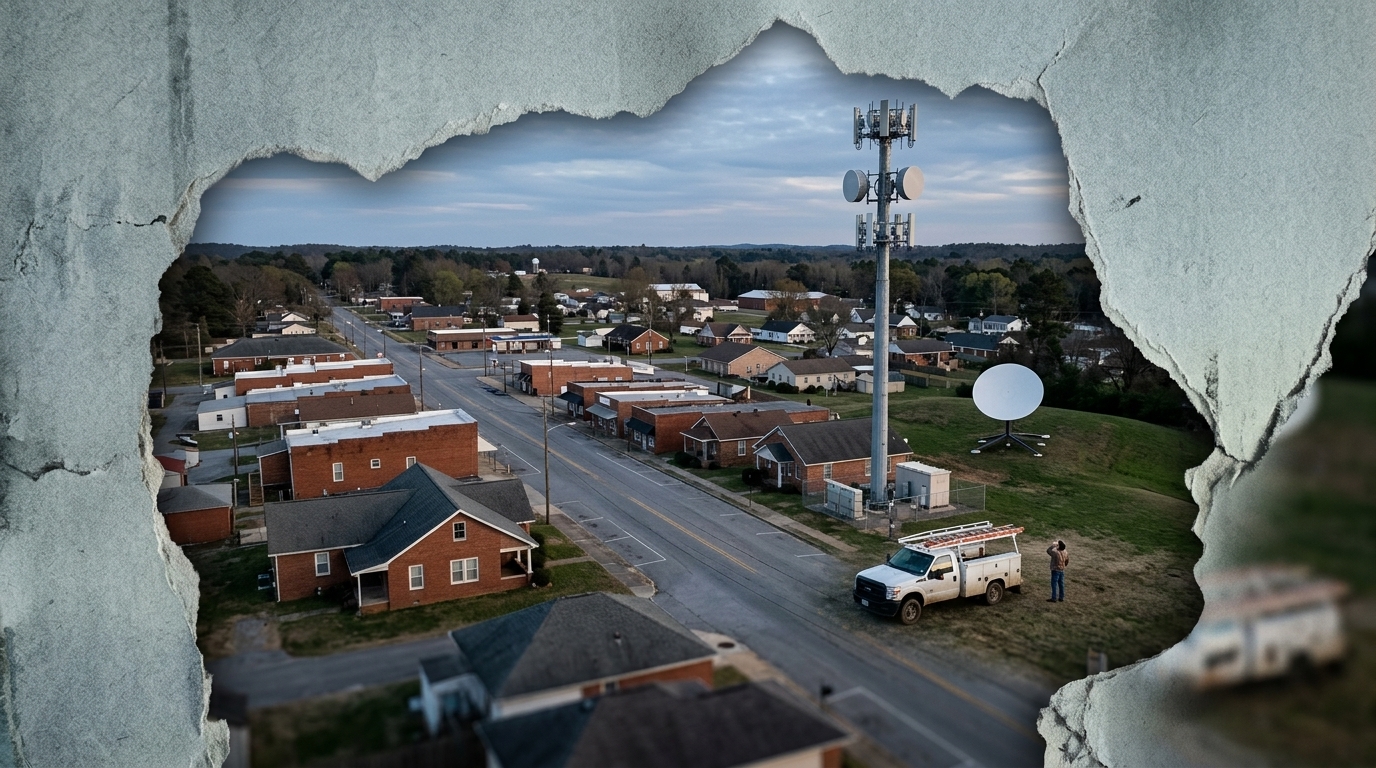
Initially conceived as a digital-age "New Deal," BEAD was designed to bridge the rural-urban divide by laying fiber-optic cables to every unserved household in America. However, a seismic shift in Washington’s political climate and the unprecedented influence of Elon Musk have pivoted this vision toward a high-stakes confrontation between permanent physical infrastructure and private satellite constellations.
The Great Fiber Pivot
For years, the consensus among telecommunications experts was unwavering: fiber-optic technology is the "gold standard." It is future-proof, offers symmetrical upload and download speeds, and possesses nearly infinite capacity. The BEAD program, a flagship of the Biden administration’s infrastructure push, explicitly prioritized fiber, viewing it as a generational solution to digital inequality.
But as we move through 2026, the narrative has shifted. Elon Musk’s SpaceX, bolstered by his newfound proximity to executive power, has launched a massive lobbying campaign to redefine the rules. They argue that laying fiber in deep rural pockets is a fiscal absurdity, with costs sometimes exceeding $100,000 per home. Their counter-proposal? Starlink. By pushing to raise the "high-cost threshold," Musk is attempting to redirect billions from construction crews to satellite subscriptions.
"This is no longer about providing the best technology to citizens; it’s about subsidizing the orbital dominance of a private entity," says a senior policy analyst at the Open Markets Institute.
Musk’s Strategy vs. Bezos’s Ambition
Musk is not the only billionaire with his eyes on the prize. Jeff Bezos, through Amazon’s Project Kuiper, is racing to break Starlink’s near-monopoly. The recent New Glenn launch signifies Amazon’s entry into the operational phase of its network. Amazon argues that competition will drive down costs for the taxpayer, but the underlying reality remains: both titans are vying for the same pot of public gold.
SpaceX’s strategy is multifaceted. It involves pressuring the FCC to relax performance standards—specifically latency and speed requirements—that were originally designed to favor fiber. Simultaneously, they employ a "speed-to-market" rhetoric, promising connectivity "today" versus the "five years of digging" required for fiber. It is a compelling argument for politicians looking for quick wins before the next election cycle.
- Capital Intensity: Fiber requires massive upfront investment in labor and materials.
- Deployment Speed: Satellites offer near-instant activation once the constellation is in place.
- Monopoly Risk: Relying on Starlink creates a national-scale vendor lock-in with a single, volatile provider.
The Dangers of "Satellite Hostage"
Many policy experts warn that pivoting to satellite broadband is a short-sighted fix with long-term peril. Low Earth Orbit (LEO) satellites have a limited lifespan—typically 5 to 7 years—requiring constant, expensive replenishment. More importantly, satellite capacity is a shared resource; as more users join the network in a specific geographic cell, speeds inevitably plummet.
Then there is the issue of national sovereignty and privacy. When the nation’s essential communication infrastructure is owned by a private individual with significant political entanglements and global business interests, internet access ceases to be a public utility and becomes a tool of geopolitical leverage. The precedent set by Starlink’s role in the Ukraine conflict serves as a stark reminder of how easily a single person can "flip the switch" on a nation’s connectivity.
Conclusion: Infrastructure for the Ages or the Moment?
The battle for BEAD funding is a proxy for a much larger question: What kind of country does America want to be? If the funds are spent on fiber, rural communities gain a 50-year asset that can grow with their needs. If the funds are diverted to satellite subsidies, the money effectively transfers from the public treasury to the balance sheets of SpaceX and Amazon, leaving citizens with a service that could be throttled, priced out, or deactivated at a whim. The decisions made in the coming months will determine whether the internet remains a public good or becomes the next fiefdom of the space barons.