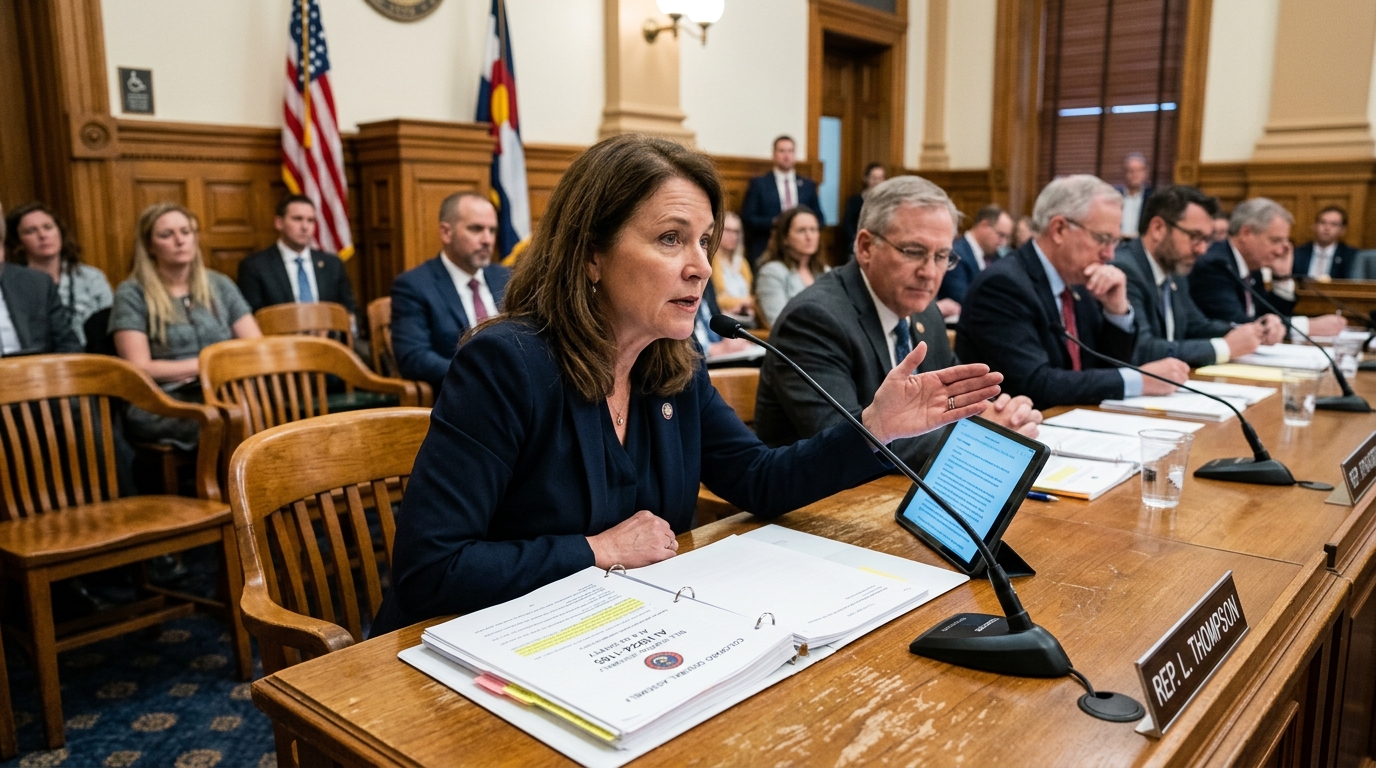
In the heart of the United States, Colorado—a state that traditionally blends a spirit of independence with technological innovation—is emerging as an unexpected leader in a global dialogue: How can we protect our children from a technology that evolves faster than our ability to comprehend it? Recent legislative activity in Denver is not merely local news; it is a harbinger of a global trend as Artificial Intelligence (AI) fundamentally reshapes education, socialization, and the mental health of minors.
Colorado’s Leadership and the Legacy of SB24-205
Colorado made history in 2024 by passing SB24-205, the first comprehensive AI consumer protection law in the United States. Now, in May 2026, the focus has intensified on refining these rules for the most vulnerable demographic: children. The legislation mandates that developers and deployers of high-risk AI systems implement rigorous safeguards against algorithmic discrimination. For children, this means that AI used in educational tools or entertainment platforms must not reinforce harmful biases or lead them into "digital rabbit holes" that undermine their self-esteem.
The Colorado approach is rooted in the concept of a "Duty of Care." Technology companies can no longer claim ignorance regarding the side effects of their products. If an algorithm recommends content promoting eating disorders or dangerous viral challenges to minors, the burden of responsibility now falls squarely on the system's creator. This paradigm shift—from the "free speech of algorithms" to the "accountability of creators"—is the cornerstone of the new digital ethics being championed in the state.
Mental Health and Algorithmic Manipulation
One of the most critical points of contention involves the manipulation of attention. Children, with their developing brains, are uniquely susceptible to AI systems designed to maximize screen time. Colorado is currently weighing additional regulations to ban the use of "dark patterns" in AI interfaces aimed at minors. These are deceptive design techniques that exploit user psychology to keep them tethered to an application longer than intended.
"We cannot allow our children to be the guinea pigs in an unregulated technological arms race," stated a key legislative proponent of the new measures.
Privacy protection remains the other vital pillar. In the era of Generative AI, children's data—ranging from their voices to their academic performance—is highly sought-after fodder for training new models. Colorado's law imposes strict limitations on the collection of such data without explicit, informed parental consent, ensuring that a child's digital footprint does not become a liability that haunts their adult life.
The Clash with Big Tech
Predictably, Silicon Valley is not standing idly by. Major tech trade groups argue that a "patchwork of state laws" creates regulatory uncertainty that stifles innovation. They contend that child protection should be handled at the federal level, knowing full well that Congress in Washington D.C. often remains paralyzed by partisan gridlock. Colorado’s counter-argument is simple: federal inaction cannot serve as an excuse for leaving citizens exposed to systemic risks.
The success of Colorado’s experiment will depend on enforcement. The establishment of a state-level "Office of Artificial Intelligence," staffed by experts capable of auditing algorithms and corporate practices, is a significant step forward. For international observers, including those in the EU, Colorado’s model is instructive. It complements and, in some instances, exceeds the provisions of the European AI Act by focusing specifically on immediate consumer and child protections within a common-law framework.
Conclusion: A New Social Contract
The AI age is not just a technological transition; it is a civilizational challenge. Colorado is demonstrating that democracy possesses the tools to set boundaries, provided there is political courage. Safeguarding children in the digital arena is the ultimate priority, as the future of social cohesion is at stake. As we move further into 2026, the question is not whether we will live with AI, but what kind of humans this technology will help shape. Colorado has decided that those humans must be, above all, protected and free.