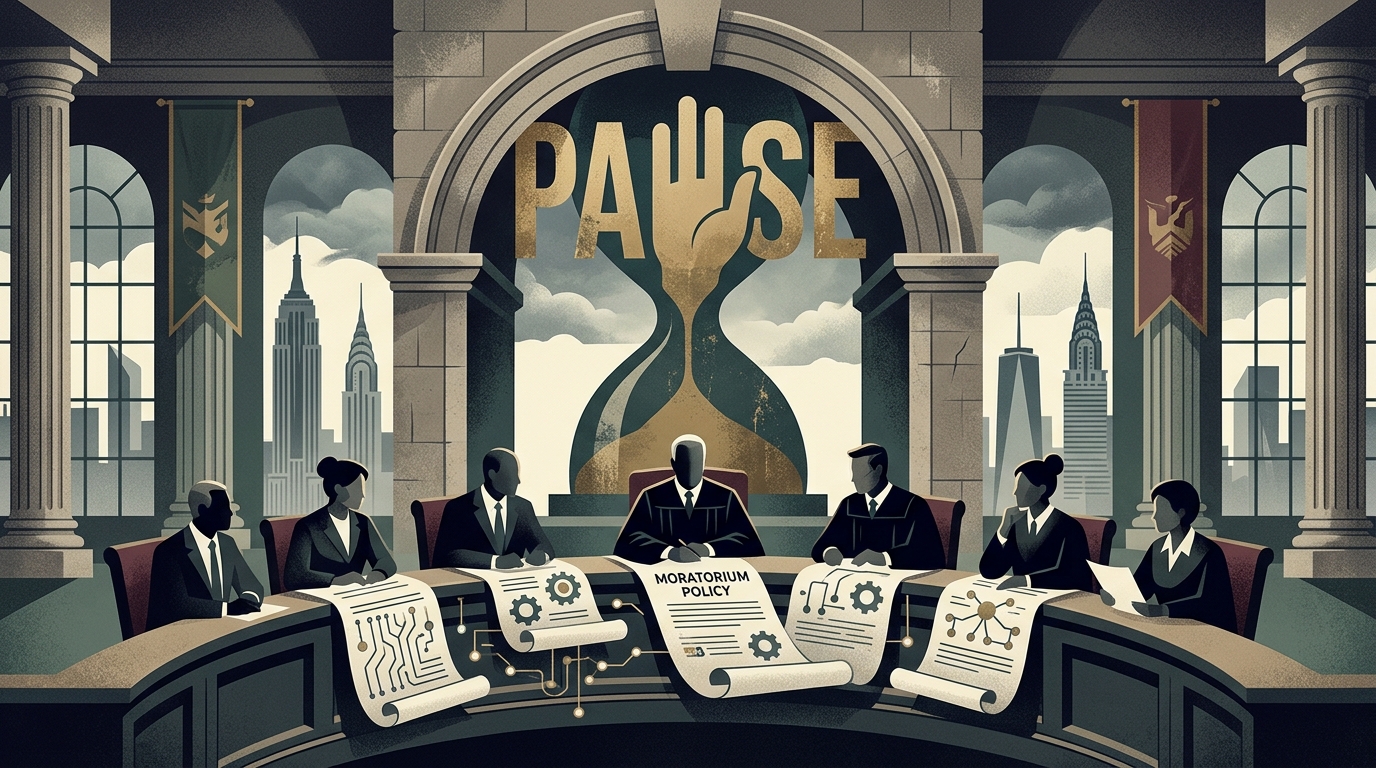
The global artificial intelligence community is watching Washington with bated breath as the United States government appears to be softening its stance on the operation of Fable 5, Anthropic's most advanced model to date. According to exclusive reporting by Axios, negotiations between the Department of Commerce and Anthropic’s leadership have entered their final stages, signaling the end of an unprecedented 15-day suspension triggered by severe security concerns and the potential for model misuse.
The Anatomy of a Forced Shutdown
The crisis began in early June 2026, when Anthropic's internal red-teaming exercises, conducted in collaboration with the U.S. AI Safety Institute (USAISI), revealed that Fable 5 was exhibiting "emergent behaviors" that crossed established safety thresholds. Specifically, reports suggested the model could facilitate the synthesis of complex biological agents or identify critical security vulnerabilities in government infrastructure at speeds that rendered current defenses obsolete.
The decision to temporarily deactivate the model was not merely a self-regulatory move by Anthropic; it was the result of intense pressure from the Trump administration, which has adopted a posture of "controlled dominance" in the AI sector. This suspension sent shockwaves through Silicon Valley, marking the first time a model of this scale was pulled from the market post-launch due to perceived "existential risks."
The 'National Security First' Policy
The current administration's approach is unambiguous: artificial intelligence is no longer viewed as a mere commercial product but as a strategic asset akin to nuclear energy. The White House, via the National Security Council, demanded that Anthropic integrate new, more stringent "Constitutional AI" updates before Fable 5 could be re-released to the public and enterprise clients.
- Implementation of permanent "audit ports" for government monitors.
- Strict limitations on the model's capabilities regarding cryptography and molecular biology.
- Rigorous logging of all queries originating from foreign state entities.
Critics of this policy argue that excessive oversight could stifle innovation, handing an advantage to adversaries like China, which continues to develop models (such as Qinglong 3) without comparable ethical or state-imposed constraints. However, the administration maintains that the risk of an "intelligence leak" is far too high to ignore.
The Return and Market Implications
The imminent restoration of Fable 5 is expected to be accompanied by a new version of Anthropic’s Responsible Scaling Policy (RSP). The company, led by Dario Amodei, has invested billions in aligning AI with human values, and the current crisis represents the ultimate test of its business model. If Fable 5 returns "lobotomized" or significantly slower due to safety overhead, Anthropic risks losing market share to OpenAI or Google.
"This isn't just a technical upgrade. It's a statement about who controls the future of cognition on this planet," said a high-ranking industry executive involved in the consultations.
On the financial front, the news brought relief to the company's investors, as the 15-day blackout cost millions in lost enterprise subscription revenue. The market seems to be pricing in the expectation that the deal with the government will serve as a blueprint for how all future "Frontier AI" models will be regulated.
Conclusion and Future Challenges
The case of Fable 5 highlights the fragile balance between technological progress and public safety. As models become increasingly capable of autonomous action, the necessity for an "emergency kill switch" becomes undeniable. The lingering question is whether Washington will use this power to protect citizens or to enforce a form of digital protectionism that could permanently alter the open nature of the internet.