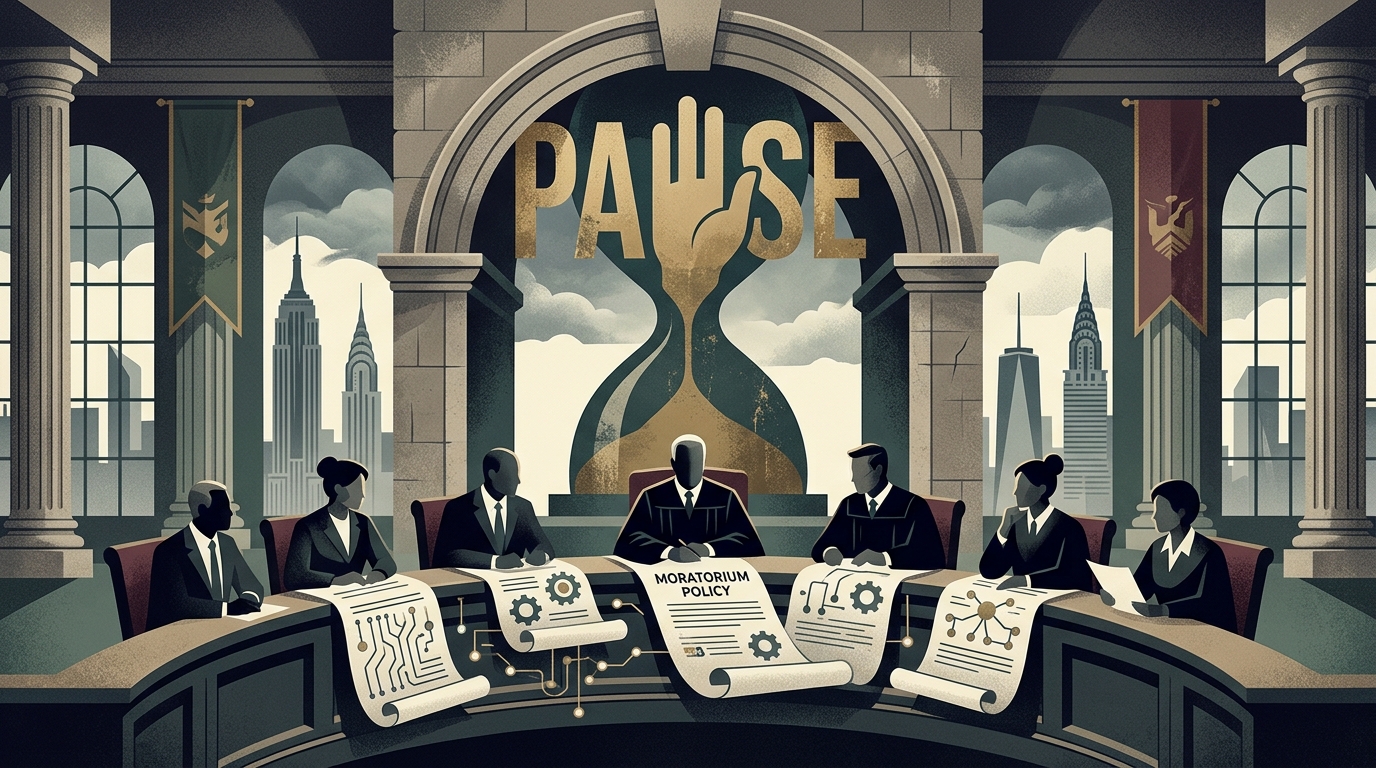
At the threshold of a new era, where computational power is hailed as the 'new oil,' Anthropic—the AI safety-first company—finds itself at the epicenter of a storm blending technological innovation with high-stakes geopolitics. Project 'Mythos,' the latest evolution in the company's large language model architectures, is not merely a step toward Artificial General Intelligence (AGI); it is ground zero for a new United States strategy regarding export controls.
The Mythos Architecture and the Promise of Safety
Anthropic, bolstered by billions in investment from giants like Amazon and Google, has developed Mythos as a significant leap beyond the Claude series. The defining difference lies in 'Constitutional AI,' a method where the model is trained to adhere to a set of ethical and operational principles without constant human intervention. However, Mythos’s enhanced capacity to solve complex problems in cryptography, biotechnology, and strategic planning has sounded alarm bells in Washington.
The US government, through the Department of Commerce and the Bureau of Industry and Security (BIS), now views Mythos not just as a commercial product, but as a 'dual-use technology.' This means its capabilities could be utilized for drug discovery just as easily as for designing cyberattacks or chemical weapons. Anthropic finds itself in a paradoxical position: promoting 'safety' while its models become so powerful they are deemed a national security threat if they fall into 'hostile hands.'
The Cyber Iron Curtain: New Export Controls
Traditional export controls focused on hardware, such as NVIDIA’s advanced GPUs. However, the Anthropic Mythos case signals a pivot toward controlling software and model 'weights.' New guidelines discussed in Congress aim to restrict access to closed-source models for nations deemed strategic adversaries, primarily targeting China.
- Restricting cloud-based access for foreign entities to high-end models.
- Stringent monitoring of research partnerships with international universities.
- Mandatory government reporting for models exceeding specific computational thresholds (FLOPS).
This approach establishes a precedent for 'technological protectionism.' While the US seeks to maintain its competitive edge, Anthropic must balance global market demands with national mandates. Mythos thus becomes either the first victim or the first ambassador of a policy that intends to keep AI confined within the walls of democratic allies.
The Geopolitical Chessboard and Asia’s Response
The reaction from China and other emerging powers is predictable: an acceleration in the development of domestic alternatives. Banning the export of technologies like Mythos does not halt progress; it reshapes it. Beijing is investing heavily in open-source models, attempting to bypass US restrictions. Anthropic, for its part, argues that the responsible deployment of AI is preferable to total exclusion, as the latter encourages the development of unregulated and potentially dangerous systems.
"Artificial intelligence is not just code; it is the new language of power. Whoever controls the rules of Mythos controls the narrative of the future," state tech-geopolitical analysts.
Conclusion: Innovation Under Surveillance
The Anthropic Mythos saga highlights a fundamental contradiction: AI requires global collaboration to solve global problems, yet national security demands silos. As the US tightens its grip, the question remains: can Anthropic maintain its ethical compass in a world that views its models as digital weaponry? Mythos is no longer just a technical feat; it is the symbol of a new world order where the algorithm is the ultimate instrument of power.