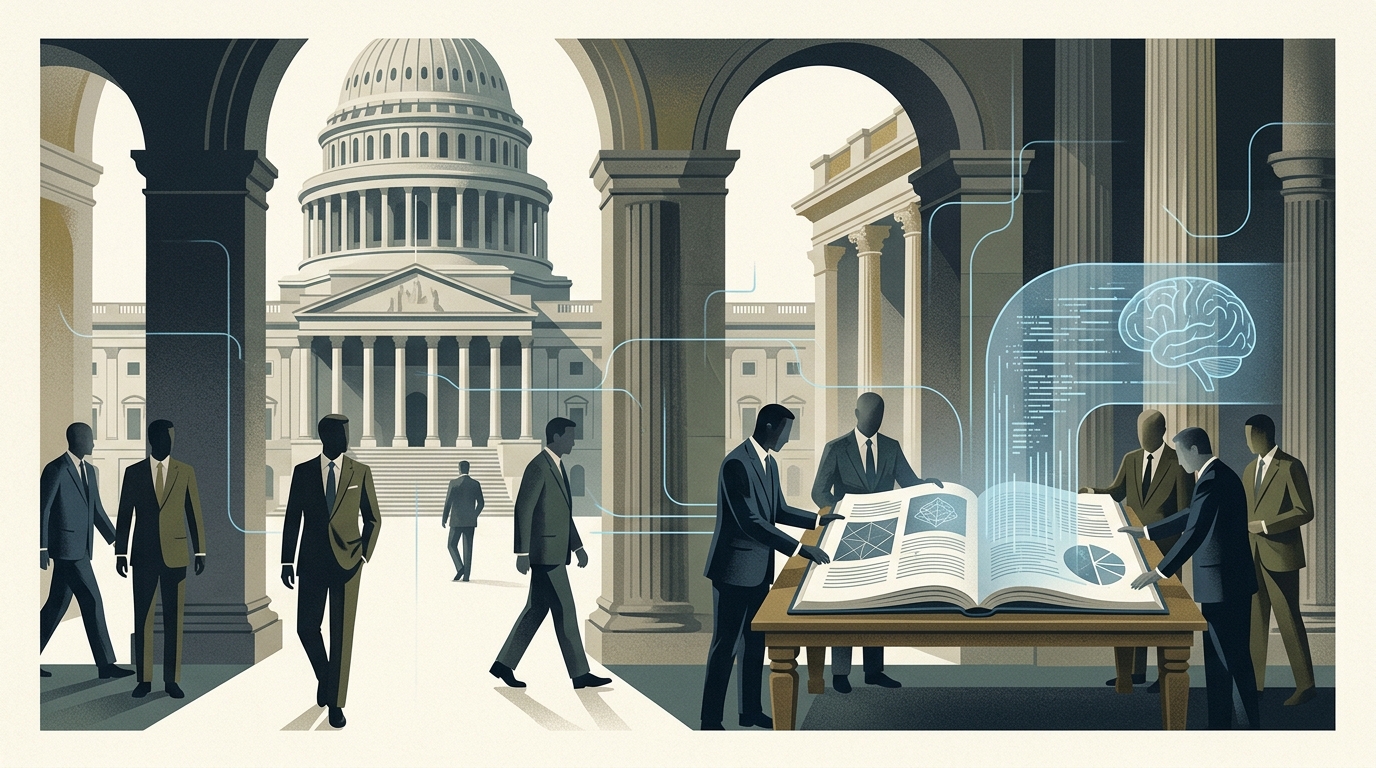
June 26, 2026, finds the European Union in a phase of deep introspection and structural transformation. The implementation of the AI Act has begun to reshape the business landscape, but the true test is not taking place in developers' labs, but in offices, factories, and services across the continent. The European labor market, traditionally protective and based on strong social guarantees, is facing the most radical challenge in its modern history.
The Regulatory Balance and the Innovation Paradox
Europe has chosen a path that many analysts describe as the "third way": neither the laissez-faire of the United States nor the state control of China. The challenge lies in ensuring that Artificial Intelligence functions as a complement to, rather than a substitute for, human labor. However, reality on the ground shows that automation no longer affects only manual labor, but also "white-collar" jobs—from legal analysis to content creation and administrative support.
"AI will not replace people, but people who use AI will replace those who do not," is a common European saying these days.
This adage, while reassuring, hides a harsh truth: the speed of the transition exceeds the ability of educational systems to adapt. In Greece and the Mediterranean South, where the economy relies heavily on small and medium-sized enterprises and tourism, the risk of a new digital divide is visible. The need for mass reskilling is no longer a theoretical exercise but an urgent political priority.
Reskilling: The New "Marshall Plan" for Labor
To address the threat of mass unemployment in specific sectors, the European Commission has launched multi-billion euro programs. But the question remains: can a 50-year-old worker be transformed into a "data handler" or "algorithm supervisor"? The answer requires a new approach to lifelong learning.
- Specialized AI programs at the local level.
- Incentives for companies to provide internal staff training.
- Creation of "digital education accounts" for every citizen.
The challenge is twofold: on one hand, the lack of talent in high-tech sectors hinders growth, and on the other, surplus labor in traditional sectors creates social pressure. Europe must bridge this gap without sacrificing its social model.
Work Ethics and Digital Surveillance
Another critical dimension is the use of AI for monitoring and evaluating employees. The AI Act prohibits specific high-risk practices, such as emotion recognition in workplaces, but the boundaries remain blurred. Algorithmic management can lead to a new form of "digital Taylorism," where human dignity is subordinated to data efficiency.
In this context, trade unions in Europe are redefining their roles. They no longer just demand wage increases, but also the "right to human intervention." The transparency of algorithms that decide on hiring, promotions, or dismissals is the new battlefield of labor relations.
Conclusions and the 2030 Perspective
As we head toward the end of the decade, the European labor market will be unrecognizable. The success of the transition will be judged by the ability of member states to turn the technological threat into an opportunity for higher-quality work. Artificial Intelligence has the potential to free humans from repetitive and arduous tasks, allowing them to focus on creativity, critical thinking, and emotional intelligence—areas where machines, for now, lag behind.
Europe is called upon to prove that technological progress can go hand in hand with social justice. If it fails, it risks a period of social instability and political populism. If it succeeds, it will become the global model for the human-centric digital age.