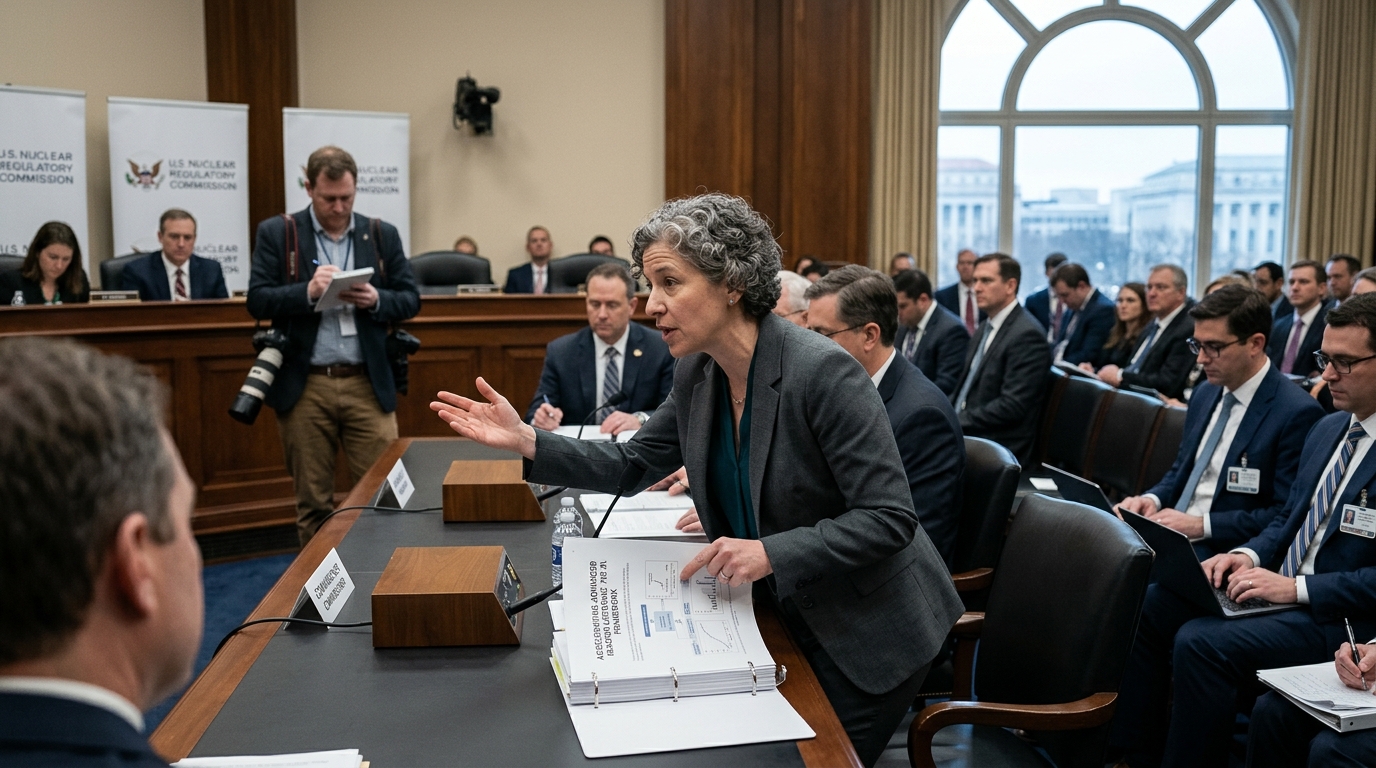
In an era where the global hunger for reliable, carbon-free baseload power clashes with the heavy bureaucracy of previous decades, Artificial Intelligence is emerging as an unexpected ally for the nuclear industry. According to recent statements from officials at the U.S. Nuclear Regulatory Commission (NRC), the integration of AI tools into review processes has begun to drastically slash the time required to license new facilities and technologies.
The Bureaucratic Bottleneck and the AI Solution
Licensing a nuclear reactor is traditionally considered one of the most complex and time-consuming administrative processes in the world. Applications often exceed ten thousand pages of technical specifications, environmental impact statements, and safety analyses. Until recently, reviewing these documents relied solely on human capital, resulting in approvals that often took more than five years to complete.
Recognizing the need for modernization, the NRC began utilizing advanced Natural Language Processing (NLP) models to cross-reference data and identify inconsistencies within applications. As a senior commission official explained, AI does not replace the judgment of scientists; rather, it acts as a "super-reader" capable of flagging critical points in seconds, allowing human inspectors to focus on the substantive safety evaluation.
Small Modular Reactors (SMRs) and the New Generation
The push for faster licensing is not coincidental. The rise of Small Modular Reactors (SMRs) promises a more flexible and economically viable approach to nuclear power. However, for SMRs to be financially feasible, the approval process must be equally agile. AI enables the NRC to create "review templates," where common features across different designs are checked automatically, significantly reducing redundant work.
Furthermore, the use of AI extends to operational safety monitoring. By analyzing real-time data from existing reactors, the NRC can predict potential maintenance issues before they escalate into problems, bolstering public confidence in nuclear technology through proactive oversight.
The Legislative Framework: The ADVANCE Act
This acceleration is not happening in a vacuum. The ADVANCE Act, passed with broad bipartisan support, mandated the NRC to modernize its processes and reduce licensing fees for advanced reactors. Artificial Intelligence serves as the technical vehicle for implementing this political will.
"It's not just about speed; it's about precision. AI allows us to be more meticulous than ever by eliminating human error in the digestion of massive datasets," the NRC official stated.
Challenges and Ethical Considerations
Despite the clear benefits, deploying AI in such a sensitive sector raises valid questions. The "black box" nature of certain algorithms sparks concerns regarding the transparency of licensing decisions. The NRC maintains that it adheres to the "human-in-the-loop" principle, ensuring that no license is issued without the final sign-off of an experienced nuclear engineer.
The geopolitical dimension is also critical. As China and Russia rapidly advance their own nuclear programs, the ability of the U.S. and its allies to license and construct reactors within competitive timeframes has become a matter of national security and energy sovereignty. AI may prove to be the catalyst that allows the West to regain lost ground in nuclear innovation.
Conclusion
The convergence of nuclear physics and data science marks a new era for energy. If the NRC succeeds in balancing the speed offered by AI with unyielding adherence to safety standards, the future of nuclear energy could be much brighter—and much closer—than imagined just a few years ago. "Digital red tape" is giving way to "smart regulation," offering a blueprint that many other sectors of government administration could follow.