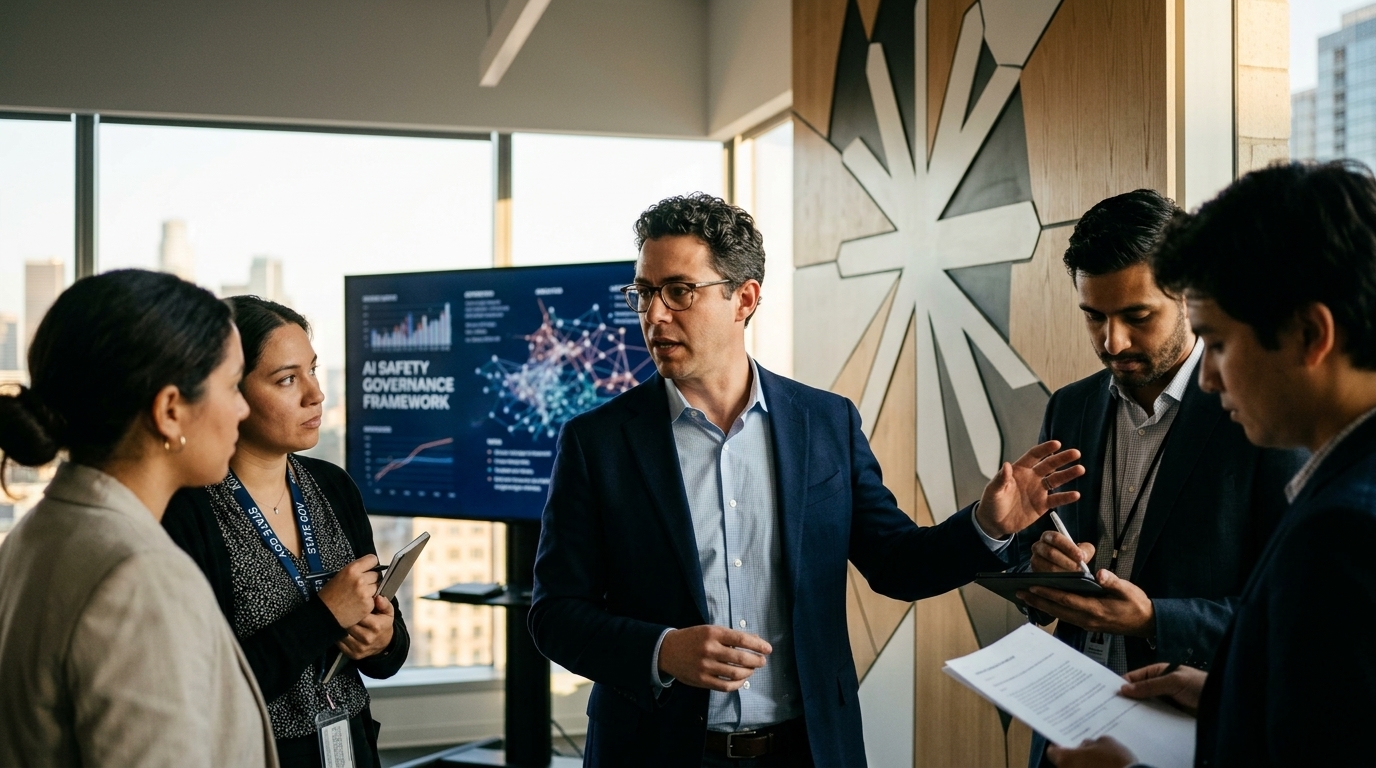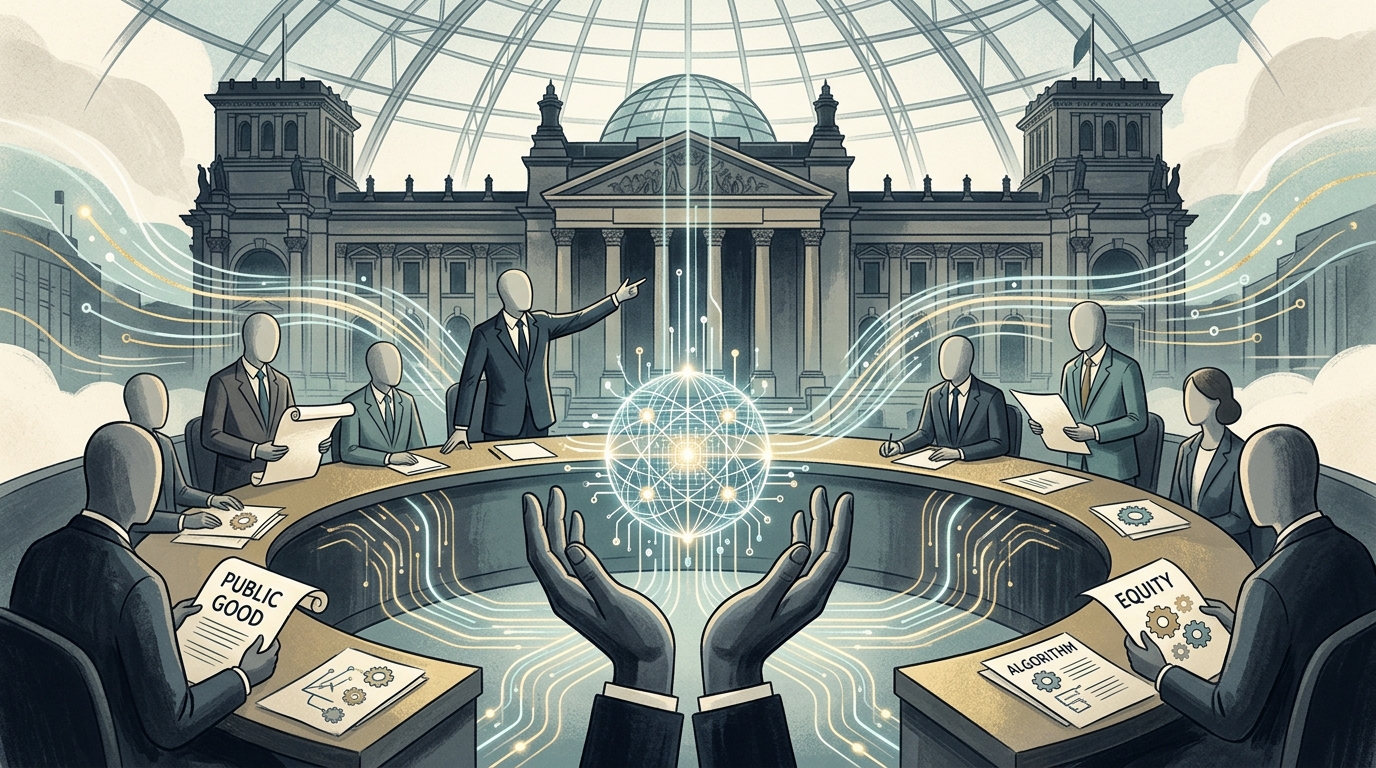
As we navigate the summer of 2026, the discourse surrounding Artificial Intelligence governance has shifted from mere regulatory frameworks to fundamental questions of ownership and existential safety. Abdul El-Sayed, a prominent public health expert and progressive political figure in the U.S., has tabled a proposal that has sent shockwaves through Silicon Valley and Washington: the complete public ownership of advanced AI systems. His intervention, originally detailed via Bridge Michigan, does not merely focus on economic inequality but issues a direct warning regarding the risk of ‘human demise’ if the evolution of technology remains exclusively in the hands of profit-driven giants.
The Existential Threat of Private Profit
El-Sayed argues that the current trajectory of AI development is fueled by an "arms race" between corporations like Microsoft, Google, and OpenAI. In this high-stakes environment, speed consistently takes precedence over safety. His core thesis is that an entity legally and financially bound to maximize shareholder value is inherently incapable of managing a technology that carries existential risks for our species.
"When profit is the motive, safety protocols are viewed as obstacles," he notes in his analysis. El-Sayed parallels AI with nuclear energy or public water systems, asserting that the complexity and power of Frontier AI models make their private management a constant threat. The danger, he argues, is not just a "robot uprising," but the loss of control over the very infrastructure that sustains social cohesion, truth, and economic survival.
AI as a Public Utility
The proposal for public ownership is rooted in the idea that AI has become a "social infrastructure" or public utility. Much like roads, the electrical grid, and the internet, AI is seen as the foundation upon which the future economy will be built. El-Sayed contends that if "intelligence"—the most valuable commodity of the 21st century—remains private, we are headed toward a form of digital feudalism.
- Democratic Control: Decisions regarding the ethics and alignment of AI must be made by elected representatives and civil society, not corporate boards.
- Access and Equity: Public ownership would ensure that the benefits of automation return to society, potentially funding programs like Universal Basic Income.
- Transparency: The "black boxes" of algorithms must be opened for public audit to prevent the manipulation of public opinion and the erosion of democracy.
Reactions and the Political Climate
Predictably, the proposal has sparked a firestorm of debate. Critics from the tech sector argue that state ownership would "strangle" innovation, leaving Western democracies lagging behind authoritarian regimes that are investing heavily in AI. Furthermore, there is a palpable fear that public ownership could lead to an omnipotent surveillance state, where the government holds absolute control over information flow.
"We cannot trust five CEOs with the keys to human evolution. History teaches us that the concentration of such power always ends in catastrophe for the many," El-Sayed declares.
In the context of 2026, where AI's impact on the labor market is clearly visible and geopolitical tensions are mounting, El-Sayed’s call no longer sounds like a utopian scenario but an urgent political choice. The debate over whether AI will be the "tool of our liberation or our jailer" now fundamentally passes through the question of who owns the servers and the code.