The climate crisis has turned the Mediterranean into a "fire zone," with Greece often at the center of devastating wildfires that threaten lives, property, and the natural environment. However, the summer of 2026 finds the country at a critical turning point. The integration of next-generation networks (5G and experimental 6G), Artificial Intelligence (AI), and autonomous systems is no longer a science fiction scenario, but an applied reality being tested in realistic field conditions.
5G Networks: The Backbone of Early Warning
The greatest challenge in firefighting is response time. The first ten minutes are considered decisive. Traditional surveillance methods, such as lookout towers, are now being replaced by a dense network of IoT (Internet of Things) sensors communicating via 5G networks. This technology offers ultra-low latency and high bandwidth, allowing data transfer from thousands of points simultaneously.
In recent tests conducted in forested areas of Attica and Evia, sensors detecting gases, temperature, and humidity were connected to central control stations. The use of 5G enables the real-time transmission of ultra-high-definition (4K) imagery from thermal cameras, providing fire chiefs with a crystal-clear view of the front, even through thick smoke.
Artificial Intelligence: From Reaction to Prediction
If 5G is the nervous system, Artificial Intelligence is the brain of the operation. The AI systems being tested in Greece are not limited to simple smoke recognition. They use advanced machine learning algorithms to analyze historical data, meteorological forecasts, and terrain morphology.
- Predictive Models: AI can predict the path of a fire with meter-level accuracy, calculating wind speed and fuel load.
- Automatic Classification: Systems can automatically distinguish between a dust cloud and fire smoke, reducing false alarms that waste resources.
- Resource Optimization: They suggest the best routes for ground units, avoiding blocked roads and hazardous zones.
"Technology does not replace the firefighter; it gives them the eyes and ears they need to be safe and effective," says a Civil Protection official.
Autonomous Systems and Drone Swarms
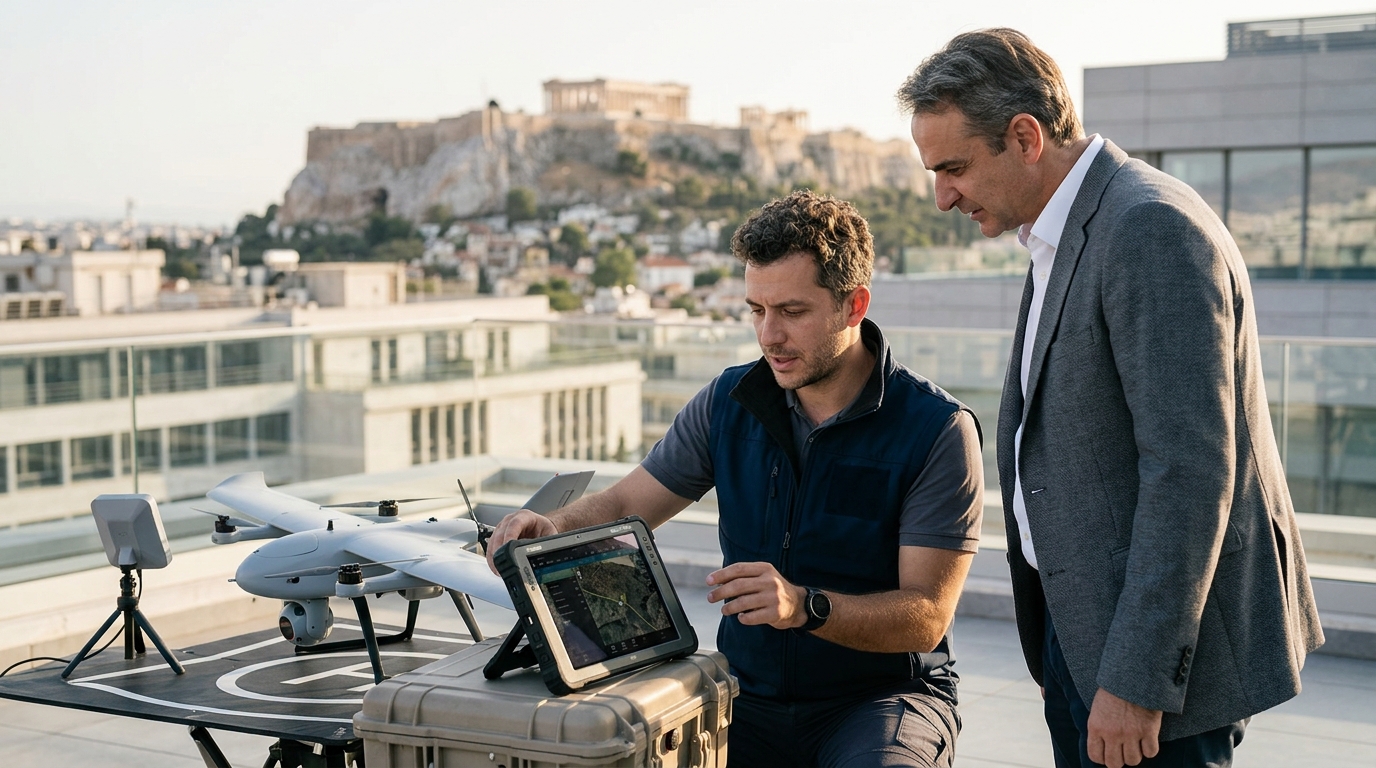
The most impressive aspect of the new trials involves autonomous unmanned aerial vehicles (UAVs). In the realistic scenarios examined, drone swarms take off automatically upon receiving a signal from ground sensors. These drones operate in a coordinated manner, mapping the area in three dimensions and creating a "digital twin" of the fire.
Furthermore, autonomous ground vehicles (UGVs) are being tested that can penetrate areas where temperatures are prohibitive for humans, carrying fire hoses or extracting individuals. The collaboration between aerial and ground autonomous systems creates a safety net that minimizes the exposure of firefighters to danger.
Challenges and the Future of Fire Protection
Despite the success of the trials, significant obstacles remain. 5G coverage in remote forest areas requires infrastructure investment, while the cybersecurity of these systems is critical to prevent malicious interference. Additionally, training personnel in new technologies is a process that requires time and resources.
Greece, through these pilot programs, is not only shielding its own territory but also exporting expertise to the entire European Union. "Smart firefighting" is now the only way to preserve biodiversity on a dangerously warming planet.