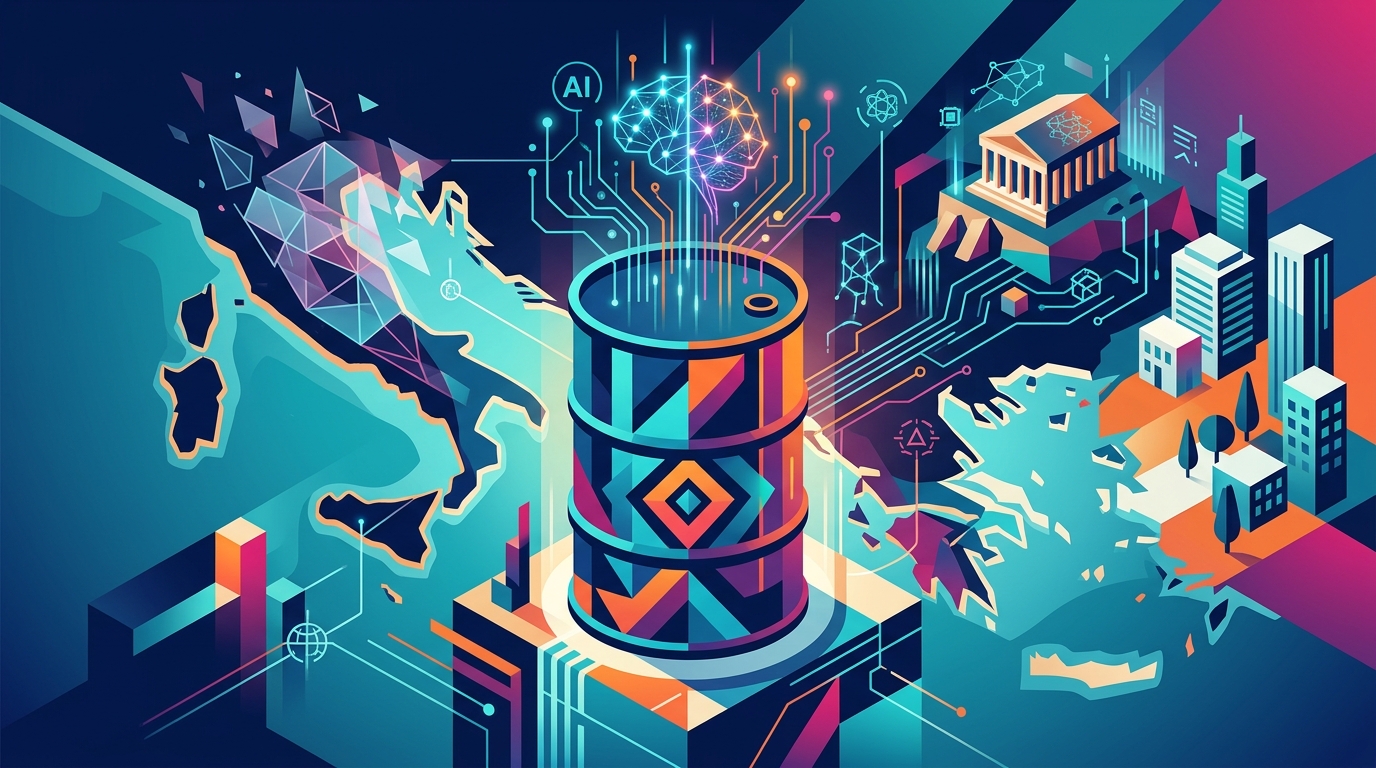
The intervention of Evangelos Venizelos, former Greek Vice President and Professor of Constitutional Law, in the public debate on Artificial Intelligence (AI) is not merely a technocratic assessment; it is a profound political and constitutional warning. In an era where technology evolves at a pace that far outstrips the legislative capacity of sovereign states, Venizelos identifies a critical juncture: AI is not just another tool, but a force restructuring the architecture of power, challenging the very essence of liberal democracy.
According to Venizelos, the greatest threat does not stem from a sci-fi "rebellion of the machines," but from the subtle erosion of human autonomy and the transparency of decision-making. When algorithms determine everything from a citizen's creditworthiness to a prisoner's likelihood of recidivism, the rule of law faces the "black box" phenomenon. The inability to explain an algorithmic decision clashes with the fundamental obligation of the administration and the judiciary to provide reasoned justification for their actions.
The Shift of Sovereignty: From States to Big Tech
One of Venizelos's central theses concerns the dilution of national sovereignty. In the traditional Western model, power emanates from the people and is exercised through state institutions. Today, however, real power—the ability to influence public opinion, the ownership of massive datasets, and the control of communication infrastructure—resides in the hands of a few private tech giants. This "privatization of the public sphere" creates a new form of digital feudalism, where citizens are transformed into users, and their rights are governed by "terms of service" rather than constitutions.
Venizelos emphasizes that liberal democracy is predicated on free will. If AI can predict, manipulate, and ultimately direct human behavior through personalized algorithms, the concept of democratic choice is called into question. Political sovereignty becomes a hollow concept if the "demos" is no longer the sovereign architect of its will but the object of continuous algorithmic processing and psychological profiling.
The "Post-Human" Subject and the Need for Algorithmic Constitutionalism
The discussion extends into the anthropological dimension of technology. Venizelos frequently refers to the need to protect the "human substance" against its digital representation. Artificial Intelligence does not process human beings; it processes data about them, creating digital shadows that often carry more weight in the eyes of the law and the market than the physical person. This necessitates the birth of a new "Algorithmic Constitutionalism."
- Transparency and Explainability: Every algorithmic decision affecting individual rights must be explainable and subject to judicial review.
- Human-in-the-loop: Final judgment, especially in matters of justice, health, and security, must remain a human prerogative.
- Data Sovereignty: Personal data should be treated as an extension of the human personality, not merely as a commodity.
Venizelos notes that while the European Union’s AI Act is a significant step forward, the challenge remains global and systemic. Democracy cannot survive in an environment where truth is relative and information is synthetically manufactured. Deepfakes and automated disinformation campaigns do not just degrade the quality of public discourse; they threaten the very fabric of social cohesion and trust in institutions.
"Artificial Intelligence is a mirror of our society. If our society is unequal and authoritarian, AI will magnify those traits. The challenge is to subject it to the values of humanism and democracy before it redefines what it means to be a free human being."
Conclusion: Political Primacy as the Antidote
In conclusion, Venizelos’s analysis is not one of technological pessimism but of constitutional realism. Technology is not destiny. Liberal democracy has the capacity to self-regulate and survive crises, provided there is the political will to do so. The stake for nations like Greece and the broader European project is to avoid becoming mere consumers of technological products and instead become regulators of the digital future. Reclaiming the primacy of politics over technological power is the only way to ensure that humanity remains at the center of history.